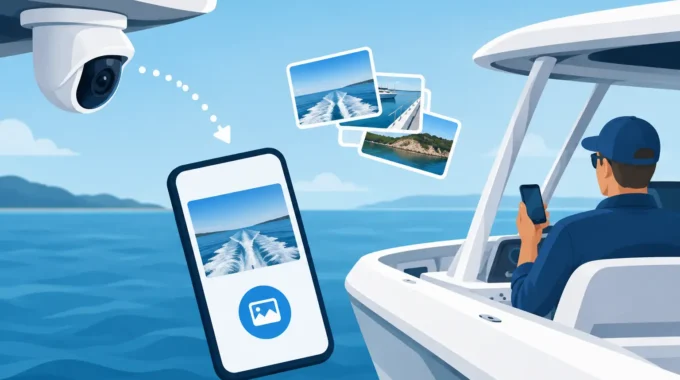
Can marine cameras request images when trouble starts? Learn how remote vessel cameras provide visual proof of flooding, theft, fire and power faults fast.
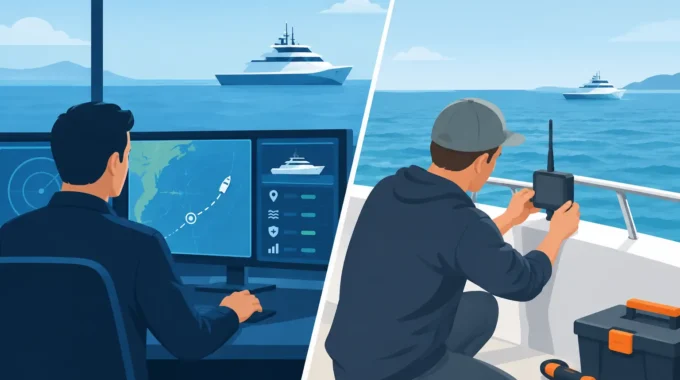
Professional Versus DIY Vessel Monitoring
A flat battery after a shore-power trip can spoil a weekend. A failed bilge pump can sink a boat before anyone walks the marina. And an anchor dragging at 2 am does not wait for business hours. That is the real decision behind professional versus DIY vessel monitoring: not whether you can fit a sensor, but whether the system will detect the right failure, reach the right people and give them enough information to act before the damage spreads.
For an unattended yacht, cruiser, houseboat or commercial vessel, monitoring is not a novelty. It is part of protecting a major asset. The right approach depends on your vessel, where it is kept, how long it sits unattended and how confident you are with marine electrical work. A DIY installation can be sensible in the right circumstances. But a cheap, improvised setup can create blind spots exactly where a marine incident becomes expensive.
What a DIY setup can do well
A capable owner can install basic monitoring for selected risks. A battery-voltage monitor, a bilge float switch and a standalone camera may provide useful reassurance, particularly on a smaller vessel kept close to home. If you understand DC systems, cable protection, fuse selection, waterproofing and mobile connectivity, you can build a tailored setup around your priorities.
DIY also gives you flexibility. You may already have compatible sensors, a preferred app or an existing onboard network. For a boat that is regularly attended and stored in a secure marina with reliable shore power, a modest system may be enough to tell you when a battery is low or a hatch has been opened.
The limitation is that individual devices do not automatically create a vessel-protection system. A camera may show a problem after you check it. A battery monitor may record a low-voltage event. A domestic smart sensor may send a notification when mobile reception is available. None of that guarantees that alarm delivery, power supply, sensor operation and response arrangements will hold up during rain, heat, vibration, corrosion or a genuine onboard emergency.
Where DIY vessel monitoring commonly fails
The hardest part is not mounting a device. It is designing for failure.
Marine conditions punish shortcuts. Connectors corrode. Unprotected cables chafe. Wi-Fi drops out when marina infrastructure goes down. A sensor that works on the workbench can become unreliable after months in a damp locker. If the monitoring device shares the same failing power source it is meant to report on, it may go silent at the worst possible time.
Alert fatigue is another problem. An app that sends repeated, vague notifications soon gets ignored. A useful marine alarm needs clear priorities: shore power has failed, bilge level is rising, smoke has been detected, the vessel has moved beyond its permitted location, or an intruder has entered. It also needs to go to people who can respond. One mobile number is a single point of failure if you are flying, offshore, asleep or simply miss the notification.
Visual confirmation matters as well. When an alarm arrives, you need to know whether the bilge has water in it, whether a person is onboard, whether a mooring line has failed, or whether the boat is simply moving normally in a gusty berth. Without camera images on demand or triggered by an alarm, owners can be left making costly decisions with incomplete information.
Professional versus DIY vessel monitoring: the practical difference
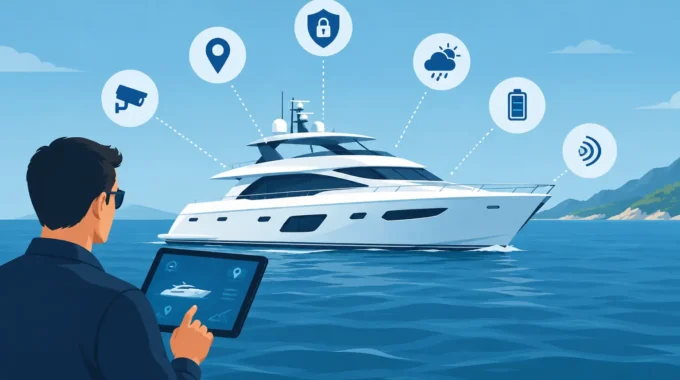
Professional monitoring systems are designed around the full chain of protection: detection, alarm delivery, evidence and action. Rather than asking one device to cover every risk, the system integrates dedicated inputs and sensors for the threats that matter on an unattended vessel.
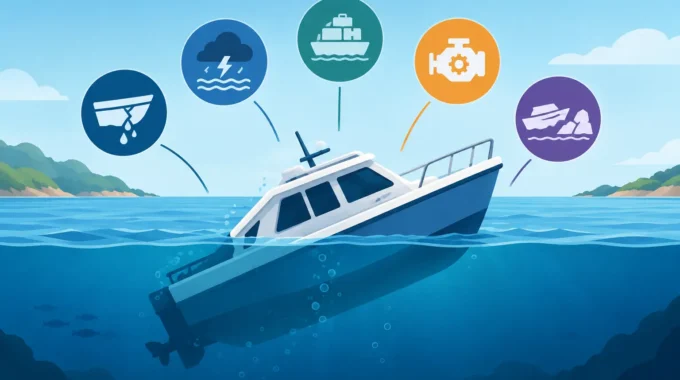
That may include battery condition, shore-power loss, high bilge water, bilge-pump run time, fire and smoke, refrigeration failure, intrusion, anchor drag, excessive pitch and roll, and a vessel moving or going adrift. The value is not the longest possible feature list. It is knowing the system can be configured around your actual operating risks.
A marine-specific system should also be built for the electrical environment aboard. Low power draw is critical when a boat may sit on a mooring for weeks. Hardware needs appropriate environmental protection, and installation must account for safe cable routing, fusing, sensor placement and the vessel’s battery arrangement. For larger boats, catamarans, heritage vessels and fleets, multiple monitoring units may be required to cover separated hulls, machinery spaces, cabins and refrigeration areas.
Trek Transponder systems, for example, are Australian-made, IP67-rated and designed to monitor once per second while drawing very little power. Alarms can be sent directly by 4G SMS and MMS to up to five mobile numbers, with HD camera images available after an alarm or on request. This is the difference between receiving a generic message and seeing what is happening onboard.
Installation is about more than getting it working
A professional installation is not always necessary, but it should be considered whenever the system is protecting a high-value boat, supporting insurance requirements, connecting to critical circuits or covering several onboard hazards.
An experienced marine installer can identify the details owners often miss. They can locate float switches where rising water will be detected early, confirm that shore-power sensing reflects a genuine supply failure, separate alarm power where needed, and ensure cameras cover useful areas rather than a patch of glare. They can also test alarm paths before the vessel is left unattended.
This does not mean hands-on owners should be excluded. Many owners are fully capable of fitting a purpose-built system themselves, particularly when clear instructions and direct technical support are available. The key distinction is whether you are installing a marine-designed alarm platform with known specifications and support, or assembling unrelated consumer devices and hoping they behave as one system.
For electrical work, compliance matters. Systems and installation practices should be appropriate for the vessel and aligned with applicable marine electrical requirements, including AS/NZS 3004.2:2014 where relevant. A cheap device is no bargain if it creates an electrical risk or complicates an insurance claim after an incident.
Connectivity changes the answer
Mobile coverage is usually adequate for boats kept around populated coastal areas, but it is not universal. A vessel may be offshore, in a remote anchorage or travelling between regions where 4G coverage is weak or unavailable. A Wi-Fi-only arrangement is even more exposed, because it relies on local marina internet and onboard network equipment staying live.
For coastal and harbour-based vessels, direct SMS and MMS alarms remain practical because they do not depend on you opening an app to see an event. An app adds real-time status and control, but the alarm should still make enough noise on your mobile to prompt action.
For remote cruising, a global satellite-capable option can be worth far more than its initial cost. Starlink-enabled vessel monitoring provides a different level of oversight when the boat is beyond normal mobile coverage. It will not prevent every incident, but it can stop a remote problem from becoming an undiscovered disaster.
Choose based on the consequence of missing an alarm
DIY monitoring may suit a trailer boat, day boat or regularly attended vessel where a missed notification is inconvenient rather than catastrophic. It can also suit technically skilled owners who are prepared to maintain, test and troubleshoot every part of their setup.
Professional-grade monitoring becomes the stronger choice when your boat stays on a swing mooring, berth or anchor unattended; relies on shore power; has significant battery banks or refrigeration; carries valuable equipment; or could harm other vessels if it breaks free. It is particularly relevant for hire fleets, commercial operators and custodians of classic or heritage boats, where an incident affects more than one owner.
Ask a blunt question before deciding: if the boat starts taking on water at midnight, who gets the alarm, what do they see, and who can reach the vessel? If the answer is uncertain, the monitoring arrangement is not finished.
Test every alarm after installation, then test it again before leaving the vessel for an extended period. The best time to find a weak signal, flat backup battery or poorly placed sensor is while you are standing safely at the dock, not when your boat is already in trouble.
Related Posts