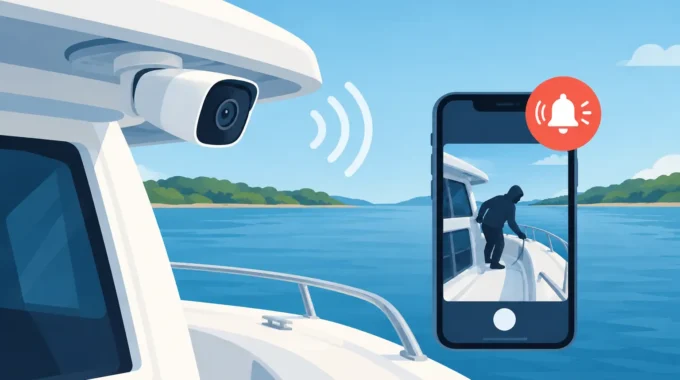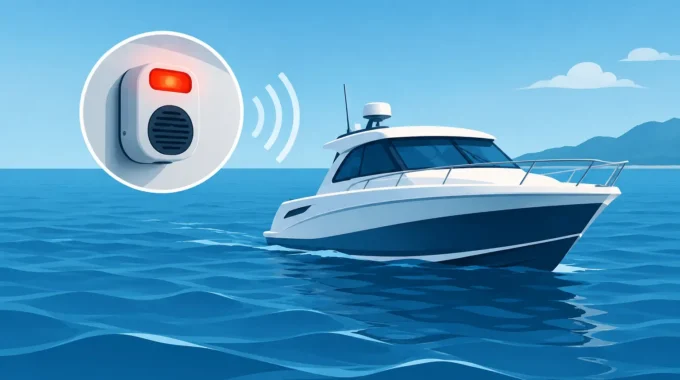
Learn how to set camera alarm snapshots on your boat, so a bilge, power, fire or security alert arrives with visual proof you can act on fast remotely.
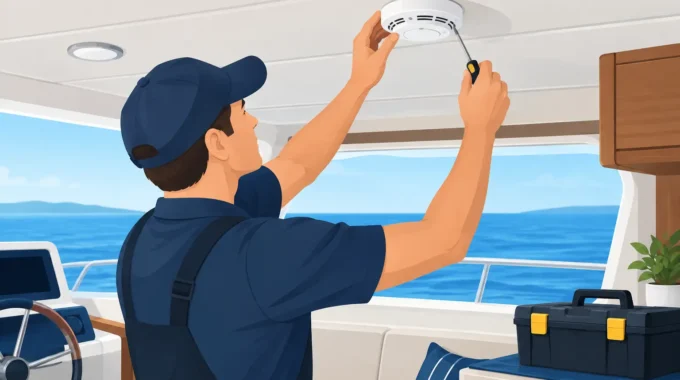
How to Install Marine Smoke Detectors Safely
A smoke alarm that only sounds inside a locked-up boat can still leave you too late to act. When you install marine smoke detectors, the job is not simply finding a spare patch of ceiling and fitting a battery unit. Detector location, power supply, the type of alarm and how the warning reaches you all determine whether you get a useful early warning or a costly surprise at the marina.
For vessels left unattended at a berth, on a mooring or in storage, smoke detection needs to be part of a wider response plan. A small electrical fault, failed charger, overloaded circuit or galley appliance can become a fire long before someone walks past your boat. The objective is simple: detect the event early, alert the right people and make sure they can act.
Choose the right detector for each space
Not every marine space should use the same detector. Smoke alarms are generally suited to accommodation areas such as cabins, saloons and passageways, where smouldering wiring, furnishings or appliances may produce smoke before flames become obvious.
Engine compartments are different. Diesel fumes, heat, humidity and airborne particles can cause nuisance alarms or contaminate a standard smoke detector. In many engine spaces, a heat detector is the more practical choice. It responds to an abnormal rise in temperature rather than ordinary vapour or exhaust residue. The best arrangement depends on the engine, ventilation, fuel type, battery-bank location and how the vessel is used.
The same thinking applies near galleys. A detector directly outside a galley door may repeatedly alarm when someone is cooking, while a detector positioned too far away may not provide early warning. Move it far enough from normal cooking vapour to avoid false alarms, without leaving the sleeping accommodation unprotected.
For a larger yacht, houseboat or catamaran, one detector is rarely enough. Separate accommodation zones, engine rooms, battery compartments and enclosed storage areas may each need their own detection method. Walk through the vessel as if smoke were starting in each compartment. Ask where it would travel first, where people sleep and which locations are normally shut tight when the boat is unattended.
Plan where to install marine smoke detectors
Smoke rises, so cabin smoke detectors are usually mounted high, on the ceiling or high on a bulkhead where permitted by the manufacturer. Keep clear of hatches, opening windows, air-conditioning outlets and ventilation ducts. Strong airflow can push smoke away from the sensor or delay activation.
Avoid dead-air corners where smoke may take longer to reach the detector. Also avoid mounting directly above a stove, beside a shower door or in a spot exposed to persistent condensation. Marine environments are hard on electronics. Salt air and moisture will find weak installation choices quickly.
Before drilling, check both sides of the mounting surface. Cabin linings often conceal wiring, plumbing, deck fittings or insulation. Use fasteners suitable for the substrate and avoid creating a path for water into a deck core. If a cable passes through a bulkhead or lining, protect it with a gland or grommet so vibration cannot chafe the insulation.
A practical layout for many cruising boats is a smoke detector in the main saloon, one near sleeping cabins and suitable heat detection in the engine or machinery space. That is not a universal rule. A compact trailer boat, a liveaboard cruiser and a commercial vessel have very different risk profiles. The detector manufacturer’s instructions and the vessel’s electrical design must guide the final placement.
Use marine-suitable power and wiring
A stand-alone battery smoke alarm can provide basic local protection, particularly on smaller vessels. But it has obvious limits. If the battery goes flat, the alarm may chirp for weeks without anyone aboard hearing it. If smoke begins while the vessel is unattended, a siren inside the cabin may not be heard from the pontoon, let alone from home.
For boats with an existing alarm or monitoring system, connect compatible smoke or heat detectors into a monitored alarm input. This allows the detector to trigger a local siren, warning light or relay output while also sending a remote alarm. Trek Transponder systems, for example, can send direct SMS or app alerts to nominated mobiles, giving owners a warning while they are away from the marina.
Use tinned marine-grade cable where wiring is exposed to the marine environment, size conductors correctly and protect the circuit with the appropriate fuse close to the power source. Keep detector wiring supported at regular intervals and separated from high-current cables where practical. Poor joins, unsupported cable runs and unprotected penetrations are common causes of faults on boats.
If you are connecting to the vessel’s 12V or 24V supply, account for voltage range, standby current and alarm current. A detector that works well in a house may not tolerate a marine electrical system’s voltage variation, charging cycle or damp conditions. Check the unit’s specifications rather than assuming it is suitable because it has a loud siren.
Where mains shore power is involved, the work needs particular care. Electrical work on an AC installation should be completed by a qualified person who understands marine requirements. Any changes must preserve the safety and integrity of the vessel’s installation, including requirements relevant to AS/NZS 3004.2:2014.
Make sure the alarm reaches someone who can respond
A detector is only the first link in the chain. Consider what happens after it operates at 2 am on a Tuesday when the boat is closed up and you are several hours away. A useful alarm setup should identify the affected zone where possible, sound an onboard alarm and notify people who can investigate.
Remote notification is particularly valuable for owners whose vessel is unattended for long periods. Set alerts to more than one trusted mobile number so a single flat phone, missed message or overseas trip does not leave the warning unanswered. If the system supports camera integration, an alarm-triggered image can help confirm whether there is visible smoke, an intruder, a crew member aboard or another obvious cause before someone travels to the boat.
Do not rely on images alone. Cameras may not see smoke in a closed engine bay or a dark cabin, and a developing electrical fire can escalate fast. Treat any fire or smoke alarm as an event requiring immediate action under your marina, club or vessel emergency procedure.
Test the entire system, not just the detector
After installation, test the detector using its approved test method, then test every part of the alarm path. Confirm the onboard siren sounds, any external light or relay operates, the monitoring system records the event and each nominated mobile receives the alert.
Do this while the boat is on battery power as well as while connected to shore power. A shore-power fault and a battery-charger issue are precisely the kinds of conditions that can expose weaknesses in an installation. If your vessel has separate house and engine-start banks, make sure the monitoring and detection circuit remains powered as intended during normal isolation arrangements.
Maintain the detectors as seriously as any other safety equipment. Vacuum dust from the external vents if the manufacturer permits it, inspect for corrosion or staining, replace batteries on schedule and replace the detector at the end of its stated service life. A unit that has been exposed to heavy moisture, fuel vapour or repeated false alarms deserves closer inspection.
Common installation mistakes
The most expensive mistakes are usually simple ones: fitting a domestic-only detector in a damp compartment, placing a smoke detector inside an engine room, connecting an alarm without remote notification, or never testing the SMS and app alerts after installation. Another common failure is mounting a detector where normal airflow prevents smoke reaching it quickly.
Do not silence repeated nuisance alarms by removing the detector or disconnecting the input. Find the cause. It may be cooking vapour, a poor location, contamination, a failing detector or, in some cases, a genuine electrical issue that needs attention.
Fire does not wait until you are back at the boat. Fit detection that suits each space, wire it properly and prove that the warning reaches someone who can respond before smoke turns into a ruined vessel.
Related Posts