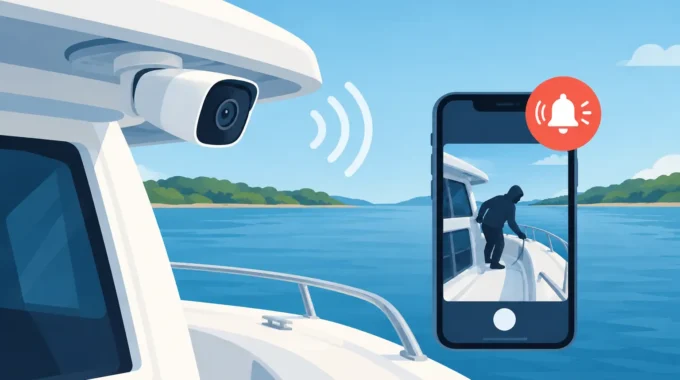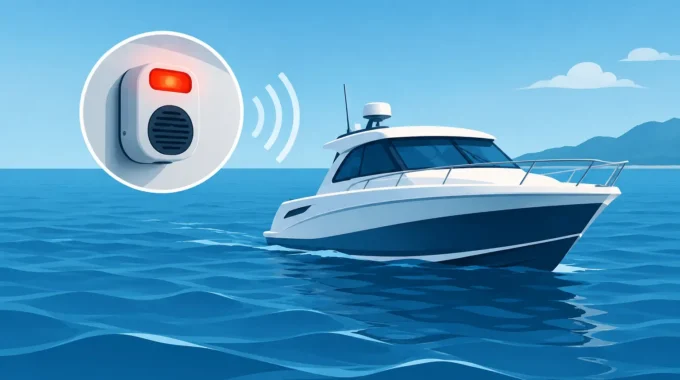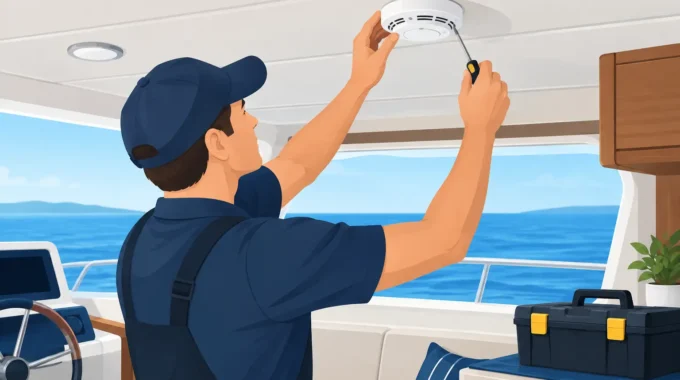
Learn how to set camera alarm snapshots on your boat, so a bilge, power, fire or security alert arrives with visual proof you can act on fast remotely.
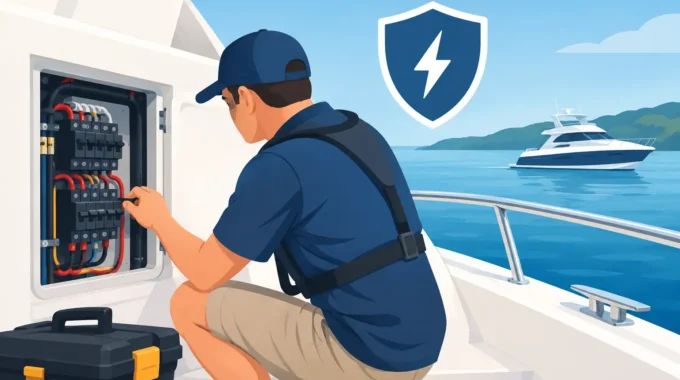
Marine Electrical Safety: Protect Your Boat
A boat can look perfectly secure at its berth while an electrical fault is building behind a panel, a battery is draining below recovery, or shore power has quietly failed. That is why marine electrical safety is not just about tidy wiring and passing an inspection. It is about preventing the chain of events that leaves owners with a flooded, burnt, flat or drifting vessel.
For boats left unattended in a marina, on a swing mooring or at anchor, the risk is rarely one dramatic failure. More often, it is a small issue that goes unseen for hours or days: a charger trips, a bilge pump cycles continuously, a connection overheats, or a fridge flattens the house bank. The cost can move from a simple repair to an insurance claim very quickly.
Marine Electrical Safety Starts With the Right Design
Marine electrics operate in conditions that punish ordinary electrical equipment. Salt air attacks terminals, vibration loosens connections, heat builds inside enclosed lockers, and water finds its way into places it should not be. A system that works reliably in a garage or caravan is not automatically suitable for a vessel.
Use marine-rated cable, connectors, circuit protection and equipment appropriate for the job. Cable needs to be correctly sized for both the load and the run length. Undersized cable creates voltage drop and heat, especially on high-draw circuits such as windlasses, inverters, refrigeration and bilge pumps. A device may still operate on a poor cable run, but the wiring can be working far harder than it should.
Every positive circuit should have protection fitted as close as practical to its power source. Fuses and circuit breakers are there to protect cable, not simply the appliance at the end of it. If a wire chafes through or a terminal fails, properly selected protection limits the chance of that cable becoming an ignition source.
On larger vessels, separate essential systems from convenience loads wherever practical. Bilge pumps, alarms, emergency communications and critical navigation equipment need reliable supply even when non-essential circuits are isolated. The exact arrangement depends on the vessel, battery-bank design and operational profile, but the principle is simple: do not allow a fault in a stereo, fridge or cabin-light circuit to disable the systems that keep the boat afloat and secure.
The Faults That Cause Expensive Damage
Electrical faults do not always announce themselves with sparks or a tripped breaker. Some are slow, intermittent and easy to miss during a quick visit to the boat.
Corroded terminals are a common example. Corrosion increases resistance. Resistance creates heat under load. Heat can damage insulation, deform terminals and eventually cause a connection to fail or ignite surrounding material. Inspect battery terminals, isolators, busbars, charger connections, shore-power fittings and high-current cables for green corrosion, discolouration, melting, cracked insulation or loose lugs.
Battery condition is another major concern. A battery that is repeatedly discharged can lose capacity long before it appears completely dead. A failing battery can also leave pumps, alarms and communications equipment without enough voltage to operate when they are needed. Check charging voltage, resting voltage, battery age and electrolyte level where relevant. If one battery in a bank behaves differently from the others, investigate it rather than assuming it will recover on the next charge cycle.
Shore power deserves particular respect. Damaged leads, loose pedestal connections, moisture ingress and incorrect wiring can present shock, fire and corrosion risks. Keep shore-power leads off wet surfaces where possible, inspect plugs and sockets regularly, and avoid forcing connections that are hot, damaged or difficult to engage. If a breaker trips repeatedly, there is a reason. Resetting it without finding the fault can turn a warning into a disaster.
Then there is the bilge-pump circuit. A pump that runs constantly could be responding to a genuine leak, a stuck float switch, water entering through a failed fitting, or a wiring fault. A pump that does not run can be just as dangerous. Either way, an unattended boat can sink before anyone sees the problem.
Checks That Should Not Wait Until Haul-Out
A full professional inspection is sensible after major electrical work, before purchasing a used vessel, or when faults are recurring. Between those inspections, owners should build routine checks into normal boat use.
At least monthly, look over battery compartments and electrical lockers. You are looking for heat damage, loose fittings, corrosion, dampness, chafed cable and signs of water tracking through cable entries. Run the bilge pumps manually where possible and confirm water is actually being discharged. Test alarms and verify that emergency lighting, navigation lights and communications equipment work from the expected battery source.
Before leaving the vessel for an extended period, check battery voltage and charging status, secure shore-power connections, confirm bilge-pump operation, and isolate circuits that do not need to remain live. Remove high-load portable appliances from unattended use. A cheap heater, fan or charger plugged into a marina supply is not worth the fire risk.
Keep a simple record of battery readings, pump activity and recurring faults. It does not need to be elaborate. A pattern of declining voltage, increasing pump cycles or repeated charger alarms gives you warning before an urgent call-out is required.
Remote Monitoring Closes the Unattended Gap
Routine checks are essential, but they cannot protect a vessel at 2 am on a Sunday, when you are interstate, or when poor weather keeps you away from the marina. This is where marine electrical safety needs remote oversight rather than optimism.
A suitable vessel-monitoring system should alert you when shore power fails, battery voltage drops, a bilge pump runs excessively, smoke or fire is detected, or water reaches an alarm level. Immediate alerts matter because the response is different for each event. A shore-power loss may require a marina call before batteries flatten. A bilge alarm may mean asking someone to inspect the vessel immediately. A smoke alarm calls for an urgent emergency response.
Direct SMS alerts are useful because they do not rely solely on someone opening an app or noticing an email. Sending alarms to multiple mobile numbers also prevents a single missed notification from becoming an unattended incident. Camera confirmation adds another layer of certainty. If an alarm triggers, an image can help you decide whether a person is aboard, conditions are worsening, or the boat needs a fast physical inspection.
Trek Transponder systems are designed for this job, with once-per-second monitoring, low current draw and direct alarm notifications to up to five mobile numbers. For larger yachts, catamarans, hire fleets or vessels with multiple compartments, monitoring can be expanded to cover the risks that a single sensor near the battery bank will never see.
Remote monitoring does not replace competent installation, inspection or maintenance. It gives you the earliest possible warning when those safeguards are challenged. That difference can save batteries, prevent a flooded cabin, protect valuable equipment and avoid the far greater cost of recovering a damaged vessel.
Installation Quality Is a Safety Feature
Even high-quality hardware can be compromised by poor installation. Electrical enclosures need to be dry, accessible and protected from mechanical damage. Cables should be supported, routed away from heat and moving gear, and protected where they pass through bulkheads or sharp edges. Connections should be mechanically secure before they are electrically connected.
Australian vessel owners should also consider whether new work aligns with applicable standards, including AS/NZS 3004.2:2014 for extra-low-voltage electrical installations in recreational boats. Compliance is not paperwork for paperwork’s sake. It creates a disciplined approach to cable selection, circuit protection, battery isolation and installation practice.
For simple accessories, a capable owner may be able to complete the work carefully. For shore power, battery-bank upgrades, inverters, charging systems, fire detection and integrated monitoring, professional installation is usually the safer decision. The trade-off is upfront cost versus the risk of hidden faults on a high-value asset. On a vessel that spends long periods unattended, that calculation is usually straightforward.
Your boat does not need to be old, poorly maintained or caught in a storm to suffer serious damage. One loose terminal, one failed charger or one unnoticed bilge-pump fault is enough. Set up the electrical system properly, check it regularly, and make sure someone is alerted the moment conditions change.
Related Posts