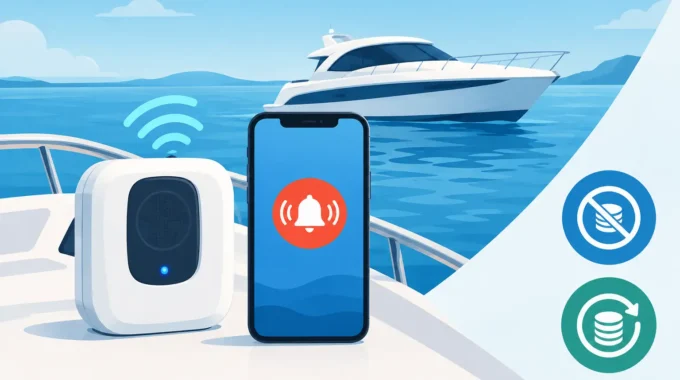
This yacht electrical monitoring guide shows owners how to catch shore-power loss, flat batteries and bilge-pump faults before costly marine disasters.
Bilge Protection That Warns Before Water Wins
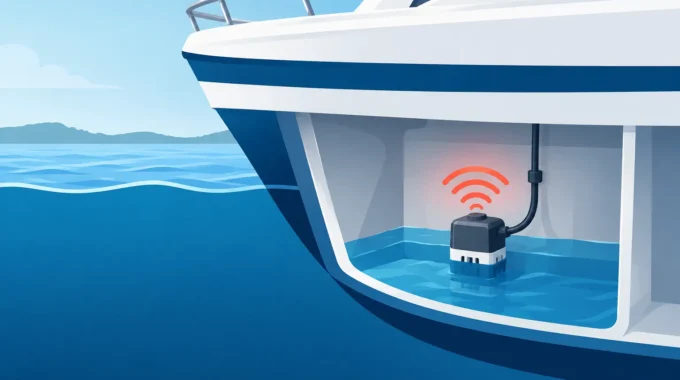
A flooded boat rarely starts with a dramatic hull breach. More often, it begins with a split hose clamp, a tired stern-gland seal, rain finding its way through a hatch, or a bilge pump that stops when its battery voltage falls away. Bilge protection is what gives you the chance to act while the problem is still small – not when a marina manager rings to say your vessel is sitting low in its berth.
For a yacht, cruiser, houseboat or work vessel left unattended, the bilge is not an out-of-sight compartment. It is an early record of what is going wrong on board. Rising water can point to a leak, failed plumbing, rainwater ingress, a cooling-system fault or water backing in through an exhaust. The outcome can be damaged electrics, ruined interiors, an insurance claim, environmental clean-up and, in the worst cases, a sunken vessel.
What Effective Bilge Protection Must Do
A bilge pump is essential, but it is not bilge protection on its own. A pump can clear water only while it has power, its float switch operates, its discharge remains clear and the incoming water is within the pump’s capacity. Any one of those conditions can fail when nobody is aboard.
Effective bilge protection combines detection, notification and enough information for the owner to make a decision quickly. It should detect rising bilge water before the level reaches critical equipment or overwhelms the primary pump. It should also identify abnormal pump activity, because a pump that runs repeatedly may be holding the water level down while a serious leak develops.
Most importantly, the alarm needs to reach a person who can respond. A siren is useful if someone is standing nearby. It is of little help when your boat is moored two hours from home, you are interstate, or the marina is quiet overnight. Remote SMS and app alerts put the warning in front of you immediately, wherever you are.
A proper system should also monitor the conditions that keep the pump working. Battery failure and shore-power loss are not separate inconveniences. They are direct bilge risks. If shore power trips, the charger stops. If battery voltage continues to fall, the pump may be the next critical service to disappear.
The Failures Boat Owners Do Not See Coming
The most expensive bilge incidents often involve several minor faults occurring together. A small leak may be manageable on a normal day. Add a flat house battery, a blocked pump outlet or an extended storm, and the same leak becomes a recovery job.
A pump that runs too often
An automatic bilge pump cycling every few minutes deserves attention, even if the bilge appears dry when you visit. The float switch may be sticking, the discharge hose may be draining back, or water may be entering through a failed fitting below the waterline. Continuous or frequent pump operation also draws down battery capacity quickly.
Remote monitoring can identify this pattern before the pump burns out or the batteries become depleted. It changes the question from, “Has the boat sunk?” to, “Why is the pump operating more than it should?” That is the question you want to answer early.
Shore power has failed at the berth
A disconnected lead, tripped pedestal breaker or marina power outage can leave your vessel running only on its batteries. Refrigeration, chargers, monitoring equipment and pumps may all be affected depending on the installation. A shore-power alarm gives you time to arrange a check, reconnect power or reduce loads before battery voltage reaches a dangerous point.
For vessels on swing moorings or at anchor, solar charging may help, but it should not be treated as a guarantee. Cloud cover, shading, dirty panels and higher-than-normal pump use can quickly alter the energy balance.
Rainwater enters where it should not
Heavy rain exposes weak seals around hatches, windows, deck fittings and cockpit drains. On some vessels, blocked scuppers or poorly maintained covers can direct water into lockers and eventually into the bilge. This is particularly dangerous when a boat is closed up for weeks.
Water-level detection does not diagnose the leak by itself, but it gives you the warning needed to investigate before water reaches wiring looms, engines, battery banks or cabin finishes.
The pump cannot keep up
Bilge pumps are rated under ideal conditions. In the real world, lift height, hose bends, narrow outlets and fouling reduce performance. A pump may be technically operational but still unable to remove water as fast as it is entering.
That is why rising-water alarms matter. They monitor the consequence, not merely the existence of a pump. If the water level continues upward, you need a warning regardless of whether the pump is running.
Build Layers, Not False Confidence
The right bilge setup depends on vessel size, layout, power system and where the boat spends its time. A trailer boat used every weekend has different needs from a 50-foot yacht left in a marina for months. Still, the principle is the same: do not rely on a single component to prevent a sinking.
Start with sound maintenance. Check through-hull fittings, hoses, clamps, stern glands, cockpit drains and pump strainers. Test each float switch manually and confirm that water discharges overboard. Inspect the hose run for kinks, chafe and signs of backflow. Keep bilges clean enough that debris cannot jam a switch or clog a strainer.
Then add redundancy where the consequences justify it. Many larger vessels use a primary automatic pump for everyday water and a higher-capacity backup pump set at a higher level. A high-water alarm provides another independent layer. It should be installed where it will detect a genuine problem early enough to matter, rather than only after the bilge is nearly full.
Power deserves the same attention. Pumps should have correctly sized wiring, protected circuits and adequate battery reserve. If your vessel relies on shore power to maintain batteries, loss of shore power should be treated as an alarm condition. There is no value in discovering a flat battery during the next visit if a pump has been operating for days.
Remote Alerts Turn Detection Into Action
A remote vessel-monitoring system is valuable because it closes the gap between an onboard fault and the person responsible for the boat. Instead of waiting for a neighbour to notice an unusual list or for water to reach the cabin sole, you receive an alarm on your mobile.
The best response path is practical. When an alert arrives, you should be able to contact a marina, neighbour, skipper or service technician immediately. If a camera is fitted, an image can help confirm whether the vessel is listing, whether weather conditions are severe, or whether someone is on board. Visual confirmation does not replace an inspection, but it prevents guesswork during a stressful call-out.
Trek Transponder systems can monitor bilge flooding, bilge-pump activity, battery condition and shore-power loss, then send direct alarm notifications to up to five mobile numbers. With once-per-second monitoring and alarm-triggered HD camera images, owners can identify urgent changes rather than relying on occasional marina walk-pasts. For larger boats and catamarans, multiple monitoring units can be configured to cover separate hulls, compartments or critical areas.
The system should be viewed as an early-warning layer, not a substitute for proper pumps, plumbing or routine inspections. No remote alarm can physically remove water, clear a blocked hose or replace a failed fitting. What it can do is give you the warning that makes a fast response possible.
Set Alarm Levels for the Way You Use Your Boat
An alarm is only useful if people respond to it. Set sensible thresholds and nominate who is responsible when an alert arrives. For a privately owned vessel, that might be you, a family member and a trusted marina contact. For a hire fleet or commercial operation, the alarm list should include the duty manager and maintenance staff.
Avoid treating all alerts the same. A brief pump cycle after a downpour may require monitoring. Repeated cycles, a high-water alarm, low battery voltage combined with shore-power loss, or an alert during rough weather requires immediate escalation. Make sure your emergency contacts know the berth location, access arrangements and where keys are held.
Test the arrangement before you need it. Trigger the high-water switch, confirm the pump-operation notification, disconnect shore power briefly and verify that the right mobiles receive the correct alerts. A system that has not been tested is simply an assumption installed behind a panel.
Water does not wait for the next scheduled visit. Keep the bilge maintained, give the pumps reliable power, and make sure rising water has a direct path to someone who can act before your boat becomes tomorrow’s marina emergency.
Related Posts