Can Starlink monitor a boat? Learn what connectivity can do, where it falls short, and how dedicated alarms protect an unattended vessel remotely.
7 Best Fridge Sensors for Boats and What They Prevent
A warm fridge is rarely discovered at a convenient time. It is found after a Friday run to the marina, when the freezer has thawed, the meat is off and the batteries have been carrying a struggling compressor for days. The best fridge sensors give you warning while there is still time to save provisions, protect battery capacity and arrange help before a small fault becomes an expensive clean-up.
For an unattended yacht, cruiser, houseboat or work vessel, refrigeration monitoring should not be treated as a luxury add-on. Fridges can fail because shore power drops out, a battery bank falls too low, a breaker trips, a door is left ajar, a compressor stops or ventilation around the condenser becomes inadequate. The right monitoring setup identifies which of these events has occurred, then sends an alarm to someone who can act.
What the best fridge sensors need to detect
A fridge thermometer alone is useful, but it does not tell the whole story. A proper boat monitoring system should help establish both the fault and the likely cause. That means considering temperature inside the cabinet, power supply to the refrigeration circuit and conditions that make a failure more likely.
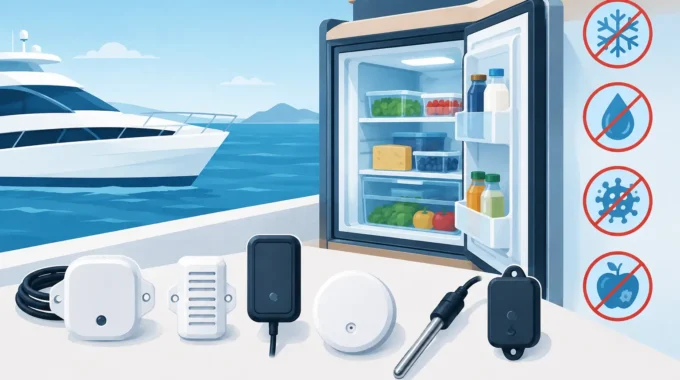
The seven sensor types below are the most useful for vessel refrigeration. Not every boat needs every one. A trailer boat with an icebox has different requirements from a liveaboard catamaran carrying a large fridge, freezer and independent drinks cabinet. But if your vessel is left on a berth or mooring for days or weeks, the first four should be considered essential.
1. Fridge cabinet temperature sensor
This is the core sensor. It measures the temperature inside the refrigerated compartment and raises an alarm when the cabinet remains above your safe limit for a defined period.
For general food storage, a warning threshold around 7°C is a practical starting point, with a lower target temperature during normal operation. The exact setting depends on how the fridge behaves during defrost cycles and how often the door is opened. Set the alert too close to the normal operating temperature and you will receive nuisance alarms. Set it too high and you may not know about a fault until food is already at risk.
Fit the probe where it measures air representative of the cabinet, not against the evaporator plate and not hard against the door. A probe clipped midway inside the fridge usually provides a more useful reading than one positioned in the coldest corner.
2. Freezer temperature sensor
A freezer deserves its own sensor. It cannot be assumed that a fridge temperature probe will reveal a freezer problem early enough, especially on larger boats with separate compressors or multiple compartments.
A freezer can hold cold for hours after power fails, particularly if it is full. That is good for preserving food, but it can delay a warning if you only monitor the fridge cabinet. An independent freezer probe lets you set a suitable high-temperature alarm and proves whether the compartment has stayed cold while you are away.
This matters for vessels used for extended cruising, charter operations or fishing. Losing frozen stores before a trip is costly. Losing bait or catch storage can disrupt work as well as waste money.
3. DC fridge supply-voltage monitoring
Many marine fridges run directly from the house battery bank. When battery voltage falls, the compressor may cut out on low-voltage protection even though the fridge itself is mechanically sound.
Monitoring the voltage at the refrigeration supply, or at least the house bank feeding it, provides vital context. If cabinet temperature rises at the same time as battery voltage drops, the issue may be charging, shore power, solar input or battery condition rather than the fridge compressor.
This distinction matters when someone is travelling to the boat. A technician sent to investigate a “failed fridge” may find a flat battery bank and a disconnected shore lead. Knowing the cause early saves time and prevents the same problem happening again.
4. Shore-power loss sensor
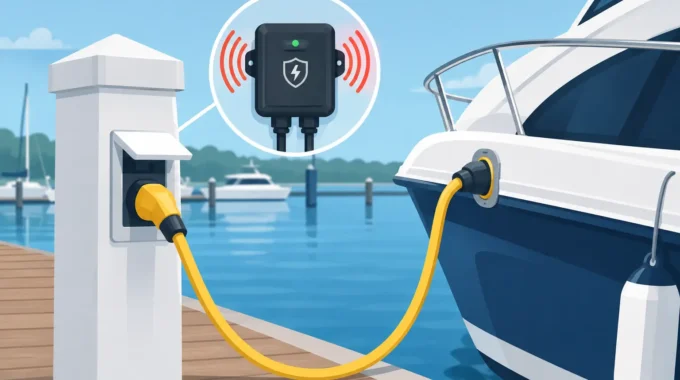
A shore-power failure is one of the most common causes of refrigeration trouble at a marina. The pedestal may trip, a lead may be unplugged, an onboard residual current device may operate or a storm may interrupt supply. Without an alarm, the first sign can be warm cabinets and severely discharged batteries.
A shore-power sensor warns when AC input disappears. Combined with a fridge temperature alarm, it gives you a clear sequence: shore power lost first, fridge temperature rising later. That is the information needed to call the marina, ask a nearby owner to check the lead or start a generator if the vessel has one.
Do not rely on a shore-power alert alone. If your charger fails while shore power remains present, the batteries can still run down. Temperature and battery monitoring complete the picture.
5. Fridge door or lid contact sensor
An open fridge door is a simple mistake with expensive consequences. On a boat, a door can also spring open after a rough passage, a failed latch or gear shifting in a locker nearby. A lid-style top-loading fridge may not seal properly if a bag or loose item catches the edge.
A magnetic contact sensor provides immediate notice that a door or lid has been left open. It is particularly valuable on charter boats, larger family vessels and commercial vessels where several people access provisions. Instead of waiting for the cabinet temperature to climb, the system can alarm as soon as the seal is broken for longer than the normal access period.
Ensure the contact is marine-suitable and fitted where vibration, movement and condensation will not create false readings. Test it with the vessel underway, not only while tied up.
6. Compressor run or current sensor
A compressor activity sensor helps identify whether the fridge is actually trying to cool. Depending on the refrigeration setup, this can be done by monitoring the compressor circuit, relay output or current draw.
It is a more technical addition, but it can be valuable where refrigeration failure has serious consequences. If the cabinet is warming and the compressor has not run, you may be dealing with a power, controller or thermostat issue. If the compressor is running continuously but temperature is still rising, suspect poor ventilation, a refrigerant issue, a damaged door seal or a failing compressor.
This sensor type should be specified and installed carefully. Marine refrigeration circuits vary, and an incorrect connection can create a fault rather than reveal one. Use a qualified installer where you are unsure.
7. Compressor-compartment temperature sensor
The air around the compressor and condenser is often overlooked. In a tight boat locker, heat can build up quickly due to blocked vents, dust, stored gear or a failed cooling fan. The fridge may appear to run normally at first, while drawing more power and struggling to maintain cabinet temperature.
A high-temperature sensor in the machinery space can provide an early warning of poor ventilation. It is especially useful for built-in fridges installed beneath bunks, behind cabinetry or in engine-adjacent areas. Keep the sensor away from direct contact with hot components and set the alarm threshold after observing normal conditions on a warm day.
Choosing a fridge alarm that works when you are not aboard
The sensor is only half the system. An alarm that appears only on a local display is no use when your vessel is unattended 100 kilometres away. Choose a marine monitoring platform that sends direct alerts to mobiles and continues operating on the vessel’s normal power supply with very low current draw.
For Australian boat owners, 4G SMS alerts are often the most direct option because they do not depend on you noticing an app notification. For offshore or remote vessels, satellite-backed connectivity may be the better choice. Camera confirmation also changes the response: a photo of an open galley fridge, a dark shore-power charger panel or a tripped switchboard can prevent a wasted trip and give a marina manager clear instructions.
Trek Transponder systems are designed for this wider vessel-monitoring role, combining refrigeration and temperature inputs with battery, shore-power, bilge, intrusion and fire alarms. Alerts can be sent to up to five mobile numbers, so one owner is not carrying the entire responsibility for a vessel in trouble.
Sensor placement and alarm settings matter
A poorly placed sensor can create false confidence. Do not place a fridge probe next to an evaporator plate, where it may read cold while the rest of the cabinet is warm. Do not place it in the door, which changes temperature every time it is opened. Use a stable central position and test the alarm by temporarily increasing the cabinet temperature under supervision.
Build delays into temperature alerts where appropriate. A short door opening should not trigger a callout, but a cabinet that remains above its safe limit for 30 to 60 minutes needs attention. Door contacts can use a much shorter delay, while shore-power loss may warrant an immediate alert.
Finally, test the complete chain. Confirm the sensor changes state, the monitoring unit receives it, the alert reaches every nominated mobile and the people receiving it know what to do. A fridge alarm is only effective if somebody can check power, close a door, reset a breaker or arrange access before the cold is gone.
Before leaving your boat, check the fridge temperature, shore-power status and battery charging as part of the same routine as securing lines and closing hatches. That five-minute check, backed by the right remote sensors, can save a weekend, a freezer full of stores and a very costly surprise at the berth.
Related Posts