Compare the best fridge sensors for boats. Find the right temperature, power and door monitoring to prevent spoiled stores and costly fridge failures.
Can Starlink Monitor a Boat? What It Can Do
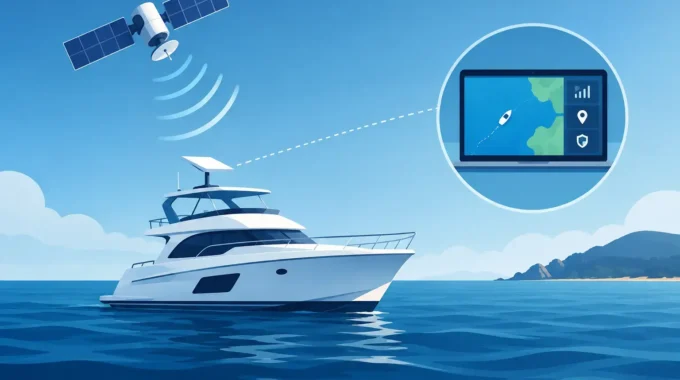
A boat can take on water, lose shore power or break free from its mooring long before anyone notices it from the marina car park. So, can Starlink monitor a boat? Not by itself. Starlink provides the internet connection that can carry monitoring data, camera footage and app notifications, but it does not include the sensors or alarm logic needed to detect a real vessel emergency.
That distinction matters. Internet on board is useful. Knowing your bilge is rising, your batteries are failing or an intruder has stepped aboard is what prevents a costly disaster.
Can Starlink monitor a boat on its own?
No. A Starlink terminal is primarily a satellite internet service. It connects onboard devices to the internet where a suitable service plan, clear view of the sky and sufficient power are available. It does not monitor bilge levels, battery voltage, shore power, smoke, movement, anchor position or a failed refrigeration system unless dedicated equipment is installed to measure those conditions.
Think of Starlink as the communications highway, not the security guard. It can give a vessel-monitoring system a far wider communications path than a marina Wi-Fi connection or a local mobile network. But without marine-rated sensors and a control unit, there is nothing meaningful to send.
A skipper who checks the Starlink app may be able to see whether the terminal is online. That is not the same as knowing whether the vessel is safe. A terminal can be connected while the bilge pump is running continuously, a battery bank is being flattened, or a loose shore-power lead has left the boat without charging.
What Starlink can do when paired with vessel monitoring
When Starlink is integrated with a proper boat alarm and monitoring system, it can provide connectivity for remote oversight beyond normal 4G coverage. This is particularly valuable for vessels that spend time in remote anchorages, on a mooring outside mobile range, or travelling between ports.
A dedicated system can watch the conditions that actually put unattended boats at risk. If water rises in the bilge, shore power drops out, a smoke detector activates or the vessel moves outside its permitted area, the monitoring unit detects the event. It then sends an alert through its available communications path, which may include Starlink connectivity.
This can also support live vessel information in an app and camera access where the installation and data connection allow it. Instead of wondering whether an alarm is genuine, an owner can request an image or receive one triggered by an alarm. That is the difference between rushing to the marina for a false alarm and calling a neighbour, marina manager or emergency service because there is visible evidence of a serious problem.
For larger private vessels, charter boats and commercial fleets, remote connectivity can make it easier to oversee several vessels without relying on someone physically walking each deck every day. It does not remove the need for inspections. It gives you a chance to act before a minor fault becomes a claim, a salvage job or a total loss.
The risks Starlink cannot detect
Starlink cannot sense danger through an internet connection alone. It needs inputs from correctly installed, marine-specific hardware. The most expensive incidents often start with a simple failure that no one sees.
A failed battery charger can leave critical pumps without reserve power. A shore-power outage can shut down refrigeration and allow batteries to discharge. A sticking bilge-pump float switch can mean the pump does not start when water enters. A split hose, failed seacock or heavy rain can fill a boat surprisingly quickly. At anchor, dragging ground tackle or a parted mooring line can put a vessel into another boat, a rock wall or a shipping channel.
Security is another blind spot if there are no sensors. Starlink does not know that a hatch has opened, motion has occurred inside the cabin or someone has disconnected equipment. Nor does it know the difference between normal wake movement and excessive pitch and roll unless a purpose-built monitoring unit is measuring it.
For a monitoring system to be useful, it needs to answer practical questions: What happened? When did it happen? How serious is it? Who has been notified? Can the owner see evidence before deciding what to do next?
What a proper remote boat monitoring system should include
The right system starts with detection, not connectivity. Look for a marine-rated control unit and sensors designed for the wet, corrosive environment found on boats. IP67-rated hardware is a sensible baseline for equipment exposed to moisture, spray and damp lockers.
The system should monitor critical events continuously, with very low power draw so it remains practical for vessels left unattended. Once-per-second monitoring gives far more useful protection than a system that only checks conditions occasionally. A rising bilge or sudden shore-power loss should not wait half an hour to be recognised.
Alarm delivery also matters. A notification buried in one app is not enough when the boat is in trouble. Direct alarms to multiple mobiles provide a better response plan. An owner, partner, boat manager, marina contact and trusted neighbour can all receive the warning, rather than relying on one person who may be out of range or asleep.
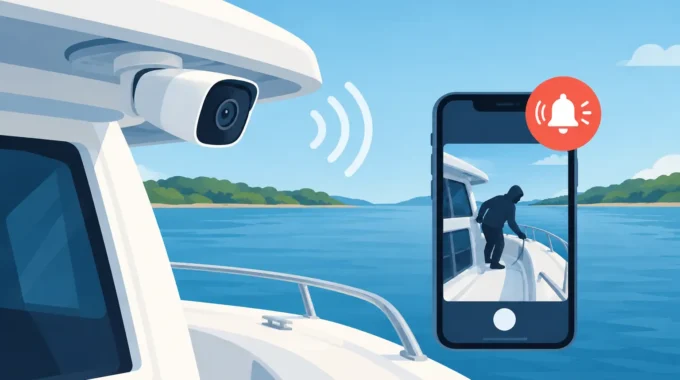
Visual confirmation is equally valuable. HD marine cameras that can send images when an alarm is triggered, or when requested by the owner, help establish whether there is an intruder, flooding, smoke or a vessel moving where it should not be. Cameras do not replace sensors, but they help you make faster decisions.
For electrical work, check that the system and installation meet applicable Australian marine requirements. Compliance with AS/NZS 3004.2:2014 is relevant for low-voltage electrical installations on recreational vessels. Do not allow a monitoring upgrade to create a new electrical or fire risk.
Starlink versus 4G for a boat alarm
For many boats kept in Australian marinas, 4G remains a practical and economical alarm path. It can deliver SMS and MMS alerts directly to mobiles, including photo evidence from a camera-equipped system. If the vessel stays within reliable mobile coverage, 4G may be all that is needed.
Starlink changes the equation for boats that travel beyond that coverage, are positioned in remote areas or need internet access for multiple onboard systems. It can support a broader connectivity setup and may provide a useful backup or primary data path depending on the vessel, operating area and service plan.
There are trade-offs. Starlink hardware needs power, a clear view of the sky and careful installation. Masts, radar domes, solar panels, buildings and marina infrastructure can obstruct the signal. Satellite equipment also adds data and service costs that should be weighed against how and where the boat operates.
The strongest approach is not to treat one connection as a guarantee. Build a monitoring setup that can alert through the most suitable available path, with sensible power protection and local alarm actions. A siren, light or relay output can still warn nearby people or operate connected equipment even if an external communications service is temporarily unavailable.
A practical setup for an unattended vessel
Start by identifying what could sink, disable, damage or expose your boat while you are away. On a cruiser at a berth, that may mean bilge water, shore-power loss, battery failure, smoke, intrusion and refrigeration alarms. On a yacht at anchor, add anchor drag, position monitoring, excessive heel and the risk of going adrift. A houseboat or commercial vessel may also need multiple zones, pump status and equipment alarms.
Then match the sensors and alarm outputs to those risks. Large catamarans and multi-deck vessels may need more than one monitoring unit to cover separate hulls, machinery spaces or accommodation areas. Do not settle for a single sensor in the easiest location if water can enter elsewhere.
Finally, test the response chain. Trigger each alarm under controlled conditions. Confirm who receives it, how quickly it arrives, whether camera images are useful and who will attend the vessel if you are interstate, offshore or overseas. The alarm is only as good as the action that follows it.
A Starlink-enabled Trek Transponder system can provide the remote connection layer for vessel-specific alarms, camera evidence and real-time monitoring where global coverage is needed. The essential point remains simple: satellite internet helps you stay connected, but dedicated monitoring tells you when your boat needs help.
Do not wait until a flat battery silences the bilge pump or a broken mooring turns into a salvage bill. Fit monitoring that detects the danger early, alerts the right people and gives you enough information to act while there is still a boat to protect.
Related Posts