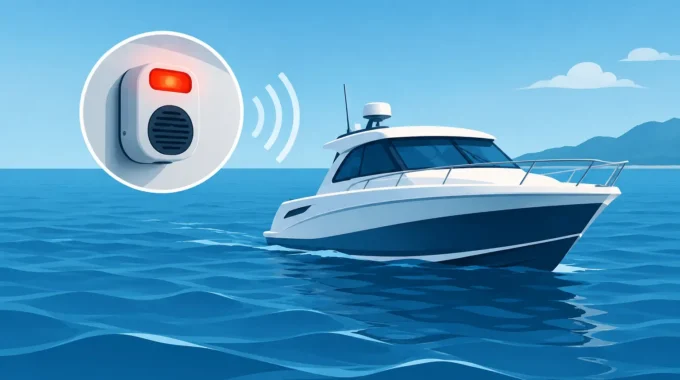
Learn how to set camera alarm snapshots on your boat, so a bilge, power, fire or security alert arrives with visual proof you can act on fast remotely.
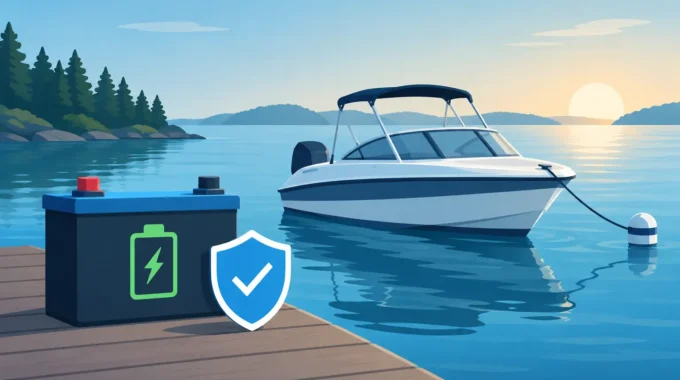
Battery Drain Prevention for Unattended Boats
A flat battery at the marina is rarely just an inconvenience. It can leave bilge pumps without dependable reserve power, refrigeration off, alarms silent and a vessel unable to start when conditions turn bad. Effective battery drain prevention means knowing what is consuming power, confirming that charging is actually working and receiving an alarm before a minor electrical fault becomes an expensive recovery job.
For boats left on a berth, swing mooring, trailer or hardstand, batteries are the quiet weak point. You may visit every weekend, yet a shore-power trip, failing charger or small parasitic load can flatten a bank between visits. The longer a vessel is unattended, the less acceptable it is to rely on assumptions.
Why boat batteries go flat while nobody is aboard
A battery can drain quickly through an obvious load, such as a light left on or a refrigeration system working overtime. More often, the cause is gradual: a battery monitor, stereo memory, inverter standby mode, corroded wiring, a faulty relay or equipment that never fully powers down. Individually these loads may be small. Over days or weeks, they add up.
A healthy charging system should offset normal standby consumption when shore power is available. But that depends on the pedestal supply, shore lead, RCD, charger, battery connections and charger settings all doing their job. If any link fails, the boat can silently move from fully charged to critically low.
Battery condition also matters. Older batteries have less usable capacity and may appear normal immediately after charging, only to lose voltage rapidly under load. Heat accelerates battery deterioration, while loose terminals and corrosion add resistance that can prevent effective charging. A voltage reading alone is useful, but it is not the whole story. The trend over time and the circumstances around any voltage drop tell you far more.
Battery drain prevention starts with separating circuits
The first practical step is to understand which battery bank supports each job. Starting batteries should be protected from domestic loads wherever possible. House batteries are designed to supply lighting, refrigeration, pumps, electronics and other everyday services, while engine starting capacity needs to remain available when you need to leave the berth or respond to an emergency.
Check that battery isolators are clearly labelled and that essential circuits remain available in the configuration you expect. A bilge pump may need a direct fused connection even when the main isolation switch is off. An alarm and monitoring system may also need a permanently available supply. Those essential loads should be low-draw and properly fused, not improvised additions attached to a battery terminal.
Charging sources need the same discipline. Shore charger, alternator, solar regulator, wind generator and DC-DC charger settings should suit the battery chemistry installed on the vessel. Incorrect charging profiles can shorten battery life or leave batteries chronically undercharged. If you have replaced lead-acid batteries with AGM, gel or lithium batteries, do not assume the existing charger settings are suitable.
Watch the loads that operate after you leave
Before locking up, turn off equipment that does not need to remain active. This includes entertainment systems, unnecessary displays, inverter outlets, deck lighting and accessory chargers. Then consider what must stay on: bilge pumps, security, monitoring, refrigeration if required and possibly selected navigation or communications equipment.
The trade-off is straightforward. Switching everything off reduces consumption, but disabling critical systems can expose the boat to flooding, intrusion or spoilage. The objective is not zero power use. It is controlled power use, with enough battery reserve and charging capacity to support the systems that protect the vessel.
Check shore power as if it will fail
Shore power is often treated as permanent, until a marina breaker trips, a lead is disturbed, a connection corrodes or a neighbouring vessel damages the supply. A shore-power failure can stop charging at exactly the time refrigeration, bilge pumping and security systems are still drawing from the batteries.
Inspect the shore lead, plug, socket and adaptors for heat marks, cracking, corrosion and loose fit. Ensure leads are supported so their weight is not hanging from a connection. Test RCD operation according to the equipment instructions, and have damaged or suspect AC equipment checked by a qualified marine electrician.
Australian vessels should not rely on household-style shortcuts around mains power. Marine electrical work requires correct protection, cable selection and installation practices. Compliance with AS/NZS 3004.2:2014 is relevant to onboard electrical safety, but compliance should never be treated as a one-off box to tick. Connections age, water gets in, and modifications introduce new faults.
Use voltage alarms before reserve power disappears
Manual battery checks are useful, but they cannot tell you what happened at 2 am on a Tuesday after a storm tripped the marina supply. Remote monitoring closes that gap by reporting a low battery voltage or shore-power loss to your mobile before the bank is exhausted.
Set alarm thresholds carefully. A threshold that is too high can create nuisance alerts during normal load changes. Set it too low and the warning may arrive after the battery is already damaged or unable to support essential equipment. The correct level depends on battery type, system voltage, normal overnight loads and whether charging should be present.
A practical system should also alert more than one person. If you are offshore, travelling or simply unable to attend, a family member, marina contact, skipper or fleet manager can act. Direct alarms to up to five mobile numbers give the boat a better chance of receiving attention before a low-voltage event becomes a no-start, bilge-pump or refrigeration failure.
Trek Transponder systems are built for this job, with low current draw, once-per-second monitoring and SMS, MMS or app-based alerts. A triggered camera image can also help distinguish between a simple power issue and a broader incident, such as storm damage, an open hatch or an intruder interfering with shore power.
Find parasitic battery drains methodically
If batteries continue to lose charge despite a working charger, guessing wastes time. Start with the vessel in its normal unattended state. Record battery voltage, isolate non-essential circuits one at a time and watch for changes in current draw. A marine electrician can use a clamp meter to identify the current moving through individual circuits without dismantling the entire installation.
Common culprits include faulty automatic bilge pumps cycling unnecessarily, stuck relays, fridge compressors running continuously, ageing inverter chargers, water-damaged switches and aftermarket electronics connected directly to the battery. A bilge pump that cycles repeatedly is particularly serious. It may be draining the battery because water is entering the boat, not because the pump itself has failed.
Do not solve an unknown drain by fitting a bigger battery bank alone. More capacity may buy time, but it can also hide a developing fault until the consequences are worse. Find the load, repair the cause and then confirm that the charging system restores the bank correctly.
Build a routine that catches trouble early
Battery drain prevention works best as part of an unattended-vessel routine. Before leaving the boat, confirm shore power is connected, battery charging is active, bilges are clear, unnecessary loads are off and essential systems are armed. Review remote monitoring reports regularly rather than waiting for an alarm.
After heavy rain, strong wind, a marina power outage or a long period away, check battery status first. These are the moments when water ingress, shore-power loss and abnormal pump activity are most likely to expose weak reserve power.
A boat does not need to be old or poorly maintained to suffer a battery failure. It only needs one overlooked load and enough unattended time. Set your warning thresholds, keep critical circuits protected and make sure somebody can act when the first alert arrives.
Related Posts