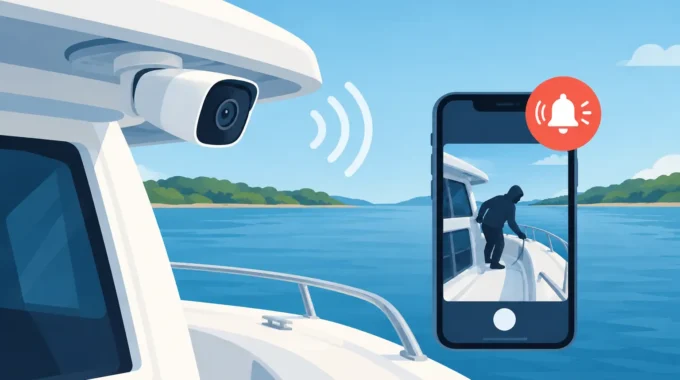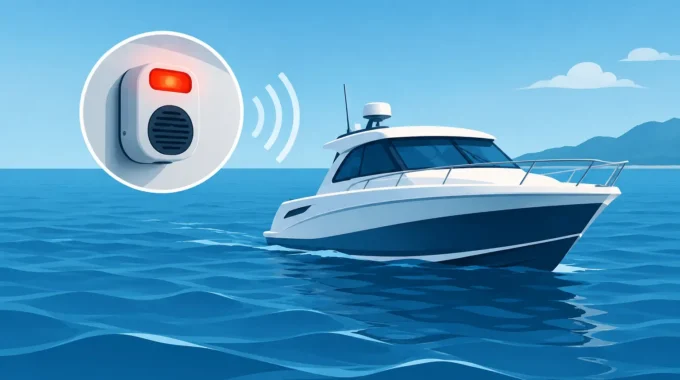
Learn how to set camera alarm snapshots on your boat, so a bilge, power, fire or security alert arrives with visual proof you can act on fast remotely.
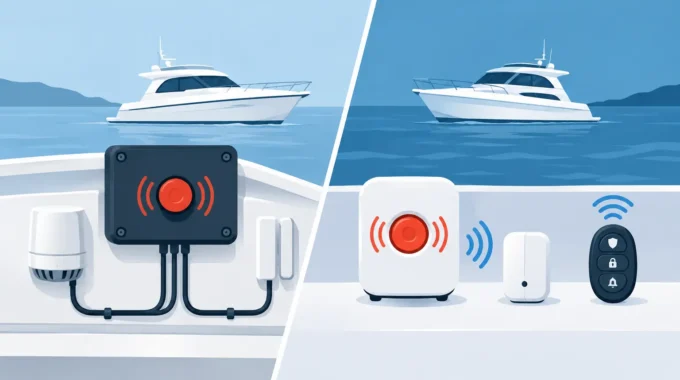
Wired Versus Wireless Marine Alarms Compared
A boat can take on water, lose shore power or break free long before anyone on the marina notices. That is why the choice between wired versus wireless marine alarms deserves more than a quick look at price and installation time. The right system must keep watching when your vessel is unattended, then get a clear warning to the people who can act.
For most yachts, cruisers, houseboats and commercial vessels, a hardwired alarm system provides the dependable foundation. Wireless devices can have a place, particularly where cable runs are difficult, but they introduce their own power, range and maintenance risks. The best decision comes down to what you are monitoring, how long the boat sits unattended and what failure you cannot afford to miss.
First, separate alarm sensors from alarm delivery
The word “wireless” is often used too broadly. A system may have hardwired bilge, smoke, battery and shore-power inputs, yet send alerts wirelessly by 4G SMS, MMS or an app. That is not a compromise. It is often the practical arrangement for an unattended boat: dependable wired detection on board, with immediate remote notification to your mobile.
A fully wireless marine alarm system usually means sensors communicate by radio to a hub, and may be battery powered. That can reduce installation work, but every remote sensor becomes another device needing a healthy battery, reliable signal path and regular testing.
Do not confuse convenient notifications with the way critical risks are detected. A photo sent to your mobile is valuable evidence. It does not help if the bilge sensor failed to report rising water in the first place.
Why wired marine alarms remain the stronger choice
Hardwired sensors draw power from the vessel’s electrical system and communicate through physical cable runs. Installed correctly, they are far less exposed to radio interference, signal range limits and flat sensor batteries.
That matters when the alarm is protecting against slow, expensive failures. A failed bilge pump, a charger fault, a shore-power outage or a refrigeration issue may develop over hours. You need confidence that the sensor will still operate after weeks at a berth, not merely when someone remembers to replace its battery.
Continuous power is a real advantage
Marine alarm hardware should have extremely low current draw, but it still needs a stable power source and appropriate battery protection. With a wired system, there is one central power arrangement to inspect and maintain rather than several scattered batteries hidden in lockers, behind linings or near equipment.
A proper vessel monitor can also alarm on low battery voltage or loss of shore power. This gives you warning before a flat house bank disables the very system intended to protect the boat. It is a practical layer of defence against the common chain of events where shore power fails, batteries discharge, bilge pumping stops and water rises unnoticed.
Physical connections suit critical inputs
Bilge float switches, smoke alarms, door contacts, high-water sensors, engine-space monitoring and shore-power detection are all safety-critical applications. A hardwired connection gives a stable path back to the alarm controller and removes dependence on a sensor’s radio transmission getting through aluminium structures, dense wiring, bulkheads or a crowded marina.
Large vessels make this even more relevant. A catamaran, multi-level cruiser or commercial craft may need several monitoring zones. Cable runs require planning, but they allow every zone to report back to one known controller. On a larger boat, properly installed wiring is usually an asset, not an inconvenience.
Once-per-second monitoring has practical value
An alarm system should not only check in occasionally. Fast, continuous monitoring can identify changing conditions before they become a recovery job. Whether it is an unexpected bilge-pump cycle, movement consistent with anchor drag, pitch and roll beyond a set point, or an intruder opening a hatch, the time between detection and alert matters.
Direct alarms to up to five mobile numbers also reduce the risk of a single missed call becoming a flooded or drifting vessel. Someone must be able to respond, whether that is the owner, marina manager, neighbour, skipper or fleet operator.
Where wireless marine alarms make sense
Wireless sensors are not automatically unsuitable. They can be useful on smaller vessels, temporary installations, difficult retrofits and areas where pulling cable would mean removing finished linings or disturbing older timberwork.
A wireless door contact, motion detector or supplementary temperature sensor can add coverage where no practical cable route exists. They are also useful for testing a monitoring plan before committing to a more extensive installation.
For heritage craft and classic vessels, this can be a sensible way to add a layer of security while preserving original interiors. The condition is simple: the wireless device must not be the only safeguard against a major loss unless its battery, radio range and reporting status are routinely checked.
The hidden costs of wireless convenience
Wireless systems shift work from installation day to every month after it. Each sensor needs a battery replacement schedule. Each radio link needs testing from its actual installed location, with hatches shut and nearby electrical equipment operating. Each device needs protection from moisture, heat and accidental damage.
A weak battery may still make an occasional report but fail when transmitting a high-priority alarm. Radio performance can also change after a boat is refitted, a metal locker is loaded with gear, or a neighbouring vessel creates interference. These are manageable issues, but they are not theoretical ones.
If you choose wireless sensors, record their locations, battery types and replacement dates. Test the alarm delivery to every nominated mobile, not just the local siren. An alarm that sounds on board while you are two hours away is not a complete response plan.
Wired versus wireless marine alarms: compare the whole system
The decision should be based on more than the sensor connection. Ask how the system reacts to power loss, whether it can trigger a siren or lights, how many people receive the warning, whether it provides camera images, and what happens when your boat is outside normal mobile coverage.
For a permanently berthed yacht, hardwired sensors combined with 4G alerts and HD camera confirmation are a strong arrangement. You receive an SMS, MMS or app alert remotely, while the detection equipment remains connected to the vessel. If an intruder boards, visual confirmation helps you decide whether to call marina security, a neighbour or police rather than guessing from a generic movement notification.
For vessels operating in remote waters, offshore or internationally, connectivity needs equal attention. A system that supports Starlink-enabled monitoring can maintain remote oversight beyond normal mobile coverage. That does not replace local alarms and physical wiring, but it extends the distance from which you can receive and act on a problem.
Installation quality is part of reliability
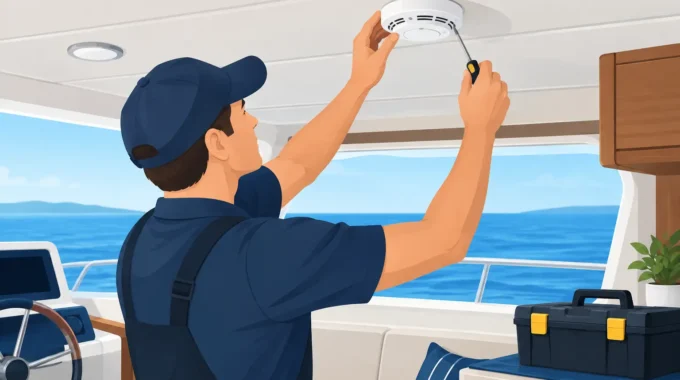
A wired system is only as good as its installation. Marine wiring must be routed and terminated to withstand vibration, moisture, heat and everyday access. Use marine-suitable hardware, protect cables from chafe and ensure sensors are positioned where they will detect the actual risk early.
A high-water sensor mounted too high gives late warning. A smoke detector installed in the wrong space may create nuisance alarms or miss the first signs of fire. A camera pointed at a dark, unlit cockpit cannot confirm much after sunset. The monitoring plan must reflect how your vessel is used, where it is moored and the incidents most likely to cause damage.
Electrical work should also meet applicable marine requirements. Australian vessel owners should look for systems and installation practices aligned with AS/NZS 3004.2:2014 where relevant. This is about more than paperwork. Sound electrical practice reduces the chance that the protection system itself becomes another point of failure.
Build protection around the losses you cannot absorb
Start with the risks that would hurt most: flooding, battery failure, shore-power loss, fire, theft, a vessel going adrift, anchor drag or refrigeration failure. Then decide which inputs must be hardwired and which could reasonably be wireless additions.
For most unattended vessels, make bilge, battery, shore power, smoke and entry monitoring part of the permanent wired core. Add cameras for proof, mobile alerts for fast action and extra wireless devices only where they genuinely improve coverage. Trek Transponder systems are built around this practical model, using marine-rated hardware, low power draw and immediate alerts rather than leaving owners to find out about a problem at their next visit.
Your boat does not need a clever-looking alarm that works only under ideal conditions. It needs monitoring that keeps watch through rain, heat, flat batteries, busy marinas and long periods away. Fit the system for the disaster you want to prevent, then test it before that disaster gets the chance to test you.
Related Posts