Can marine cameras request images when trouble starts? Learn how remote vessel cameras provide visual proof of flooding, theft, fire and power faults fast.
9 Best Yacht Monitoring Features That Prevent Loss
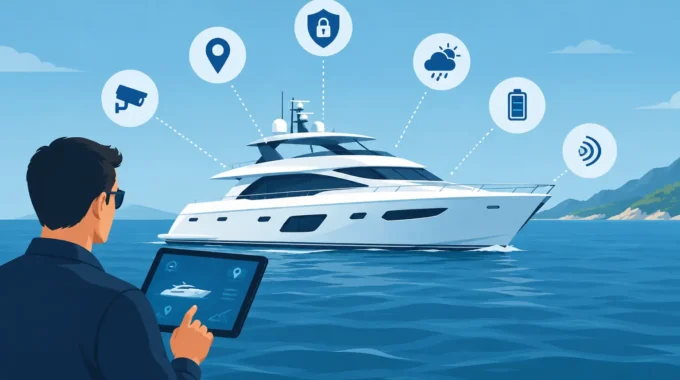
A yacht can be taking on water, losing shore power or dragging its anchor long before anyone at the marina notices. The best yacht monitoring features close that dangerous gap by putting a clear warning, and ideally visual proof, in your hand while there is still time to act.
For a vessel left on a berth, swing mooring or at anchor, monitoring is not a novelty. It is early warning against an insurance claim, a ruined electrical system, a salvage bill or the call every owner dreads: your boat has gone adrift. The right system must detect genuine problems quickly, use very little power, and alert the people who can do something about it.
1. Once-per-second monitoring of critical systems
Slow reporting leaves too much room for damage. A yacht can begin flooding quickly after a hose failure, fitting leak or failed bilge pump. It can also move unexpectedly when a mooring line parts or an anchor starts to drag in a squall.
Look for monitoring that checks inputs once per second rather than at wide reporting intervals. Fast detection matters most when the risk is escalating, such as rising bilge water, fire, an intruder entering the vessel or excessive roll. A system that knows a condition has changed should raise the alarm immediately, not wait until the next scheduled update.
The trade-off is that frequent monitoring must be engineered for low current draw. A yacht alarm that flattens batteries while protecting them has missed the point. Marine-specific hardware should remain economical to run while the vessel is unattended for weeks or months.
2. Direct alarms to multiple mobile numbers
An alert sent to one owner is a single point of failure. You may be on a flight, out of coverage, asleep after a night passage, or simply unable to reach the boat quickly. The best systems send alarms directly to several nominated mobiles so a partner, marina contact, skipper, neighbour or vessel manager can respond.
SMS remains particularly useful because it does not rely on someone having an app open or noticing a push notification. MMS image alerts add another layer of certainty. For everyday oversight, an app can show live status and history; for a genuine emergency, a direct message gets attention.
Set the contact list deliberately. Five people receiving every minor reminder can cause alarm fatigue, while too few recipients can leave a serious incident unattended. Use escalation based on the risk and make sure every nominated person knows where the keys, shore-power lead and emergency contacts are kept.
3. Bilge water and bilge-pump failure detection
Bilge monitoring belongs at the top of every yacht owner’s list. Water ingress is not always dramatic at first. A dripping shaft seal, split washdown hose, failed through-hull fitting or rainwater issue can fill a bilge slowly enough to escape notice, then overwhelm the pump or damage equipment below the sole.
A proper setup should identify high water and, where required, bilge-pump operation or abnormal pump cycling. Repeated pump activity can indicate a leak before the water reaches a high-level alarm. Conversely, a high-water condition with no pump activity may point to a failed pump, blocked strainer, blown fuse or flat battery.
Sensor placement is critical. A float switch fitted too high provides little warning margin; fitted too low, it may nuisance-alarm from normal movement. Have the system installed and tested around the yacht’s actual bilge layout, including separate compartments where water cannot freely move between them.
4. Shore-power and battery protection
A disconnected shore-power lead, tripped marina breaker or failed charger can turn into dead house batteries, spoiled refrigeration and a disabled bilge pump. On a yacht with refrigeration, battery banks and sensitive electronics, shore-power loss needs an immediate alert, not discovery at the next weekend visit.
The useful feature is not merely knowing that 240V supply has disappeared. It is understanding what happens next. Battery voltage monitoring shows whether the charger is maintaining the bank, whether a load is draining it, and whether a voltage threshold needs urgent attention.
Australian installations should be assessed with marine electrical safety in mind. Equipment designed to comply with AS/NZS 3004.2:2014 provides a far better starting point than adapting consumer-grade security gear to a wet, vibrating marine environment. The alarm system should also be suitably protected from moisture, with IP67-rated hardware where exposure demands it.
5. Fire and smoke alarms that reach you off the boat
A conventional smoke alarm can be heard throughout a cabin, which is useful only if someone is aboard or nearby. An unattended yacht needs the alarm to travel beyond the vessel. Remote fire and smoke alerts give an owner or marina contact a chance to call emergency services, alert the marina and direct responders to the correct berth.
Fire detection should be treated as part of a wider response plan. Know the vessel name, berth number, marina emergency number and location of battery isolators and fuel shut-offs. A remote alert cannot extinguish a fire, but it can save critical minutes.
Avoid assuming one detector covers every risk. Engine spaces, galleys, accommodation areas and electrical lockers have different conditions. The appropriate sensor type and location depend on the vessel and should be selected to reduce false alarms without leaving high-risk areas unprotected.
6. Intruder detection with HD camera proof
An intrusion alert without verification can leave you guessing whether a hatch was opened by an intruder, a contractor, a friend or wind movement. Camera integration changes the response. An alarm-triggered HD image can show whether someone is aboard, whether a hatch has been forced, or whether the situation is a false alarm.
The ability to request images yourself is equally practical. Before driving to the marina after an alert, you can check the cockpit, companionway or cabin view. For fleet operators and owners living interstate or overseas, that evidence can prevent a wasted call-out or confirm that immediate action is required.
Cameras are not a substitute for physical security. Use them with hatch alarms, door contacts, motion detection, a siren and visible deterrents. A loud local alarm and flashing light may push an opportunistic thief away; a mobile alert and image give you the evidence to follow up.
7. Anchor drag, adrift and motion alerts
A yacht does not have to sink to suffer a devastating loss. A parted mooring line, failed cleat, dragging anchor or storm-driven drift can put it into another vessel, rocks, a channel marker or a bridge piling. By the time someone sees it from shore, the damage may already be extensive.
GPS-based geofencing can alert you when the yacht leaves a defined area. It needs sensible setup. A tight boundary may create alerts from normal swing at anchor, tide movement or GPS variation; too broad a boundary may not warn you until the yacht is already in trouble. Set the zone for the mooring arrangement and revise it when conditions change.
Pitch and roll monitoring adds useful context, especially on exposed moorings, catamarans and vessels secured in rough weather. Excessive movement can signal a deteriorating situation, a dragging anchor or conditions likely to cause damage to gear and fittings.
8. Refrigeration and equipment-failure alerts
Refrigeration failure may not threaten the hull, but it can quickly create a costly clean-up, waste provisions and leave charter guests or crew without essential stores. More importantly, a failed refrigerator can reveal a larger electrical issue: lost shore power, a weak battery bank, charger failure or tripped circuit.
Temperature monitoring gives you a direct warning before contents are lost. It is also valuable for commercial vessels, heritage craft and boats with sensitive equipment or stores that need stable conditions. Pair temperature alerts with power and battery monitoring so the likely cause is easier to identify.
The same approach applies to other critical equipment. A monitoring system should be able to accept the inputs that matter to your vessel, rather than forcing every yacht into the same generic configuration.
9. Reliable connectivity beyond marina Wi-Fi
Marina Wi-Fi is often patchy, overloaded or unavailable when weather is at its worst. A vessel-monitoring system needs a dependable communications path independent of the internet connection on your berth. 4G alerts provide practical coverage for most Australian boating areas and can deliver SMS, MMS and app updates directly to the people who need them.
For yachts operating offshore, in remote regions or internationally, global connectivity becomes more relevant. A Starlink-enabled monitoring option can keep an owner informed where terrestrial mobile service is not available. It depends on your cruising pattern and power budget, but for long-range vessels it removes a major blind spot.
Build a system around the risks your yacht actually faces
There is no value in fitting every possible sensor if the system is difficult to use, poorly installed or unable to contact you when it matters. Start with the risks that can cause immediate loss: bilge water, shore-power failure, battery condition, fire, intrusion and the yacht leaving its safe location. Then add camera verification, refrigeration monitoring and motion alerts according to how and where you use the vessel.
Trek Transponder systems are built for this job: Australian-made marine monitoring with IP67 hardware, low power draw, direct alarms to up to five mobiles and camera images that replace uncertainty with evidence. Before the next storm, long trip away or quiet month on the berth, make sure your yacht can tell you when something is wrong – while there is still a yacht to save.
Related Posts