Why do boats sink? Learn the failures that flood unattended vessels, and the monitoring alerts that help owners act before a minor fault becomes loss.
Best Sensors for Unattended Boats in Australia
A boat left on a mooring, in a marina berth or on a trailer does not stop being exposed to risk when you lock the cabin. A failed shore-power lead, a leaking hose or a flat battery can turn into a major insurance claim before the next weekend. The best sensors for unattended boats are the ones that detect the first sign of trouble and put a clear alarm in your hand while there is still time to act.
For most Australian owners, one sensor is never enough. A high-water alarm may save a vessel from flooding, but it cannot tell you that the fridge has failed, the shore supply has dropped out, or someone is opening the companionway at 2 am. Effective remote protection starts by matching sensors to the way your vessel is stored, powered and used.
Best sensors for unattended boats: start with the real risks
The priority is not fitting every available device. It is covering failures that can cause rapid damage, danger to neighbouring boats or a costly recovery. On a yacht on a swing mooring, bilge level, battery condition, movement and anchor drag may lead the list. A marina-based cruiser with permanent shore power needs close attention to AC supply loss, charging faults, refrigeration and unauthorised entry. Commercial and hire vessels often need both, along with reporting that lets an operator watch several boats without guessing.
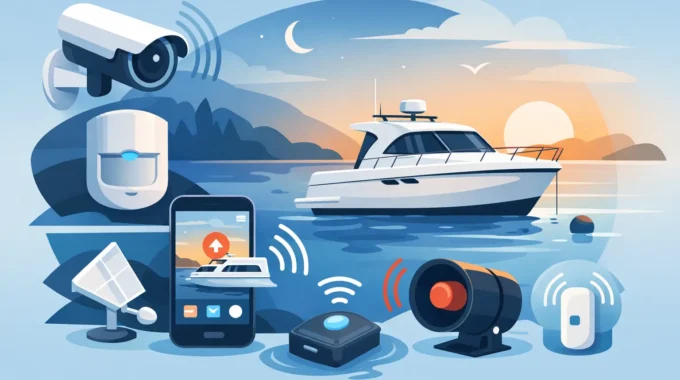
A worthwhile monitoring system should also do more than sound an alarm aboard an empty vessel. If nobody is there to hear it, a siren is only a local deterrent. Choose sensors connected to a marine alarm controller that can send immediate SMS or app alerts to the people able to respond. Camera confirmation is equally valuable. A photo of a rising bilge, open hatch or person in the cockpit helps you decide whether to call a marina manager, neighbour, contractor or emergency service.
High-water and bilge-pump sensors
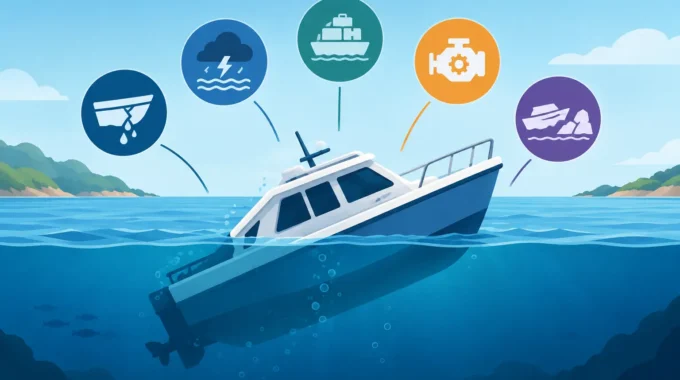
Flooding is the first risk to cover. A small leak from a failed seacock hose, stern gland, washdown fitting or rainwater ingress can become serious quickly, particularly if the bilge pump is flat, blocked or unable to keep up. Fit a dedicated high-water float or electronic water sensor above the normal pump activation level. This provides a separate warning before water reaches wiring, engines or cabin sole level.
Do not rely solely on the standard bilge-pump float switch. It may tell the pump to run, but it does not necessarily tell you the pump has been cycling for hours, has failed, or cannot overcome the incoming water. Monitoring the pump circuit is useful because unusually long or frequent pump operation is often the earliest warning of a leak.
Placement matters. Put the high-water sensor where it will detect a genuine problem, not every cup of harmless bilge water. On larger boats with separated compartments, consider sensors in each critical area, including engine spaces, forward compartments and low points behind bulkheads. A single sensor in the wrong bilge can leave the actual leak undetected.
Battery-voltage and shore-power sensors
A vessel can be physically dry and secure yet still be one flat battery away from trouble. Battery monitoring should alert you to low DC voltage before the bilge pump, alarm system, refrigeration or automatic charging arrangement stops working. It can also reveal charging faults early, before batteries are damaged by prolonged undercharge or overcharge.
Look for a system with low current draw. A monitoring device that drains the battery it is supposed to protect is no solution for a boat left unattended for weeks. You also need configurable voltage thresholds. A healthy lithium bank, AGM bank and ageing lead-acid house bank do not behave identically, so alarms must be set to suit the battery chemistry and normal operating voltage.
For berthed boats, shore-power loss deserves its own alarm. A tripped marina pedestal breaker, failed charger, damaged lead or marina outage can leave refrigeration off and batteries discharging without anyone noticing. The critical detail is speed. If an alert arrives only after the battery bank has been depleted, the warning has done its job too late.
Fire, smoke and gas sensors
Fire sensors are essential where a vessel has shore power, chargers, inverters, refrigeration equipment, cooking appliances or ageing electrical wiring. A marine-rated smoke or heat sensor can give early warning of electrical overheating or a cabin fire before it develops into a total loss. Heat detection is particularly useful in engine spaces where dust, fumes or humidity may make a conventional smoke detector unsuitable.
The right choice depends on the compartment. Smoke detection is generally appropriate in accommodation spaces, while heat sensing can suit machinery areas. If gas appliances are installed, add suitable LPG or petrol vapour detection at the lowest practical point, because heavier-than-air vapours collect in bilges and enclosed spaces.
These sensors are not a substitute for compliant wiring, maintained extinguishers and regular inspections. They are the last early warning when a fault begins after you have gone home. Configure alarms to notify more than one trusted mobile number. One owner may be overseas, driving or out of coverage when the message arrives.
Intrusion, hatch and camera sensors
Break-ins do not always begin with smashed glass. An intruder may board from a pontoon, lift a hatch, open a locker or enter through an unsecured companionway. Magnetic reed switches on doors, hatches and lockers give a direct alert when protected access points are opened. Motion detectors add another layer inside cabins or cockpits, though they need careful placement to avoid false alarms from curtains, insects or a swinging fender visible through a window.
A triggered HD marine camera changes the quality of the response. Instead of receiving a vague security alarm, you can see whether a hatch has blown open in bad weather, a marina worker has boarded with authority, or an intruder is on deck. User-requested images are also useful after a storm or when you simply want to check that covers, lines and solar panels are where they should be.
Cameras should support, not replace, physical security. Good locks, secured outboards, marked equipment and sensible berth lighting still matter. The camera’s job is to provide evidence and situational awareness when nobody is aboard.
Movement, anchor-drag and adrift sensors
A boat that breaks free can damage itself and every vessel around it. This risk is not limited to anchorages. Failed mooring lines, worn shackles, a dragging anchor, storm surge or an incorrectly secured trailer can all put a vessel in motion.
GPS position monitoring can alert you when a boat leaves a defined area. It is particularly useful for tenders, trailerable boats and vessels at anchor. But position alone may be slow to identify a developing problem. Pitch, roll and movement sensors can raise an alarm when a vessel is experiencing unusual motion, impact or heel, potentially signalling severe weather, boarding, a collision or a line failure.
Set geofence and movement thresholds realistically. A boat on a mooring naturally swings with tide and wind, while a vessel in a marina should barely move from its berth. Over-sensitive settings create nuisance notifications, and nuisance notifications train owners to ignore the alarm that eventually matters.
Refrigeration and equipment-failure monitoring
For cruisers stocked for a trip, charter boats and commercial vessels, refrigeration failure is more than an inconvenience. It can mean spoiled provisions, lost stock, melted ice and a long clean-up. Temperature sensors in fridges, freezers and critical lockers warn you when cooling performance changes before everything thaws.
The same approach applies to other equipment. Monitor a freezer, bait tank pump, ventilation fan, machinery-space temperature or any switched circuit that causes expensive consequences when it stops or runs unexpectedly. The best setup is built around consequences, not gadgets. Ask one practical question for each system: if this fails at midnight on a Tuesday, how quickly do I need to know?
What makes a sensor system dependable offshore and ashore?
Marine conditions punish poor hardware. Salt air, condensation, vibration and washdowns quickly expose systems designed for dry garages. Use equipment with suitable marine protection, including IP67-rated components where they may face moisture or spray. Check that wiring, connectors, fuses and enclosure placement are appropriate for the vessel, not merely convenient during installation.
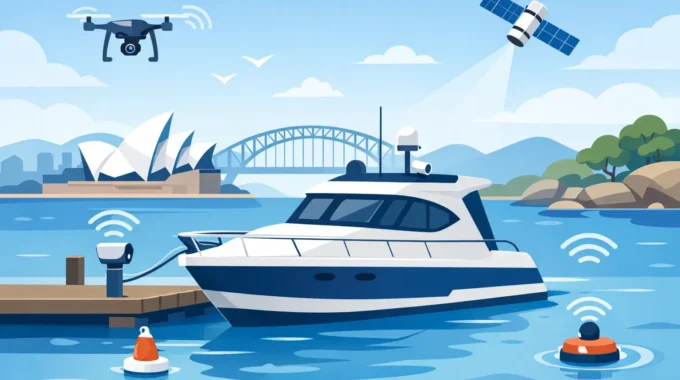
Communications are equally important. A 4G system that sends direct SMS or app alerts is practical for most Australian marinas and coastal areas. For offshore, remote or international cruising, satellite-backed connectivity can close the coverage gap. A Starlink-enabled setup may be the better choice where mobile coverage is unreliable, provided the power and data arrangement suits the vessel.
Alert delivery should be immediate, clear and shared. Systems that can notify up to five mobile numbers reduce the chance of a single missed message becoming a disaster. Once-per-second monitoring is valuable for rapidly changing events such as water ingress, power loss and movement, but it must be paired with sensible alarm settings and a response plan.
Build a response plan before the alarm arrives
An alarm without a plan creates panic. Keep the marina office, local shipwright, electrician, neighbour or caretaker details current. Make sure at least one authorised person can access the boat, knows where the isolation switches are, and understands whether to reset a breaker, start a pump, move the vessel or call for help.
For larger yachts, catamarans and fleets, multiple monitoring units may be needed to cover separated hulls, machinery areas and accommodation spaces. Professional installation is often worthwhile where 240V shore power, complex battery banks or critical commercial operations are involved. Select equipment designed for marine use and installed to applicable requirements, including AS/NZS 3004.2:2014 where relevant.
Trek Transponder systems bring alarm hardware, cameras, mobile alerts and vessel monitoring together so an owner can see the warning, assess the situation and act quickly. Fit the sensors that reflect your vessel’s real exposure, test every alarm before leaving the berth, and treat each notification as the opportunity to prevent the damage you cannot afford to discover later.
Related Posts