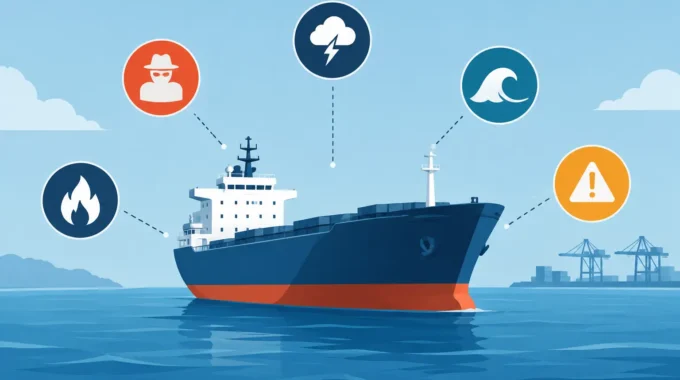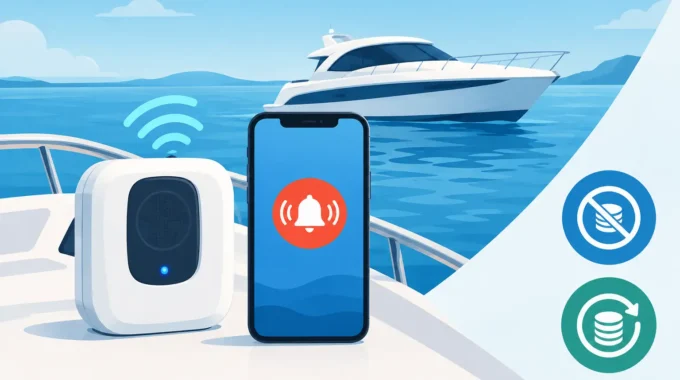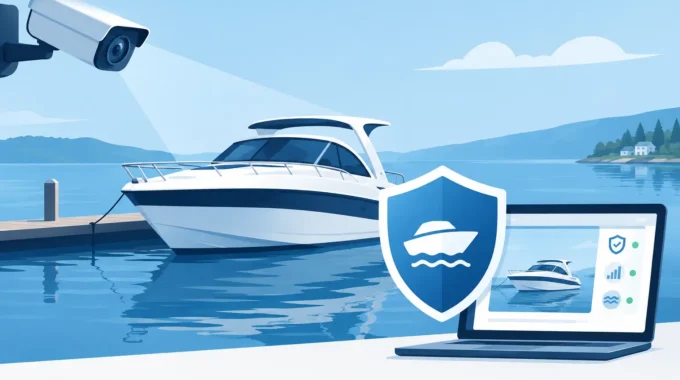
Five risks unattended vessels face can escalate fast. Learn what to monitor remotely to prevent flooding, fire, theft and costly damage at your berth.

Vessel Tracking Is Not Enough When Alarms Matter
A dot on a map will not tell you that your bilge pump has been running for an hour, shore power has failed, or smoke is building below deck. Vessel tracking is valuable, particularly when your boat is on a swing mooring, at anchor or operating away from home. But location alone is not protection.
For an unattended yacht, cruiser, houseboat or work vessel, the serious losses usually begin with a fault that nobody sees. A failed charger flattens the batteries. A hose clamp lets go. Heavy rain finds a blocked drain. A fridge failure ruins stock. A dragged anchor puts the vessel into shallow water, another boat or the rocks. By the time somebody notices, the repair bill, insurance claim and lost boating time can be substantial.
The right question is not simply, “Where is my boat?” It is, “What is happening on board right now, and will I know early enough to act?”
What vessel tracking can tell you
At its most basic, vessel tracking uses position data to report where a vessel is and, depending on the system, where it has travelled. This is useful for owners checking on a boat from home, fleet operators coordinating multiple vessels, and anyone concerned about theft or a boat going adrift.
A properly configured tracking system can alert you when a vessel leaves a defined area. That makes geofencing particularly useful for boats in marinas, on moorings and at anchor. If the boat moves outside its permitted radius, you receive an alarm rather than discovering the problem when you arrive at the berth.
Position information also helps after an incident. If a vessel breaks free, is stolen, or drags anchor overnight, an accurate location gives you a starting point for recovery and can help you direct marina staff, a contractor or emergency services.
But GPS position has limits. It cannot see water rising in the bilge. It cannot confirm whether shore power is charging the batteries. It cannot tell you whether someone is climbing aboard. For real unattended-vessel protection, tracking needs to sit alongside continuous onboard monitoring.
Why vessel tracking alone leaves costly gaps
A boat can remain exactly where you left it while a major failure develops. In fact, many of the most expensive marine incidents happen at the dock.
Consider a shore-power loss during a hot weekend. The vessel may still appear safely tied up in the marina, but battery voltage can fall, refrigeration can stop and bilge pumps may lose the power they need. On a larger vessel with multiple battery banks and systems, the consequences can spread quickly.
Or consider a slow freshwater or seawater ingress. A GPS tracker reports a normal position while the bilge pump cycles more often than it should. If the pump eventually fails, a small leak becomes a sinking risk. The same applies to smoke, fire, intrusion and excessive pitch and roll. Location is only one piece of the picture.
This is why owners should treat vessel tracking as one sensor within a broader alarm strategy. The system needs to detect the event that matters, notify the right people immediately and provide enough information for a sensible response.
The alarms that matter when nobody is aboard
The most useful vessel monitoring systems watch the conditions that lead to preventable loss. For most private and commercial vessels, that means battery voltage, bilge water level, shore power, fire or smoke, intrusion, anchor drag and vessel movement.
Battery monitoring is not just about avoiding a flat start battery. Low voltage can signal failed shore power, charger issues, battery-bank failure or abnormal current draw. Early warning gives you the chance to get somebody aboard before pumps, alarms and communications are compromised.
Bilge monitoring needs the same urgency. A high-water alarm is vital, but monitoring pump activity can provide an earlier warning that water is entering the boat or a float switch is sticking. Repeated pump operation should never be ignored simply because the boat still looks level from the dock.
For vessels on anchor, movement and anchor-drag alarms provide a separate layer of protection. Conditions can change rapidly after dark. A defined safe area, paired with a fast alert, gives the owner or skipper a chance to respond before the vessel ends up aground or collides with another boat.
Intrusion alarms and cameras also change the quality of your response. An alarm tells you something has happened. An image from an HD marine camera can help confirm whether it is an unauthorised person, a contractor, a loose cover or another cause. That means less guesswork and faster decisions.
Speed of detection changes the outcome
Marine damage rarely waits for convenient hours. A flooded boat, an overheating charger or a dragged anchor needs an alert when the event happens, not when somebody next opens an app.
Once-per-second monitoring is significant because it reduces the time between a fault occurring and the system recognising it. That matters for rapidly changing events, including intrusion, movement, pitch and roll, and a vessel breaking free. It also allows the system to distinguish a momentary fluctuation from an alarm condition that requires action.
The alert method matters just as much. A notification trapped in an app is not enough if the owner has poor internet coverage, has notifications muted, or does not check the app for several hours. Direct SMS or MMS alerts to up to five mobile numbers create a practical escalation path. The owner, marina manager, family member, skipper or maintenance contractor can all receive the warning.
That does not mean every alarm needs the same response. A brief shore-power interruption may warrant a check. A high bilge-water alarm or smoke detection requires immediate action. Configure each input with clear alarm logic, sensible contacts and an agreed response plan before you leave the vessel unattended.
Cameras provide confirmation, not just notification
A remote camera should not be treated as a novelty. In a real alarm event, visual confirmation can save critical time and prevent unnecessary call-outs.
If a bilge or intrusion alarm is triggered, an image sent to your mobile gives you useful context. If you receive an anchor-drag warning, a camera view can help assess the vessel’s orientation and conditions on deck. You can also request images when you want to check on the boat without travelling to the marina.
Camera placement is important. Cover entry points, the cockpit, engine space access or any area relevant to the risk you are monitoring. On a larger yacht, catamaran or commercial vessel, one camera and one monitoring point may not be enough. Multiple monitoring units can be positioned to cover separate hulls, machinery spaces or accommodation areas.
Connectivity must suit where your boat goes
For a marina-based vessel, 4G connectivity can provide reliable remote alarms and status reporting where mobile coverage is available. It keeps the arrangement straightforward and allows alerts to reach nominated mobiles without relying on a nearby person noticing a siren.
However, boats do not always remain within mobile range. Offshore cruisers, remote commercial vessels and owners who travel extensively need to consider what happens beyond the terrestrial network. A Starlink-enabled monitoring option provides a practical path for receiving alarms and checking vessel status in locations where standard mobile coverage cannot be relied upon.
The right connectivity setup depends on your operating area, the vessel’s power capacity and how often it is unattended. A boat on a metropolitan berth has different needs from a cruising yacht in northern Australia. The principle remains the same: an alarm system is only useful if it can deliver the message when you need it.
Marine hardware has to survive the environment
A consumer tracker designed for a car or toolbox is not a substitute for marine-specific monitoring hardware. Salt air, vibration, moisture, temperature changes and long periods without attention expose weak equipment quickly.
Choose hardware built for the marine environment, with IP67-rated protection where appropriate and extremely low current draw. Low power consumption is essential because an alarm system should protect the battery bank, not become another source of drain while the boat is unattended.
Installation quality is equally important. Sensors must be fitted where they can detect the intended risk, cable runs need proper protection, and alarm outputs should be configured for the vessel’s operating reality. Relay capacity, sirens, lights, cameras and external sensors all need to work together without compromising existing systems.
For Australian vessels, electrical work should also be considered against relevant requirements, including AS/NZS 3004.2:2014 where applicable. This is not paperwork for its own sake. Correct marine electrical design helps prevent faults in the very systems intended to protect your boat.
Build a response plan before the alarm arrives
The best system is only as useful as the people responding to it. Before leaving your vessel, confirm who receives each alert and what they are authorised to do.
For example, a battery or shore-power alert may go to the owner and marina electrician. A high-bilge alarm may also go to a nearby trusted contact who can immediately inspect the boat. A break-and-enter alarm may require a security response and a camera image sent to your mobile. Keep contact numbers current, test the alert chain and make sure a keyholder can gain access when needed.
Trek Transponder systems are designed around this practical reality: direct alarms, visual evidence and continuous remote oversight for the risks that can ruin a vessel while nobody is on board. Whether you fit the system yourself or use a preferred installer, configure it around your boat, your location and the people who can act.
Your vessel may be out of sight, but it should never be out of warning. Set up tracking, monitor the conditions that cause real damage, and make sure the right person gets the alarm before a small fault becomes a marine disaster.
Related Posts