Learn how to set camera alarm snapshots on your boat, so a bilge, power, fire or security alert arrives with visual proof you can act on fast remotely.

Marine Security That Watches When You Cannot
A boat can look perfectly safe from the marina car park, then take on water for hours after a failed bilge pump, flat battery or failed shore-power connection. By the time someone notices, the repair bill, insurance claim and lost time can be severe. Effective marine security gives you a warning while there is still time to act – not when your vessel is already on the bottom, adrift or stripped of gear.
For owners of yachts, cruisers, houseboats and commercial vessels, the real risk is often the time spent away from the boat. A vessel left at a berth, on a swing mooring or in storage is exposed to changing weather, failing equipment and unwanted visitors. Security is not just an alarm for a break-in. It is a way to keep watch over the systems that keep your boat afloat.
What marine security should protect against
A worthwhile system starts with the risks that cause the most expensive damage. Intruders are an obvious concern, particularly where electronics, tenders, tools and personal gear are visible. But theft is only one part of the problem.
Water ingress can begin with a leaking hose, rain entering through an open hatch, a failed gland or a bilge pump that has stopped working. Shore-power loss may leave batteries uncharged and refrigeration off. A battery failure can disable pumps, lights and security equipment at the exact time you need them. Smoke and fire need immediate attention, while a dragged anchor or broken mooring can turn an unattended vessel into a danger to itself and every boat around it.
The right protection also considers the less dramatic warning signs. Repeated pump activity can point to a developing leak. A refrigeration alarm can save valuable stores or protect a commercial vessel’s operating schedule. Excessive pitch and roll may indicate a vessel is in trouble at anchor or being battered in conditions that need checking.
These are not hypothetical problems. They are common failure points on boats exposed to salt, heat, storms and long periods without anyone aboard.
Marine security needs to deliver an alarm you will see
An alarm that only sounds on the boat is of limited use when you are at home, at work or interstate. Remote notification is the difference between knowing about a problem early and hearing about it from a marina manager after the damage is done.
Look for direct alerts sent to nominated mobile numbers by SMS or MMS, rather than relying solely on a notification that can be missed in a crowded app feed. Sending alarms to up to five people gives owners, crew, family members and managers a clear chain of response. If one person is unavailable, someone else can check the vessel, contact the marina or arrange assistance.
Speed matters as well. Once-per-second monitoring can identify a change as it happens, whether that is a bilge level rising, shore power dropping out or a door opening. A delayed report may be acceptable for routine battery status, but it is not enough for flooding, fire or a vessel going adrift.
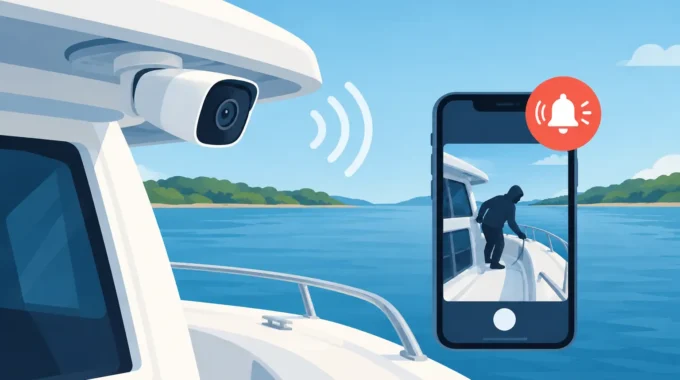
Camera confirmation is equally valuable. An alarm tells you something has changed. An HD image can help show whether a hatch is open, a person is on board, water is visible, or your boat is sitting normally at its berth. The ability to request an image when you want to check the vessel adds practical reassurance without needing to drive to the marina for every concern.
Choose hardware built for the marine environment
Consumer home-security equipment is rarely suited to a wet, vibrating, salt-laden boat. A marine system should use properly protected hardware, including IP67-rated components where exposed conditions demand it. It must tolerate the environment it is installed in and continue working without placing unnecessary drain on the vessel batteries.
Low current draw is not a minor specification. Security equipment that consumes too much power can create the very battery problem it is supposed to report. This is especially relevant for vessels on moorings, boats with limited solar charging, and vessels left through periods of poor weather.
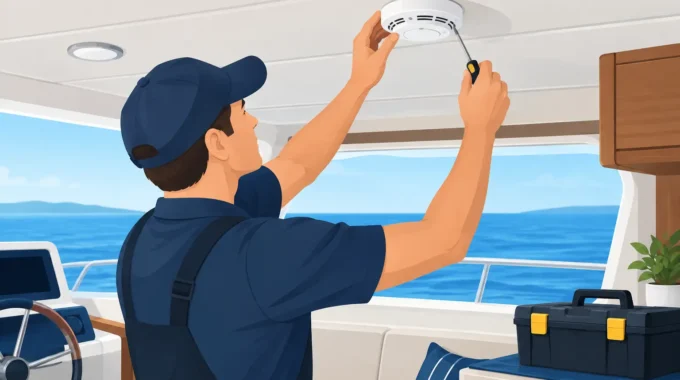
Installation quality matters just as much. Sensors need to be positioned where they can detect a genuine issue without creating nuisance alarms. A high-water sensor belongs where it will identify dangerous water levels early. Door, hatch and motion monitoring should account for normal vessel movement. Smoke detection must be selected and placed with the vessel layout, engines and accommodation spaces in mind.
For larger boats and catamarans, one central unit may not cover every compartment. Multiple monitoring units can be the sensible option for separate hulls, machinery areas, storage spaces or distant accommodation zones. The design should match the vessel, rather than forcing every boat into the same layout.
Protect the vessel systems that fail quietly
The most useful remote monitoring does more than report intrusion. It watches the systems that can fail silently between visits.
Battery voltage monitoring can flag charging problems before batteries are ruined or vital equipment stops working. Shore-power monitoring alerts you when a marina supply trips, a lead is disconnected or a pedestal fails. Bilge-pump monitoring can show whether the pump is running excessively, while high-water detection provides an urgent warning if the pump cannot keep up.
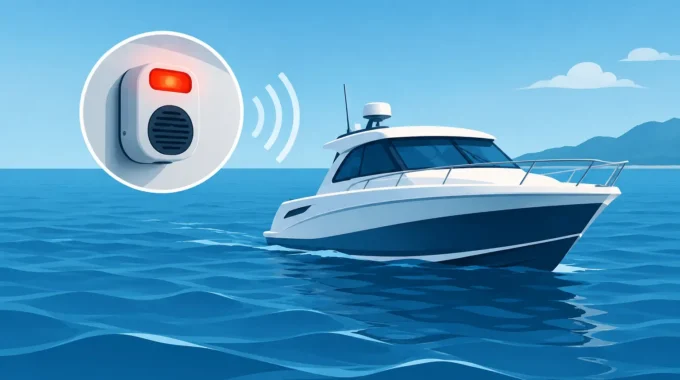
Fire and smoke detection should trigger an immediate response plan. Depending on the vessel and installation, alarms can also activate a siren, light or other connected equipment through relay outputs. This provides a local deterrent and can draw attention from people nearby while remote alerts are being sent.
Movement monitoring has a different purpose at anchor, on a mooring or when a vessel is stored on a trailer. Geofence and location functions can identify unexpected movement. Pitch and roll monitoring can help reveal conditions that warrant a check, particularly during strong winds or when a boat has broken free from normal restraint.
No system removes the need for maintenance. It does, however, make maintenance more targeted. Instead of visiting the boat hoping everything is fine, you can respond to a specific warning while the fault is still manageable.
Connectivity should match where your boat goes
For many Australian boat owners, 4G connectivity is a practical and economical way to receive remote alerts. It works well where mobile coverage reaches the marina, mooring or storage site. Before fitting any system, check the actual signal at the berth, not just the coverage map for the suburb.
For vessels operating beyond reliable mobile coverage, satellite connectivity can be the better choice. A Starlink-enabled monitoring option can provide remote oversight for offshore cruising, remote anchorages and vessels travelling internationally. It depends on your operating area, power setup and communication requirements, but global connectivity removes a major blind spot for owners who cannot rely on a local mobile network.
The interface should remain simple when an alarm occurs. You need to know what triggered, where it happened and what action is required. A real-time vessel monitoring app is useful for checking status, while SMS and MMS alarms offer a direct warning path that does not require you to be actively watching a screen.
Build an alarm response plan before you need one
Marine security is only as effective as the response it triggers. Before you leave the vessel, decide who receives alarms, who has keys, who can access the berth and who can contact a marine electrician, mechanic, marina office or emergency service if required.
Set sensible alert thresholds and test every sensor after installation. Check the bilge alarm, shore-power alarm, battery alerts, hatch contacts and cameras. Confirm images reach each nominated mobile. Test again after changing batteries, fitting new equipment or moving the vessel to another berth.
For commercial operators, heritage vessels and hire fleets, document the response process. A clear escalation path avoids confusion when an alarm comes through after hours. For private owners, even a simple arrangement with a trusted nearby contact can prevent a small fault becoming a major salvage job.
Trek Transponder systems are designed around this practical reality: marine-specific monitoring, low-power operation, direct alerts and visual proof when something changes. Australian-made equipment and compliance with AS/NZS 3004.2:2014 provide further confidence for owners who expect their electrical equipment to be fit for marine service.
Your boat does not need attention every minute of every day. It does need a way to call for help the moment conditions change. Fit monitoring before the next storm, power failure or unwanted visitor gives you that call early enough to make a difference.
Related Posts