Five risks unattended vessels face can escalate fast. Learn what to monitor remotely to prevent flooding, fire, theft and costly damage at your berth.

Yacht Electrical Monitoring Guide for Owners
A yacht can look perfectly secure from the marina car park while its batteries are draining, shore power has failed or a bilge pump is cycling itself to death. By the time someone notices, the batteries may be ruined, refrigeration lost, alarms silent and water already rising. This yacht electrical monitoring guide explains what needs watching, why it matters and how to receive a warning while there is still time to act.
Why yacht electrical faults become expensive fast
Most electrical failures do not begin with smoke or a dramatic blackout. They begin quietly: a marina pedestal trips, a charger stops charging, a battery connection corrodes, or a pump runs more often than normal. An unattended vessel gives these small faults time to become major damage.
Shore power loss is a common example. Without mains supply, the battery charger cannot maintain the house bank. Refrigeration may stop. If the vessel relies on electrical bilge pumps, battery capacity becomes a safety issue rather than a convenience. On a hot Australian day, a failed fridge can also leave a costly mess long before the owner next visits.
A monitoring system does not replace proper wiring, maintenance or a compliant installation. It gives the owner timely information when the electrical system stops behaving as it should. That difference can be the difference between resetting a breaker and making an insurance claim.
The electrical risks worth monitoring
The right setup depends on the vessel, its berth and what remains operating when nobody is aboard. A day yacht on a trailer has different needs from a liveaboard cruiser in a marina, a catamaran on a swing mooring or a commercial vessel between jobs. Start by identifying the circuits and conditions that can create loss, damage or danger.
Shore power and charger status
Monitor the presence of shore power, not simply whether a charger appears to be installed. A disconnected lead, tripped marina supply, failed RCD, damaged inlet or faulty charger can all produce the same result: batteries are no longer being maintained.
Set the alarm to tell you immediately when shore power is lost, then investigate before the battery bank drops too far. Some owners choose a short delay to avoid nuisance alarms during planned marina works. That is sensible only if the delay cannot leave the vessel without charging for hours.
Battery voltage and charging health
Voltage monitoring is the foundation of remote electrical oversight. It can reveal a flat battery, failed charger, charging issue or unexpected overnight load. However, voltage is a clue, not a complete diagnosis. A battery can show a respectable voltage at rest yet have little usable capacity under load.
Use alarm thresholds that suit your battery chemistry and electrical arrangement. Lead-acid, AGM, gel and lithium banks should not be treated as identical. Your battery supplier, charger manufacturer and qualified marine electrician should guide the final settings.
Watch the trend as well as the alarm. A steady, unexplained voltage decline points to a load or charging problem. A sudden drop may indicate a high-current device, loose connection or a battery nearing failure. If the vessel has separate engine-start and house banks, monitor both where practical. A healthy house bank does not help if the engine start battery is flat when you need to move the boat.
Bilge pump operation and high-water alarms
A bilge pump is an electrical load with a job that cannot wait. Frequent pump operation may mean rainwater ingress, a leaking hose, a failed shaft seal or water entering through a fitting below the waterline. It may also mean a stuck float switch or a pump that is consuming battery power without moving water.
Monitor high water independently from pump activity. A pump-run alert tells you something has happened; a high-water alarm tells you the vessel may already be losing the battle. Where the system permits, use both. A properly installed high-water sensor and immediate mobile alert can provide the early warning needed to organise a marina check, neighbour or contractor.
Refrigeration and critical onboard loads
Fridges and freezers are often overlooked until the marina supply trips. On cruising yachts, refrigeration protects provisions. On charter, heritage or commercial vessels, it may protect stock, equipment or temperature-sensitive supplies.
Monitoring the supply or circuit condition of refrigeration helps, but it has limits. A circuit can be live while a compressor has failed. For high-value loads, combine electrical monitoring with temperature monitoring so you know whether the equipment is actually doing its job.
Other circuits worth considering include freshwater pumps, communications equipment, navigation electronics left on for security, emergency lighting and fire detection. Do not monitor every circuit simply because you can. Monitor the ones that create a real consequence if they fail or run unexpectedly.
What a dependable monitoring system must do
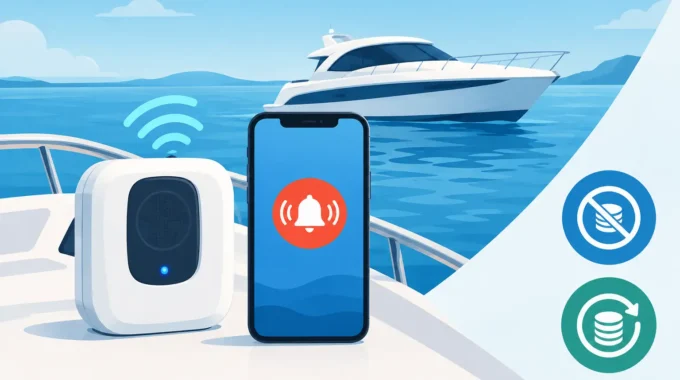
A marina Wi-Fi notification is not enough for a vessel you may not visit for weeks. Wi-Fi can fail with the same power event affecting the boat, and a smart plug cannot tell you that the bilge is filling. Yacht monitoring needs purpose-built sensors, independent alarm delivery and low power consumption.
Look for direct alerts to mobile numbers, rather than an alert that sits unnoticed inside an app. SMS alarms are particularly useful when mobile data is poor or an app notification has been silenced. App access still matters for checking status, reviewing conditions and receiving camera images, but urgent warnings need a path that gets attention.
Once-per-second monitoring provides a far clearer picture of changing conditions than occasional polling. This matters for water ingress, battery voltage collapse, movement and power failure. The system should also draw very little current itself. A monitor that materially drains an unattended battery bank defeats the purpose.
For exterior and machinery-space hardware, marine-grade protection is essential. IP67-rated components are built to cope with the wet, salty conditions found around bilges, lockers and exposed areas. Installation quality still matters. Keep connections protected, use appropriate cable sizing and fusing, and ensure the work complies with AS/NZS 3004.2:2014 where applicable.
Set alarms that lead to action
An alarm is only useful if someone knows what to do next. Before commissioning your system, write a simple response plan. It should include the marina office or harbourmaster, a trusted nearby contact, your preferred marine electrician and any contractor authorised to board the vessel.
Send alarms to more than one person for high-consequence events. If you are offshore, travelling or asleep, a second contact may be the person who can reach the boat. Systems capable of notifying up to five mobiles provide useful redundancy, provided each recipient understands their role.
Avoid setting every threshold too tightly. Nuisance alarms train people to ignore real alarms. Bilge pump activity after heavy rain may be normal, while a high-water alarm is never routine. Low battery alerts should allow enough time to respond but not wait until starting capacity is gone. Test each alarm and confirm the message reaches every intended mobile.
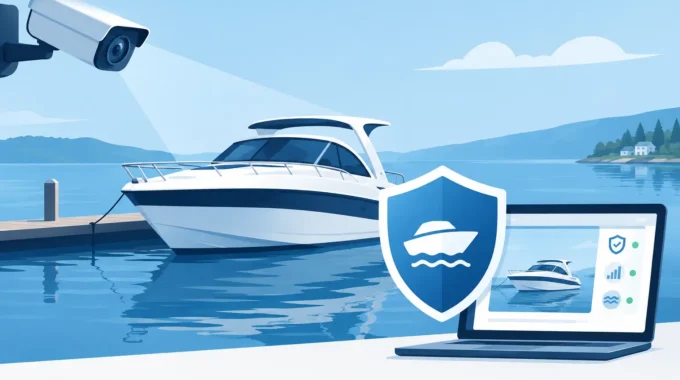
Camera confirmation is especially valuable after an electrical alarm. An image can show whether the cabin is dark, whether water is visible, whether shore power appears disconnected or whether somebody is onboard. It will not replace a physical inspection, but it helps you decide whether to call the marina, send a contractor or attend immediately.
Installation mistakes that leave blind spots
The most common mistake is monitoring only battery voltage. This misses why the battery is declining and may not detect water ingress until the pump has already depleted the bank. Build coverage around causes and consequences: shore power failure, charger output, battery state, pump activity and high water.
Another mistake is fitting sensors where they are easy to reach rather than where they will detect a problem early. A high-water sensor mounted too high provides a late warning. A camera aimed at a blank bulkhead provides no confirmation. Cable routes, fuse protection and access for testing need consideration before holes are drilled.
Large yachts and catamarans may need multiple monitoring units or sensor zones. One unit in a central locker cannot reliably cover separated hulls, distant bilges, machinery spaces and cabins. Treat the vessel as several risk areas, especially when it has multiple pumps, battery banks or shore-power inputs.
If you are not confident working on DC and AC marine systems, use a qualified installer. The consequences of poor electrical work include fire, electric shock, unreliable alarms and insurance complications. Professional installation is not an unnecessary extra when the system is protecting a significant asset.
A practical monitoring routine
Remote monitoring works best alongside a regular inspection routine. Check the app or reports before and after leaving the vessel. Review battery voltage trends, recent pump activity and shore-power status. After heavy weather, marina electrical work or a long absence, treat any change as a reason to investigate.
Test alarms at scheduled intervals. Trigger the relevant sensor safely, confirm the SMS or app alarm arrives, and check that any camera image is useful. Inspect cable glands, sensor mounts, battery terminals and fuses for corrosion or damage. Replace weak batteries and tired pumps before they become an emergency.
Trek Transponder systems are built for this kind of unattended-vessel protection: low-draw, IP67-rated marine monitoring with direct SMS/MMS alerts, camera confirmation and monitoring options suited to Australian marinas, moorings and vessels operating further afield.
Your yacht does not need constant attention, but it does need a way to call for help when shore power drops, a battery fails or the bilge starts rising. Set the alarms, test them properly and make sure someone can act on the warning before a small electrical fault becomes a lost season on the water.
Related Posts