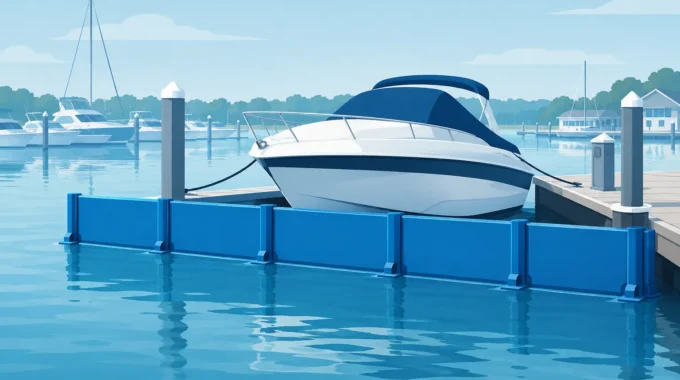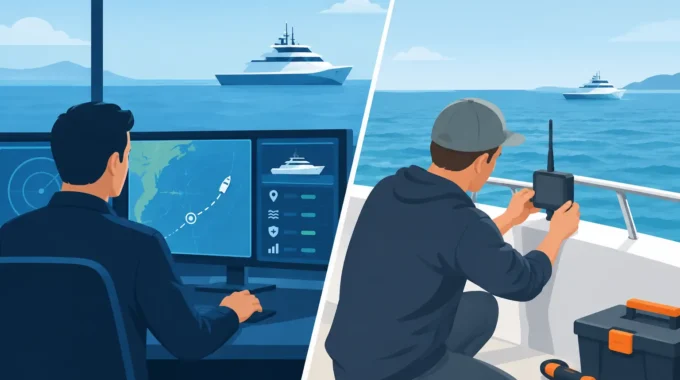
Marina flood prevention combines bilge alarms, shore-power checks and fast action, helping stop a small leak becoming a sinking at the berth overnight.
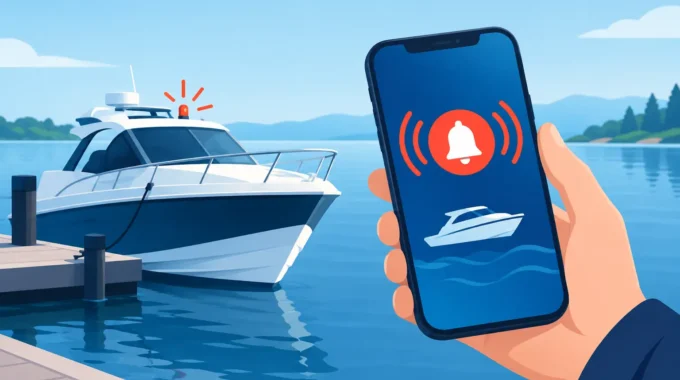
How to Receive Boat Alarm Notifications Fast
A boat can take on water, lose shore power or break free from its mooring long before anyone at the marina notices. To receive boat alarm notifications fast enough to prevent serious loss, you need more than an occasional check-in from a neighbour. You need a marine monitoring system that detects a fault as it happens, sends the warning directly to the right people and gives you enough information to make the next call.
For owners with a yacht, cruiser, houseboat or commercial vessel left unattended, minutes matter. A bilge pump running continuously can flatten batteries. A failed shore-power lead can stop refrigeration and charging. A small water ingress can become an insurance claim, a salvage job or a lost boat.
What makes a boat alarm notification useful?
An alarm is only useful if it arrives quickly, clearly and reliably. A flashing light on the dash is no help when your vessel is on a mooring and you are hours away. The notification must reach your mobile, identify the event and allow you to decide whether to attend, call the marina, send a caretaker or contact emergency services.
SMS remains one of the most practical delivery methods for marine alarms. It is direct, works on ordinary mobiles and does not depend on somebody opening an app at the right moment. For critical incidents, alarms should be sent to more than one person. If you are flying, driving or in a meeting, a partner, marina manager or trusted crew member can still act.
A capable system can also send alerts through a vessel-monitoring app, giving you a live view of conditions rather than a single warning. This matters when the first alert is only the beginning. For example, a shore-power failure may be followed by falling battery voltage. A high-water alert may be followed by a bilge-pump fault. Remote visibility helps you judge whether the situation is stabilising or escalating.
The strongest evidence is visual. An alarm-triggered HD camera image can show whether there is a person aboard, water in the cabin, a loose line, smoke, or simply a crew member who forgot to disarm the system. It does not replace attending the vessel, but it prevents blind decisions at the worst possible time.
How to receive boat alarm notifications when it counts
Start with the risks that can damage your vessel while nobody is aboard. Every boat is different, but unattended vessels commonly need monitoring for bilge water, battery voltage, shore-power loss, fire or smoke, intrusion, movement, anchor drag, refrigeration failure and bilge-pump operation.
The key is not fitting every available sensor without a plan. It is deciding what requires immediate action on your boat. A weekend runabout stored on a trailer has different exposures from a liveaboard yacht on a swing mooring. A charter fleet needs notifications that can be assigned to duty staff. A large catamaran may need several monitoring units to cover separate hulls, machinery spaces and accommodation areas.
Once the risks are set, configure an escalation path. Critical alarms should go to up to five nominated mobile numbers, not just the owner. Choose people who can genuinely respond: a nearby family member, a marina contact, a skipper, a caretaker or an operations manager. Confirm that each person knows what the alert means and has authority to access the vessel.
Set up notifications with a clear purpose. A high-bilge alarm should prompt someone to inspect the source of water ingress and pump operation. A shore-power-loss alert should trigger a check of the pedestal, lead, RCD and onboard charger. An intruder alarm may require a camera image first, then a call to marina security or police. The system provides the warning. Your response plan limits the damage.
Use immediate alarms, not delayed reports
Scheduled status reports are useful for confidence – for example, a daily confirmation of battery condition and system status. They are not a substitute for immediate warnings. Flooding, fire, a vessel going adrift and a sudden power failure need an alert the moment the sensor detects the condition.
Once-per-second monitoring provides a major advantage here. It detects a change when it occurs rather than waiting for a periodic poll or a delayed update. That is particularly valuable for excessive pitch and roll, movement at anchor and fast-changing bilge conditions.
Make the message actionable
A vague text saying “alarm” forces you to guess. A useful notification identifies the vessel, location or system name, sensor type and state. Label inputs properly during installation: “Port hull high water”, “Shore power”, “Engine room smoke” and “Fridge temperature” are far more useful than “Input 3”.
Use camera images where they will answer real questions. Place cameras to view companionways, cockpit access, machinery spaces or the berth area, depending on the risk. A camera aimed at a dark corner of the saloon will not help you confirm an intruder or investigate a water alarm. Consider infrared capability and avoid mounting positions that are regularly blocked by covers, towels or stored gear.
Connectivity is part of the safety system
Most Australian coastal marinas have mobile coverage, but reception at the berth can vary. Metal sheds, enclosed marinas, remote anchorages and distance from the shore can affect performance. Test signal strength where the vessel lives, not just at the marina entrance.
A 4G alarm system with SMS and MMS notifications is often the right fit for vessels operating within mobile coverage. It keeps alerts simple, supports image delivery and avoids relying on onboard Wi-Fi that may fail when shore power drops.
For vessels travelling well beyond dependable mobile service, global connectivity changes the picture. A Starlink-enabled monitoring option can keep alarm and camera functions available across remote cruising grounds where standard cellular alerts cannot reach you. It does require suitable installation, an active satellite service and enough power budget to support the communications equipment. For a boat that spends every night in a well-covered marina, it may be unnecessary. For offshore, remote or long-range cruising, it can be the difference between knowing and hoping.
Do not let the alarm system create a battery problem
An unattended-vessel monitor must draw very little current. There is no value in fitting an elaborate security system that slowly discharges the very batteries it is meant to protect. Check standby draw, charging arrangements and how cameras or communications equipment behave when the vessel is away from shore power.
Marine hardware also has to survive the environment it protects. Salt spray, condensation, heat and vibration quickly expose equipment built for homes or vehicles. IP67-rated hardware provides strong protection against dust and temporary immersion, making it appropriate for the wet, demanding conditions around bilges, lockers and exposed marine installations.
Installation quality matters just as much. Wiring should be fused correctly, connections protected, cable runs supported and sensors positioned where they can detect the actual hazard. For electrical work on a vessel, compliance with AS/NZS 3004.2:2014 is not a marketing extra. It supports a safer, more dependable installation and reduces the chance of faults being introduced during the upgrade.
Test the people as well as the equipment
A monitoring system should be tested before you rely on it. Trigger each sensor in a controlled way, confirm SMS and app alerts reach every nominated mobile, request camera images and check the response time. Do this after installation, after changing mobile numbers, after a major software or service change, and before leaving the boat unattended for a long period.
Also test your practical response. If the high-water alarm arrives at 2 am, who has keys? Who knows the berth number? Who can start a pump, isolate shore power or move the vessel? Write these details down and give them to the people receiving alarms. The best technology still depends on a person taking the right action.
Trek Transponder systems are designed for this real-world job: Australian-made marine monitoring with low power draw, direct alerts to nominated mobiles, app-based oversight and camera confirmation when an alarm occurs. They suit owner-operated boats, heritage vessels, fleets and large multi-hull installations where a single missed warning can become an expensive disaster.
Your vessel does not need attention every minute of the day. It does need a way to call for it immediately when something starts going wrong. Set the alarms, nominate the responders and test the notification path before the next quiet night at the berth becomes a costly morning.
Related Posts