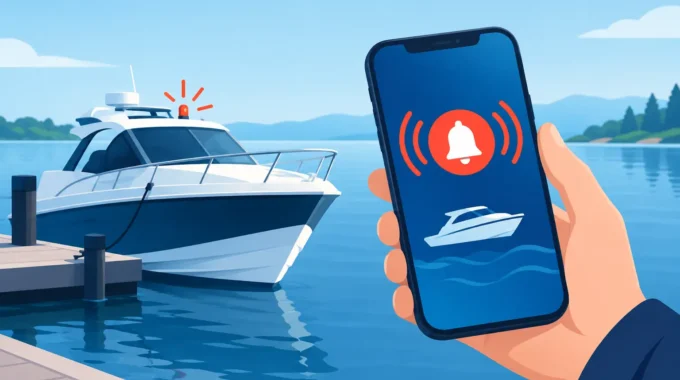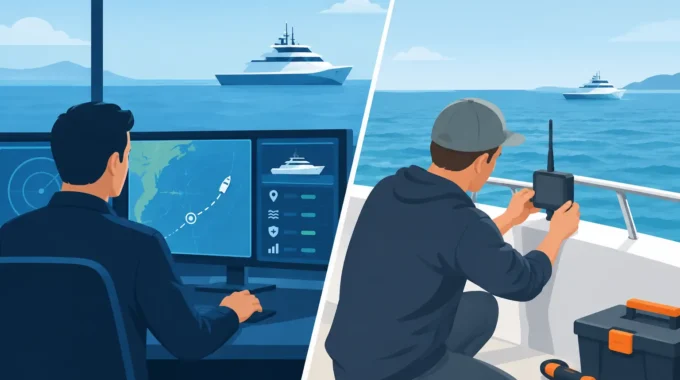
Learn how to receive boat alarm notifications by SMS, app and camera image, so you can act before flooding, fire, theft or power loss worsens at sea.
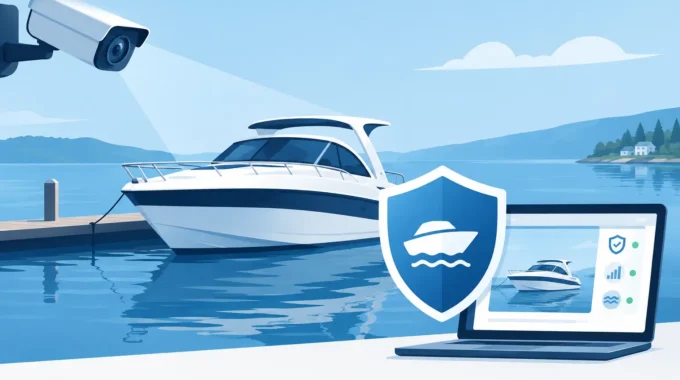
Boat Insurance Monitoring That Protects Evidence
A boat can take on water, lose shore power or break free from its mooring long before anyone at the marina notices. Boat insurance monitoring gives you a far better chance of seeing the warning signs early, acting fast and retaining proof of what happened. It does not replace a sound insurance policy or proper maintenance. It gives you eyes, alarms and a record when your vessel is unattended.
For an owner with a yacht, cruiser, houseboat or working vessel tied up for days or weeks at a time, that difference matters. A flat battery can stop bilge pumps. A failed hose clamp can become a flooding event. A fridge fault can spoil provisions, while a shore-power outage can create a chain of electrical and battery problems. By the time a neighbour spots trouble, the repair bill and insurance claim may already be substantial.
What boat insurance monitoring actually does
Insurance protects against financial loss within the terms of your policy. Monitoring is about reducing the chance that a loss becomes severe in the first place. A capable marine system watches the conditions that commonly lead to claims, then sends an alarm directly to the people who can do something about it.
That may be you, a family member, your skipper, marina manager or a trusted contractor. The best arrangements send critical alarms to multiple mobile numbers, rather than relying on one person being available at the right moment. If a high-water alarm arrives at 2 am, somebody needs to be able to get to the boat, call the marina or arrange assistance without delay.
The practical value is not just the alert. It is the detail behind it. If an alarm-triggered camera image shows water rising in the bilge, a person on board, or lines pulled tight as the vessel moves, you can make a better decision than you can from a vague notification alone.
Why insurers care about unattended vessel risk
Insurers assess risk, policy conditions and the facts of each claim differently, so no monitoring system can promise cover, a premium reduction or claim acceptance. You should always read your Product Disclosure Statement, understand lay-up and mooring requirements, and speak with your insurer about your individual vessel.
Still, the risks are plain. Many expensive marine losses begin with an unattended fault that had time to worsen. Flooding, fire, theft, storm damage, battery failure and vessels going adrift are not theoretical risks at a marina or anchorage. They can destroy equipment, damage neighbouring boats and leave an owner facing excesses, downtime and difficult questions about inspections and maintenance.
A monitoring record can help establish a useful timeline. When did shore power fail? When did the battery voltage begin dropping? When did the bilge pump start cycling excessively? When was an intruder alarm activated? Accurate timestamps, alerts and images may assist your own investigation and provide supporting information if an incident needs to be reported.
That is different from treating monitoring as an insurance workaround. It is a practical risk-control measure. Your duty remains the same: keep the vessel maintained, secure it properly and respond sensibly when a warning is received.
The alarms worth having on board
Not every boat needs the same sensor layout. A trailer boat stored at home has different exposures from a liveaboard cruiser on shore power, and a commercial fleet needs a different escalation plan again. Start with the faults that can cause rapid, expensive damage when no one is aboard.
A comprehensive system should be able to monitor:
- Bilge water level and bilge-pump activity, so abnormal water ingress or a continuously running pump is not missed.
- Battery voltage and shore-power loss, which can expose charging faults, flat batteries and loss of power to essential equipment.
- Fire and smoke, because early notification is critical when a vessel is closed up at a berth or in storage.
- Intrusion and unauthorised entry, with siren, light or camera options that can deter an offender and document the event.
- Anchor drag, movement outside a defined area and a vessel going adrift, particularly when weather changes or mooring gear fails.
- Refrigeration temperature, pitch and roll, and other operational conditions that matter on larger vessels, charter boats and specialist applications.
The response path matters as much as the sensor. An alarm that sits in an app until you next open it is not adequate for a potential sinking or fire event. Direct SMS and MMS alerts remain useful because they reach ordinary mobiles immediately, while a monitoring app can show live status and event history when you need more detail.
Evidence changes the first response
When an alarm arrives, owners often have to make a decision quickly: drive to the marina, ask someone nearby to check the boat, call a contractor, or contact emergency services. Camera images can turn uncertainty into action.
Consider a shore-power alarm during hot weather. It might be a marina-wide outage, a disconnected lead or a fault isolated to your vessel. An HD image requested remotely can show whether cabin lights are out, whether weather conditions are affecting the berth, or whether there is an obvious issue around the pedestal. It will not diagnose every electrical fault, but it can prevent wasted time and help you give clear instructions to the person attending.
The same applies to a security alarm. A triggered image may show whether a hatch is open, whether someone is on deck, or whether the alarm resulted from legitimate access. For an owner managing a vessel from interstate or overseas, visual confirmation is often the difference between a controlled response and a long period of worry.
Reliability is a marine requirement, not a luxury
A domestic alarm is not automatically suitable for a boat. Marine equipment must tolerate moisture, vibration, salt air and the harsh conditions found in lockers, engine spaces and exposed areas. Look for IP67-rated hardware where the installation demands it, low current draw so the monitoring system does not become a battery burden, and components designed for vessel use.
Installation quality is equally important. Sensors need to be placed where they will detect the real risk without producing nuisance alarms. Bilge sensing needs to account for normal pump operation. Door and hatch protection should suit how the crew actually access the vessel. Cameras need useful sight lines, not just a broad view of darkness.
For larger boats and catamarans, one unit may not cover every compartment or access point. Multiple monitoring units can be configured to protect separate hulls, machinery spaces, cabins and storage areas. The right design follows the vessel’s risk points, rather than forcing a generic package onto every boat.
Australian electrical compliance should also be part of the conversation. Equipment and installation practices aligned with AS/NZS 3004.2:2014 are particularly relevant where the system interacts with onboard electrical systems. If you are unsure, use a competent marine electrician or preferred installer who understands both the electronics and the vessel.
Connectivity determines whether the warning arrives
A monitoring system is only useful if it can get its message to you. 4G-based alerts suit many Australian marinas and coastal locations, delivering alarms and images without relying on the marina Wi-Fi. Before fitting any system, check mobile coverage at the berth, anchorage and storage location, including below-deck signal strength where equipment will be mounted.
For vessels travelling beyond dependable mobile service, global connectivity changes the equation. Starlink-enabled monitoring can keep an owner informed far from a marina, provided the installation, plan and operating environment suit the vessel. It is a stronger option for offshore cruising, remote operations and boats that spend long periods outside mobile coverage, but it should be selected with a clear understanding of power use and hardware requirements.
Trek Transponder systems are built in Australia for this kind of unattended-vessel reality: once-per-second monitoring, direct alarms to up to five mobiles, camera images on alarm or request, and low-power marine hardware designed to keep watch when you cannot.
Set the response plan before the alarm sounds
Monitoring is not fit-and-forget. Set sensible alert thresholds, test sensors after installation and review the system before storm season, extended trips or a long period away from the boat. Make sure every alarm recipient knows what they are expected to do.
For example, a low-battery warning may warrant checking shore power and charger status within hours. A high-water or fire alarm needs immediate escalation. An anchor-drag alert could mean checking the vessel’s location, weather and mooring arrangement straight away. Write these actions down, including marina contact details, contractor numbers and who has keys.
Also keep your policy, maintenance records and monitoring history organised. If the worst happens, calm, accurate information helps everyone involved. More importantly, fast action may mean there is no major claim to make at all.
Your boat does not stop being your responsibility when you lock the cabin and head home. Put monitoring in place that detects the faults insurers see too often, sends the warning to people who will act, and gives you proof of what is happening on board before a small problem becomes a wrecked season.
Related Posts