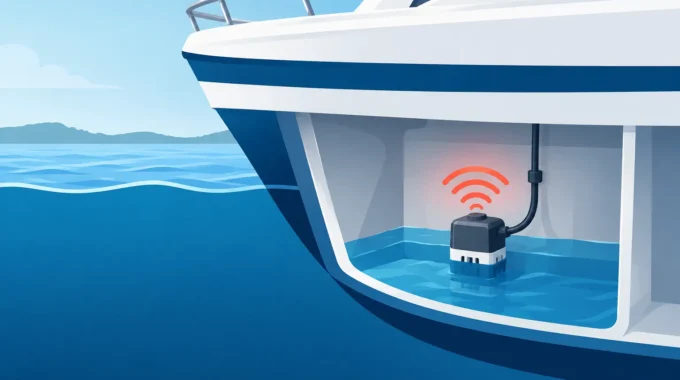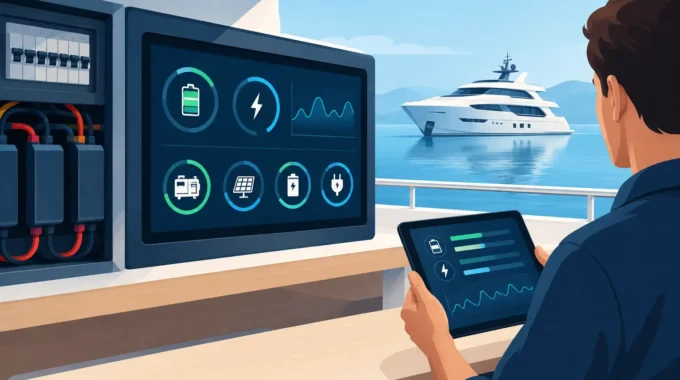
Compare SMS versus app boat alerts for your unattended vessel. See which warnings still reach you during power, data and marina network failures ashore.
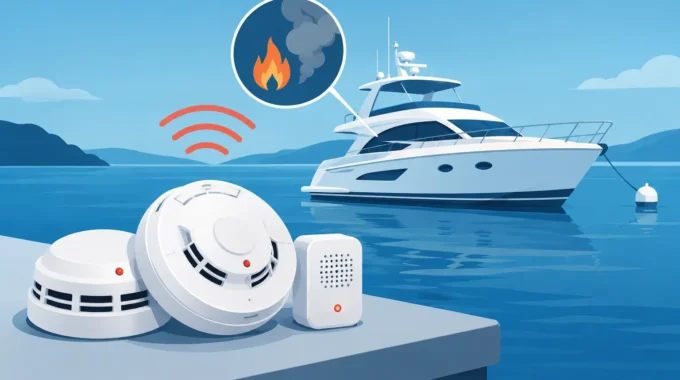
Top Boat Fire Detectors for Unattended Vessels
A fire alarm that only sounds inside an empty boat is not enough. The top boat fire detectors for an unattended yacht, cruiser or houseboat must detect the right type of fire risk, survive the marine environment and get a warning to someone who can act before flames take hold.
At a marina, a small electrical fault can become a total loss while the owner is hours away. Shore-power chargers, ageing cable connections, refrigeration compressors, inverter systems and galley appliances all add ignition sources. By the time a neighbouring berth notices smoke, the damage may extend well beyond one vessel.
What makes a boat fire detector worth fitting?
A domestic smoke alarm may be inexpensive, but it is not automatically suited to a damp, vibrating, salt-air environment or a vessel left locked up for weeks. The best protection is not simply the detector with the loudest local siren. It is a marine monitoring arrangement that detects danger early and sends a clear alert to your mobile.
For most vessels, fire detection should be considered alongside battery condition, shore-power loss, bilge level and security. These risks often overlap. A failed shore-power connection can affect charging or refrigeration. A compromised battery system can create heat. An alarm that tells you what has happened, when it happened and where to look gives you a chance to stop a developing incident rather than discover it after the insurer has been called.
Smoke detectors: early warning in living spaces
Smoke detectors are generally the first line of warning in cabins, saloons and accommodation areas. They can identify smouldering materials before a flame produces enough heat to activate a heat detector. This matters where upholstery, bedding, timber linings and stored gear can produce substantial smoke before a fire becomes visible.
Placement is critical. Avoid fitting a smoke detector immediately beside a galley, shower compartment, hatch or engine-space door, where steam, cooking residue or exhaust contamination may cause nuisance alarms. A nuisance alarm that is routinely ignored is not protection. Fit the detector where smoke is likely to collect, while following the equipment manufacturer’s installation guidance.
Heat detectors: the better choice for engine and galley areas
Heat detectors are often more suitable for spaces where smoke, fumes or airborne particles are normal. Engine rooms, machinery spaces and galley-adjacent areas are common examples. Rather than reacting to light smoke, a heat detector responds when the temperature reaches a set point or rises unusually fast.
The trade-off is simple: heat detection can be less prone to false alarms, but it will usually activate later than smoke detection. That is why a larger vessel often needs both. Smoke detection provides early warning in enclosed living spaces; heat detection watches higher-risk technical areas where a conventional smoke detector may be unreliable.
Do not fit a detector in an engine compartment and assume the job is finished. Consider what could start a fire there: starter batteries, battery isolators, alternator wiring, chargers, fuel-system components, exhaust heat, loose terminals and aftermarket electrical work. Detection needs to sit within a wider inspection and maintenance routine.
Carbon monoxide alarms are not fire detectors
Carbon monoxide alarms deserve a place on many boats with petrol engines, generators, solid-fuel heaters or gas appliances, especially where people sleep aboard. However, they do a different job. Carbon monoxide is a life-safety risk to occupants, not a dependable substitute for smoke or heat detection.
Use the right sensor for the threat. A carbon monoxide alarm may warn of dangerous exhaust infiltration, while a smoke detector can identify combustion products and a heat detector can flag an overheating machinery space. Combining their signals into one monitored system makes the vessel easier to manage remotely.
Top boat fire detectors need remote notification
A detector that activates at 2.00 am is only useful if the alarm reaches somebody. Local sirens can alert people on board or nearby, but marina noise, wind, distance and closed cabins can limit their value. Owners who leave their boat unattended need immediate off-vessel notification.
Look for a marine alarm system that can send a direct SMS alert to multiple mobile numbers. This allows the owner, a family member, marina contact, skipper or maintenance contractor to receive the warning at the same time. App alerts are useful too, but SMS provides a direct, familiar warning path when quick action matters.
Visual confirmation is equally valuable. A triggered HD camera image can help establish whether smoke is visible, whether anyone is aboard, or whether the issue may be linked to shore power or an intruder. It does not replace an emergency response, but it can prevent wasted time and give the person attending the vessel a clearer picture before they arrive.
For vessels beyond reliable mobile coverage, global connectivity matters. A Starlink-enabled monitoring setup can provide a practical option for cruising boats, remote moorings and vessels operating outside normal marina coverage.
Choosing detector locations on your vessel
There is no single layout that suits every boat. A 7-metre runabout stored on a trailer has different risks from a multihull on a swing mooring or a commercial vessel with separate machinery spaces. Start with the places where fire could begin and the areas where it may go unnoticed.
On a typical cruiser, priority locations may include the main cabin, accommodation passageway, galley-adjacent space, engine room, battery compartment and electrical locker. Separate enclosed spaces should not be treated as though an alarm in the saloon will adequately cover them. A closed engine-room door can delay smoke reaching the accommodation detector.
Large catamarans and vessels with multiple cabins may need more than one monitored unit. The aim is not to fill the boat with sensors for the sake of it. It is to avoid blind spots, particularly where equipment runs continuously or the vessel is secured for long periods.
Keep detectors accessible for testing and cleaning, but protect them from direct spray, condensation and accidental damage. Select marine-rated equipment suited to the installation environment. If you are adding sensors to a vessel’s electrical system, use a competent marine installer where required and ensure the work is compatible with applicable Australian marine electrical requirements, including AS/NZS 3004.2:2014 where relevant.
Avoid the false economy of isolated alarms
The cheapest alarm is often the one that tells nobody when you are ashore. It may tick a basic box, but it does not answer the practical question: who will know, and what will they do next?
A proper unattended-vessel setup should have a defined response plan. Decide who receives alerts, who holds keys, who can reach the marina, and when emergency services or marina management should be called. Test that process, not just the detector’s test button. A monthly test is a small task compared with recovering from fire, smoke damage and a prolonged insurance claim.
False alarms also need attention. Repeated alerts may point to poor detector placement, contamination, low system voltage or an underlying electrical problem. Do not silence the symptom and move on. Find the cause. Boats are unforgiving of small faults left to develop in closed compartments.
Build fire detection into total vessel protection
Fire detection works best when it forms part of continuous vessel monitoring. If an alarm event is paired with shore-power status, battery voltage, bilge activity and camera images, the owner has more information to make a fast decision. For example, a heat alarm following shore-power irregularity and abnormal battery behaviour is a very different situation from an isolated, momentary sensor trigger.
Trek Transponder systems are built for this real-world job: once-per-second monitoring, low power draw, IP67-rated alarm hardware and direct alerts to up to five mobile numbers. Rather than relying on an alarm that calls only to the empty cabin, the system is designed to put the warning in the hands of people who can protect the vessel.
Fire does not wait until you are back at the marina on Saturday. Fit detection that matches your vessel, make sure the alert reaches you ashore, and act on the first warning while there is still a boat to save.
Related Posts