Why do boats sink? Learn the failures that flood unattended vessels, and the monitoring alerts that help owners act before a minor fault becomes loss.
Best Marine Alarm Accessories for Unattended Boats
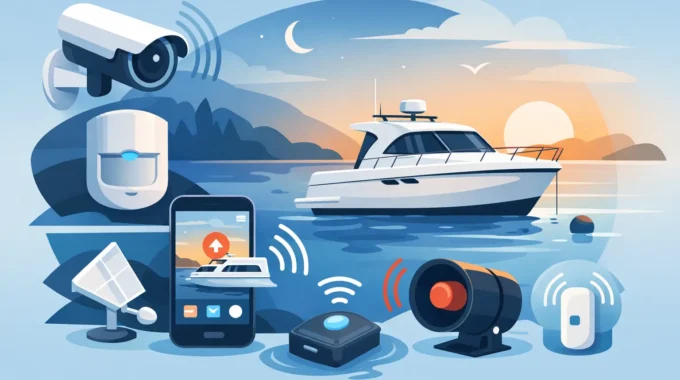
A flooded bilge does not wait until you are back at the marina. Neither does a flat house battery, failed shore power connection, smoke in the cabin or an intruder testing a locked hatch. The best marine alarm accessories are the ones that detect the first warning sign, tell the right people immediately and give you enough information to make the right call before a small fault becomes a salvage, insurance or repair nightmare.
For boats left on a mooring, in a marina berth, on a swing mooring or in storage, an alarm panel alone is not the answer. You need purpose-built sensors and communications that suit the risks your vessel actually faces. Start with the events that can sink, burn, disable or expose the boat, then build the system around them.
What the Best Marine Alarm Accessories Must Do
A useful boat alarm accessory does more than make noise on board. If no one is within earshot, a siren may only alert the person stealing from you or wake neighbouring boats after the damage has started. Remote notification is the critical layer. An alarm should send a clear alert to your mobile, ideally to several nominated numbers, so someone can check the vessel, contact the marina or call emergency services.
Marine conditions also punish ordinary security gear. Salt air, condensation, vibration, heat and spray find weak enclosures and poor connections quickly. Look for marine-specific hardware with suitable ingress protection, low current draw and wiring that can be installed cleanly without creating another point of failure. IP67-rated components are a sensible benchmark where equipment may be exposed to damp or harsh conditions.
The right mix depends on the boat. A trailer boat stored at home may prioritise intrusion and battery status. A liveaboard cruiser on shore power needs serious attention on bilge level, AC power failure, smoke and refrigeration. A commercial vessel or hire fleet may need repeatable monitoring across several boats, with alarms sent to duty staff who can respond fast.
The Core Accessories Worth Fitting
High-water and bilge-pump monitoring
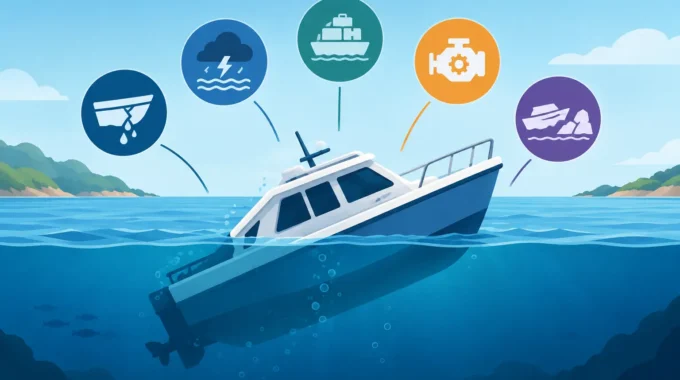
High-water detection belongs at the top of the list. A failed hose clamp, leaking stern gland, blocked cockpit drain or rainwater ingress can put a surprising volume of water aboard while you are away. A high-water sensor should sit above the normal bilge-pump activation level. That way, you are alerted when the pump has not kept up, has failed, or the incoming water is beyond its capacity.
Pair it with bilge-pump run monitoring where possible. A pump that runs too long or too often may be dealing with a leak. A pump that should be running but is not may have a flat battery, blown fuse, failed float switch or blocked intake. The distinction matters. One tells you water is already rising; the other can identify a developing problem before it reaches that stage.
Do not assume one sensor protects the entire vessel. Larger yachts, houseboats and catamarans may need sensors in separate hulls, engine spaces and low compartments. Water follows its own path, not your assumptions.
Shore-power loss and battery-voltage alarms
Shore power can fail because of a tripped marina pedestal, a loose lead, a failed charger or a power outage. If you rely on mains power for charging, refrigeration, dehumidification or bilge pumping, the consequences build quietly. Batteries run down, fridges warm up and equipment that depends on DC power eventually stops.
A shore-power loss accessory should notify you promptly, not at the next scheduled status report. It should also be supported by battery-voltage monitoring. Shore power may be available while a charger has failed, and a healthy charger cannot help if the battery bank itself is nearing the point where pumps, alarms or communications will drop out.
Low power draw is not a minor specification. Your monitoring system must stay alive when the boat is unattended for weeks. If an accessory consumes too much current, it becomes part of the problem it was meant to detect.
Smoke, fire and gas detection
Fire on an unattended boat moves fast, particularly around battery chargers, inverter installations, engine compartments, galley appliances and electrical distribution. Fit detectors appropriate to the location and the hazard. Smoke detection is generally suited to accommodation spaces, while heat detection can be better in areas where steam, cooking vapour or dust would create nuisance alarms.
Gas detection is equally worth considering on vessels with LPG systems. A minor leak can settle in low areas before a spark turns it into a major incident. The goal is not merely to sound an alarm. It is to send an immediate remote warning so someone can act while there is still time.
Any fire, smoke or gas accessory should be installed and maintained to the manufacturer’s instructions. Detection is only one part of the protection plan. Sound wiring, properly protected battery systems, fuel-system maintenance and compliant gas installations remain essential.
Intrusion sensors, sirens and HD cameras
A door contact, hatch sensor or motion detector gives an early warning that someone has boarded or entered the cabin. But a notification without verification can leave you guessing. Was it an intruder, a cleaner, a marina contractor, a bird setting off a motion sensor or a poorly secured hatch moving in the wind?
That is why an HD marine camera is one of the most useful alarm accessories on an unattended vessel. Camera images triggered by an alarm, or requested from your mobile, can show whether there is a person aboard, whether a hatch is open or whether water is visible in the cabin. It gives you evidence to provide to marina security or police, rather than asking them to investigate a vague alarm.
A siren and flashing light still have a place. They can deter opportunistic theft and draw attention from nearby vessels. Treat them as the local response, not the complete security system. The remote alert and camera confirmation are what let you take action from kilometres away.
Anchor-drag, adrift and motion sensing
Boats at anchor or on moorings face a different threat: they can move when they should not. A dragging anchor, failed mooring line or broken fitting can send a vessel into other boats, rocks, piles or shallow water. The repair bill is often only part of the damage. There may be injury risk, pollution, salvage costs and serious disruption to other berth holders.
GPS-based location alerts and geofence functions can warn you when the vessel leaves a nominated area. Motion sensing adds another layer, particularly when the boat should be stationary at a berth. On sailing yachts and powerboats, excessive pitch and roll monitoring can also identify unusual movement from severe weather, wash or a vessel that is no longer secured as expected.
Set these alerts with care. A geofence that is too tight can create nuisance notifications as the boat swings naturally on its mooring. Too wide, and the vessel may travel a long way before you know. Match the settings to the location, local tide, swing room and the boat’s normal movement.
Refrigeration and temperature alarms
For cruisers, charter operators, houseboats and commercial vessels, refrigeration failure is not a small inconvenience. It can mean spoiled provisions, lost stock, an unexpected return trip or a costly clean-up. Temperature monitoring provides an early warning when power has failed, a compressor stops, a door has been left open or cooling performance is deteriorating.
It is particularly valuable when combined with shore-power and battery alerts. Those readings help identify whether the fridge is the failed item or simply the first piece of equipment to show a broader electrical problem.
Communications Matter as Much as Sensors
A sensor is only useful if the alert reaches you when the boat needs help. SMS and MMS alarms remain highly practical because they go directly to nominated mobiles and do not rely solely on someone opening an app. Sending alarms to up to five numbers means an owner, family member, skipper, marina contact and fleet manager can all receive the same warning.
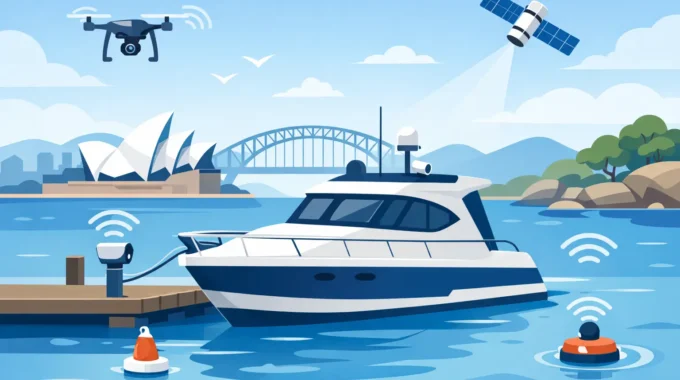
App-based real-time monitoring adds the wider picture: battery voltage, sensor status, location and other operating conditions. It is useful for checking the vessel after an alarm, reviewing what has changed and keeping an eye on multiple boats. For vessels travelling beyond normal mobile coverage, global connectivity via a Starlink-enabled system can be the deciding factor. A system that cannot communicate offshore or in remote locations leaves a dangerous blind spot.
Trek Transponder systems are designed around this practical chain of protection: once-per-second monitoring, direct mobile alerts, camera images and low-power marine hardware. The point is not to add technology for its own sake. It is to make sure somebody knows there is a problem while there is still something to save.
Choose Accessories as a Working System
Avoid buying isolated gadgets simply because they are cheap or easy to fit. A collection of separate apps, batteries and alarm methods can become difficult to maintain, particularly when you need it most. Select accessories that work with a central monitoring system, can be tested regularly and give clear alarms that tell you what has happened.
Installation quality is just as important. Use marine-rated cabling and connections, protect wiring runs, label circuits and ensure the system has an appropriate power supply and backup strategy. Electrical work on vessels must be taken seriously, including compliance considerations under AS/NZS 3004.2:2014. If you are not confident with marine electrical work, use a qualified installer.
Before leaving the vessel, test every critical alarm. Lift the bilge float, disconnect shore power, open a protected hatch, request a camera image and confirm each nominated mobile receives the correct message. Repeat the test after maintenance, battery changes or alterations to the boat.
Your boat cannot call for help when the bilge is rising or the shore lead has failed. Fit accessories that can, then make sure the alert reaches someone ready to act.
Related Posts