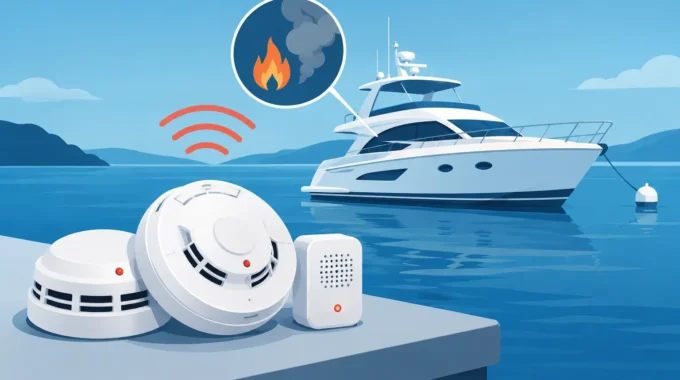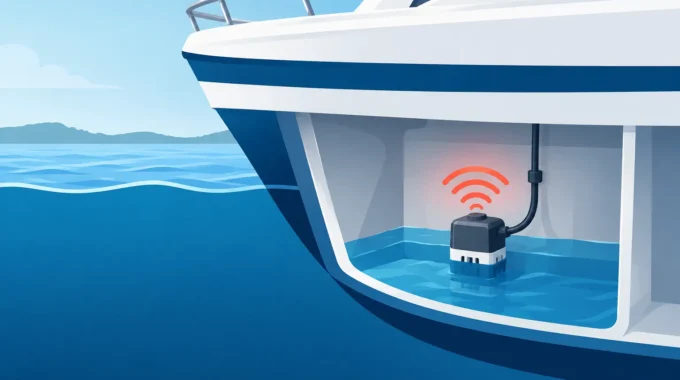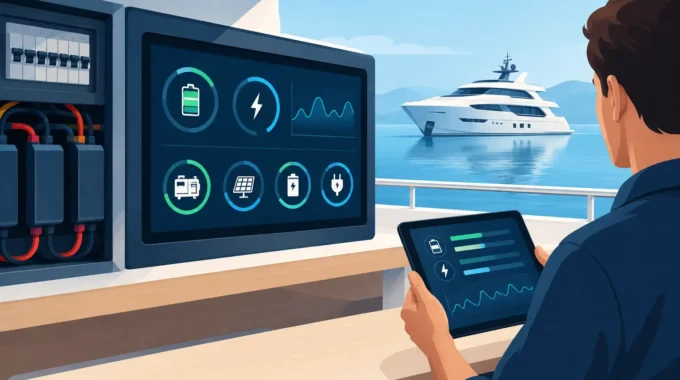
Compare top boat fire detectors for Australian vessels: smoke, heat and remote alerts that warn you before a small fault becomes a total loss at marina.
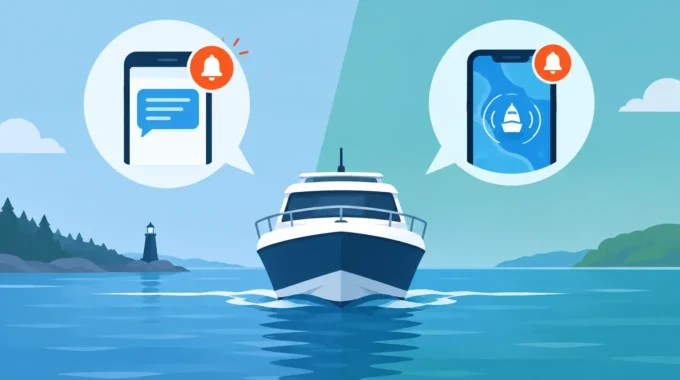
SMS Versus App Boat Alerts: What Works Best?
A bilge alarm at 2:13 am is not a notification you want buried beneath weather updates, group chats and a dozen app badges. When comparing SMS versus app boat alerts, the real question is simple: will the warning reach someone who can act before a small fault becomes a flooded, drifting or damaged vessel?
For an unattended yacht, cruiser, houseboat or work vessel, remote monitoring is only as useful as the alarm path. The best detection hardware in the world cannot prevent a loss if the message arrives late, is muted, requires a login, or goes unnoticed until the morning. SMS and app alerts both have a place on board, but they do different jobs.
SMS versus app boat alerts: the practical difference
SMS alerts are direct messages sent to a mobile number. They are familiar, visible and usually configured to make a distinct sound or appear prominently on the lock screen. A boat alarm can send a specific warning such as shore power failure, high bilge level, low battery voltage, fire or smoke, intruder detection, or anchor drag straight to the owner and other nominated contacts.
App alerts are push notifications delivered through a monitoring application. They are generally tied to a data connection and offer a richer view of the vessel. Instead of receiving only an alarm message, the owner can open the app to check battery voltage, alarm status, vessel position, sensor readings and recent activity. Depending on the system, they may also request an image from an onboard camera.
Neither method is automatically better in every situation. SMS is often the strongest first line for urgent action. The app is usually the better tool for checking what has happened and deciding what to do next.
Why SMS still matters when the boat is unattended
A boat owner does not need another app for the sake of it. They need an unmistakable warning when shore power trips during a hot weekend, a bilge pump runs longer than it should, or a person boards the vessel after dark.
SMS is built for that moment. It does not rely on the owner remembering to open an app. It can be delivered to up to five mobile numbers, so the skipper, partner, marina contact, fleet manager or nearby mate can all receive the same warning. That matters when the primary owner is flying, asleep, offshore or simply unable to get back to the berth quickly.
It also suits alarms that need plain language and decisive action. A message stating that shore power has failed gives the recipient a clear reason to call the marina or attend the vessel. A low-voltage warning can stop batteries being deeply discharged. A high-water alert can send someone to investigate before pumps, wiring and interior fit-out are under water.
SMS is not magic. If the vessel has no mobile coverage, a mobile network is down, or the recipient’s phone is switched off, messages may be delayed or not delivered. That is why coverage at the berth, anchorage or storage yard should be checked before relying on any cellular alarm system. But where mobile service is available, SMS remains a direct and dependable way to raise an urgent alarm.
SMS does not mean basic monitoring
Some owners assume an SMS-based system can only send a short text. In a properly designed marine monitoring system, it can do far more. Alarm-triggered camera images can provide immediate visual confirmation of an intrusion, a loose mooring situation or conditions inside the cabin. SMS and MMS alerts can also be paired with external sirens, lights and relay outputs, giving the vessel a local response as well as a remote warning.
That combination is valuable when every minute counts. An image will not pump out a boat, but it can help an owner distinguish between a genuine break-in and a false trigger before arranging a response.
Where an app earns its place
An app is the control room in your pocket. It is particularly useful for owners who want to check their boat without waiting for a fault. Before leaving home, you can review whether shore power is present, confirm battery condition, look at system status and assess whether the vessel is where it should be.
For larger private vessels, hire fleets and commercial operations, this visibility becomes more valuable. A manager responsible for several vessels needs more than a string of text messages. They need a quick way to see which boat needs attention, which alarm has cleared, and whether a recurring problem – such as refrigeration cycling or a bilge pump operating too often – is developing.
Apps also work well with camera checks. If a storm is moving through the marina or you receive a pitch-and-roll warning, being able to request an HD image can replace guesswork with evidence. It may show that all is well, or it may confirm that a canvas cover has come loose, a line is fouling, or the vessel needs immediate attendance.
The limitation is that app notifications are easily managed into silence. Phones may be on Do Not Disturb, battery-saving settings can restrict background activity, users may be signed out, and push notifications can be lost in a crowded screen. An app should support vigilance, not be the only way a high-priority vessel alarm reaches you.
Use both channels for the risks that cause real losses
The strongest setup does not force owners to choose between text messages and an app. It uses each channel according to the consequence of the event.
Treat direct mobile alarms as the urgent call to action. Configure them for events that can cause major damage or require a fast response: flooding, fire and smoke, shore-power loss, low battery voltage, intruder detection, a vessel going adrift, anchor drag and critical bilge-pump faults. Make sure more than one responsible person receives these warnings, especially if the boat is unattended for weeks at a time.
Use the app for ongoing oversight and verification. Check readings after an alarm, review the condition of the vessel before a trip, monitor power use while the boat is on the hardstand, and use camera access to understand the situation before you travel to the marina. The app adds context. SMS supplies urgency.
This approach also reduces false confidence. A message saying “bilge alarm” should trigger immediate concern. The app and camera can then help establish whether it is rainwater, a leaking hose, a failed pump or a sensor issue. You are not delaying action while you search for information, but you are better informed when arranging it.
The alarm system itself matters more than the screen
Alert delivery is only one part of protection. A system needs to detect faults accurately, survive the marine environment and continue operating without flattening the very batteries it is meant to protect.
Look for purpose-built, IP67-rated hardware with low current draw, suitable for the heat, damp and vibration found aboard Australian vessels. Monitoring speed matters too. A system checking conditions once per second can identify a developing event far sooner than one that only reports at wide intervals. For flood, intrusion, power and vessel-movement alarms, those minutes can be expensive.
Installation is equally important. Bilge sensors must be positioned where rising water will be detected early. Shore-power monitoring must identify a genuine supply failure. Cameras need useful sight lines, not a view of a bulkhead. Larger catamarans and multi-deck vessels may require more than one monitoring unit to cover separate hulls, machinery spaces and living areas properly.
Trek Transponder systems are Australian-made for this job, combining direct 4G SMS/MMS alarms, real-time app monitoring and camera evidence in a low-power marine-specific package. They are designed to monitor the risks owners actually face, with hardware built to meet AS/NZS 3004.2:2014 requirements.
Plan for the place your boat actually lives
A marina berth in Sydney, a mooring in Moreton Bay and a remote cruising ground in the Kimberley do not have the same connectivity conditions. Before choosing alerts, consider where the vessel spends most of its unattended time and who can physically attend it.
For metropolitan marinas with solid mobile coverage, SMS plus app monitoring is a sensible baseline. For vessels travelling beyond reliable cellular service, a Starlink-enabled monitoring option can provide broader connectivity and continued remote visibility. It does not remove the need for sound onboard wiring, charged batteries and correctly installed sensors, but it can reduce the blind spots that leave remote owners guessing.
Set alarm recipients carefully, test every sensor after installation and agree on who will respond when an alarm arrives. The best alert is not the one with the flashiest interface. It is the one that reaches a person who knows exactly what to do while there is still time to save the boat.
Related Posts