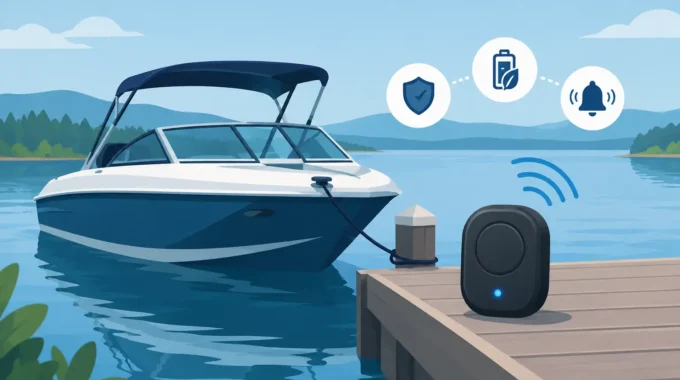
A low power boat alarm system protects unattended vessels from flooding, fire, theft and power loss without draining the batteries it is meant to protect.
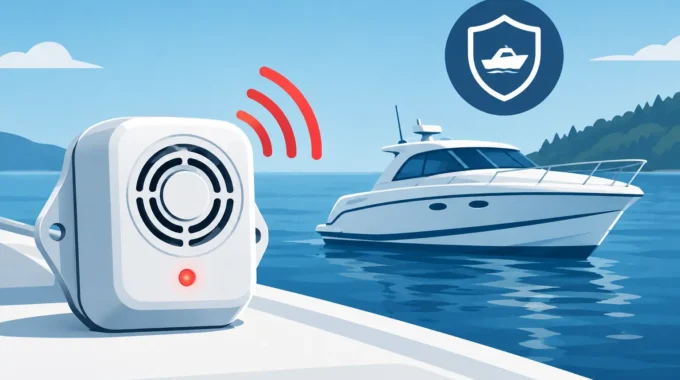
Marine Alarm Reliability Review for Boat Owners
A proper marine alarm reliability review starts at the point most owners would rather not picture: a boat sitting unattended at 2 am, with a failed shore-power lead, a rising bilge or an intruder already aboard. The issue is not whether an alarm has a glossy app or an impressive feature list. The issue is whether it detects the problem in time, reaches someone who can act, and gives them enough information to make the right call.
For vessels left in marinas, on moorings, at anchor or in storage, reliability is the whole job. A late alarm can mean ruined batteries. A missed water ingress alarm can mean a written-off vessel. An unverified security alert can waste precious time while the real threat continues.
What makes a marine alarm reliable?
Reliability is not one specification on a box. It is the chain from sensor to owner. Every part must keep working in wet, hot, salty and often poorly maintained conditions.
First, the hardware has to belong on a boat. Domestic security products and lightly protected electronics may work on a dry bench, then suffer corrosion, condensation or water entry in a damp locker. Look for marine-suitable construction, properly protected enclosures and wiring that can be installed cleanly away from physical damage. An IP67-rated alarm component, for example, is built to resist dust and temporary immersion – a meaningful safeguard where spray, rain and bilge moisture are facts of life.
Second, the system must monitor continuously rather than waking up occasionally to check conditions. Water can rise quickly after a hose failure. A vessel can begin dragging in a matter of minutes as wind and tide shift. Monitoring critical inputs once per second gives the system a chance to alert early, before a minor fault becomes a salvage job.
Third, the notification path matters as much as the detection. An alert buried in an app notification is not enough when your boat is an hour away and the marina office is closed. SMS alerts sent directly to multiple mobile numbers remain practical because they do not require a person to have a particular app open at the exact moment the alarm occurs. A reliable system should also keep an operational record of its communications and make it simple to nominate the people who need to respond.
The hard test: will it work when power fails?
Shore-power loss is one of the most common unattended-vessel problems, and it can trigger a chain of other failures. The battery charger stops. Refrigeration stops. Batteries are drawn down. Pumps, communications equipment and security systems may eventually go offline.
A credible alarm system needs its own carefully managed power arrangement and very low current draw. There is no value in fitting a monitoring device that becomes the load that flattens the battery bank it is meant to protect. Ask how the system behaves during shore-power failure, how long it can continue reporting on vessel power, and whether it raises the alarm before voltage reaches a damaging level.
This is also where installation quality becomes part of reliability. Loose terminals, undersized cable, poor fusing and a connection to the wrong battery circuit can defeat excellent hardware. On larger vessels, commercial craft and catamarans with separated electrical systems, plan the monitored circuits deliberately. In some cases, multiple alarm units are the sensible answer rather than trying to stretch one unit across distant hulls or compartments.
Battery alerts must be actionable
A useful low-voltage alert tells you there is a problem while there is still time to preserve the batteries. Better still, it helps distinguish between a normal overnight voltage change and a serious charging or power issue. Set thresholds for the vessel and its battery chemistry, then test them at commissioning. An alarm that has never been tested is an assumption, not protection.
Detection is only half the evidence
A bilge alarm tells you water may be entering the boat. A motion alarm tells you something may be moving aboard. Those warnings are essential, but visual confirmation changes the response.
An HD marine camera that sends an image when an alarm occurs can show whether water is visible in the cabin, whether a hatch has been forced, whether the vessel is listing, or whether a crew member is simply aboard. The ability to request an image remotely is equally useful after a storm warning, a power alert or an unexpected change in vessel position.
This does not replace a physical inspection when a serious fault is indicated. It gives the owner, caretaker or marina contractor a clearer reason to act immediately and helps avoid guessing from the other side of town. For fleet operators and custodians of heritage vessels, image evidence can also help document the condition of a vessel before a contractor arrives.
Marine alarm reliability review: common weak points
Most alarm failures are predictable. They are not always failures of the main control unit either. The weak point is often a neglected sensor, an expired SIM arrangement, a flat backup supply, poor antenna placement or a contact that was never adjusted correctly.
False alarms deserve attention too. If an owner receives nuisance alerts every week, they will begin to dismiss them. The goal is not to eliminate every alert. The goal is to configure meaningful thresholds and use sensors suited to the risk. A float switch in a bilge should be positioned to identify abnormal water, not every routine pump cycle. An anchor-drag setting should account for the vessel’s normal swing. A fridge alarm should allow for ordinary compressor behaviour while identifying a genuine refrigeration failure.
Run a practical test after installation and at regular intervals. Simulate shore-power loss. Confirm the bilge input. Open a protected hatch. Check that camera images arrive. Make sure every nominated mobile number receives the alert. If the boat is under cover, in a steel shed or berthed where mobile signal is weak, test connectivity from its actual location rather than assuming coverage from the car park.
For owners travelling offshore or keeping vessels outside reliable mobile coverage, communications should be considered separately from local detection. A Starlink-enabled monitoring arrangement can provide global connectivity where conventional 4G alerts are not viable. It adds equipment and power considerations, but for long-range cruising, remote locations or high-value vessels, that trade-off can be worthwhile.
Choose protection for the risks your boat actually faces
Not every vessel needs every input, but every unattended vessel has a risk profile. A marina-based cruiser may prioritise shore-power, battery, bilge, smoke, intrusion and refrigeration alarms. A yacht on a swing mooring may place anchor drag, vessel movement, flooding and battery condition at the top of the list. A houseboat or hire vessel may need additional oversight of pumps, doors, fire detection and operating areas.
The most useful monitoring systems can bring these risks together: bilge flooding, smoke and fire, break and enter, shore-power failure, low battery voltage, failed bilge pumps, refrigeration faults, excessive pitch and roll, anchor drag and a vessel going adrift. Where required, outputs can also trigger a local siren or lights, creating a deterrent and drawing attention nearby while remote alerts go out.
Do not buy on sensor count alone. A long list of possible inputs is meaningless if the system cannot deliver the alarm promptly, if it drains the batteries, or if it leaves the owner with no way to verify what has happened.
Installation and support are part of the system
A marine alarm is not a fit-and-forget gadget. It should be installed where its enclosure, antennas, cameras and sensors can do their work without being exposed to avoidable damage. Cable runs need protection. Sensors need sensible locations. The system needs labels and documentation so a future electrician or skipper does not disconnect it by mistake.
For owners comfortable with vessel wiring, a planned self-install may suit. For complex vessels, multi-zone protection, commercial operations or insurance-sensitive installations, use an experienced marine installer. Confirm that the system and its installation approach align with AS/NZS 3004.2:2014 requirements where applicable, particularly when working around the vessel’s electrical system.
Australian-made systems such as Trek Transponder are designed around the real conditions local boat owners face: salt, storms, unattended marinas, remote moorings and the costly delay between a fault starting and somebody noticing it. Direct alarms to up to five mobile numbers, low power consumption and camera confirmation are practical protections, not decorative extras.
Before you next leave the marina, ask one blunt question: if water starts rising or power disappears tonight, who will know, how quickly will they know, and what proof will they receive? Set up the answer while the boat is dry, charged and secure.
Related Posts