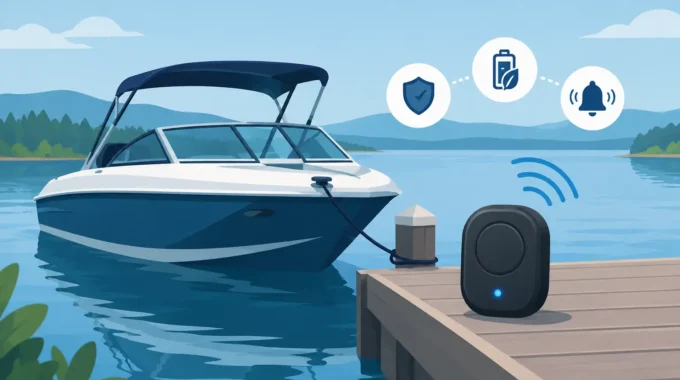
A low power boat alarm system protects unattended vessels from flooding, fire, theft and power loss without draining the batteries it is meant to protect.

Keeping Secure Moored Yachts Under Watch
A yacht can look perfectly safe from the marina car park and still be one failed hose clamp, flat battery or blown shore-power lead away from serious damage. Secure moored yachts are not protected simply because they are tied up behind a gate or left in a familiar berth. When no one is aboard, small faults have time to become insurance claims, salvage jobs and long weeks out of the water.
The practical question is not whether something can go wrong. It is whether you will know early enough to stop it. A proper unattended-vessel plan combines sound mooring practice, physical security and remote monitoring that alerts the people who can act before water reaches the floorboards or a drifting yacht reaches someone else’s hull.
Why secure moored yachts still face real risk
A marina berth removes some weather exposure, but it introduces its own risks. Shore power can trip. A battery charger can fail. A leaking stern gland, split hose or faulty bilge pump can quietly fill a boat. A fridge failure can spoil provisions, while a fire or smoke event can escalate before a neighbour notices.
Then there is movement. Wind shifts, a surge rolls through the marina, a cleat works loose or a line chafes through at the fairlead. A yacht does not need to travel far to cause major damage. A vessel that has moved only a few metres can strike a pontoon, foul another boat, stretch electrical leads or put enormous loads on a line and cleat.
Security is equally time-sensitive. An intruder may not take the whole vessel, but stolen electronics, damaged locks, cut canvas and a sabotaged electrical system are expensive enough. A visible camera and alarm help deter opportunists. More importantly, an immediate alert and image give you useful information while there is still a chance for marina staff, a neighbour or security patrol to respond.
Start at the berth, not with an alarm
Remote alarms are powerful, but they should never compensate for poor preparation. Before leaving a yacht unattended, inspect the berth as if you will not return for a fortnight – because weather, work and distance can easily turn a few days into longer.
Check mooring lines for chafe, stiffness and flattened sections. Lines should be appropriately sized, protected where they pass through fairleads, and arranged for the expected tide range and wind direction. Spring lines matter as much as bow and stern lines, particularly in berths exposed to ferry wash or surge. Do not assume last season’s lines are sound because they still look acceptable from the deck.
Make shore power deliberate rather than casual. Inspect the lead, plug ends and strain relief, keep connections out of standing water, and ensure the lead cannot pull tight as the yacht moves. If the vessel relies on shore power to maintain batteries, refrigeration, dehumidifiers or critical equipment, then shore-power loss is an alarm condition, not an inconvenience to find on your next visit.
Inside, close seacocks where practical for the vessel’s operating arrangement, clear bilges, test pumps and confirm the automatic bilge-pump circuit remains live. Keep a log of normal battery voltage and pump activity. A change from normal is often the first sign of a developing issue.
Monitor the failures that sink, disable or expose a yacht
A good monitoring system watches the conditions that need a response, not just the ones that are easy to measure. For a moored yacht, priority alarms generally include bilge water, battery voltage, shore-power loss, fire or smoke, unauthorised entry and unexpected movement.
Bilge flooding and pump activity
A high-water sensor provides a direct warning that water has reached an unacceptable level. It is also wise to monitor bilge-pump activity. A pump that runs repeatedly may be keeping up with a leak for now, but it is drawing battery power and masking a problem that will worsen. Conversely, a flooded bilge with no pump activity can indicate a blown fuse, failed float switch, flat battery or blocked discharge.
The difference between a routine alert and a lost yacht can be a single call made at the right time. If a bilge alarm goes to up to five nominated mobile numbers, there is less reliance on one owner being available, in coverage or awake.
Battery health and shore power
Low battery voltage is not merely a starting problem. It can disable pumps, communications, lighting, security equipment and refrigeration. When shore power fails, batteries begin carrying loads they were not meant to support for long periods. By the time an owner arrives to find dead batteries, the original cause may have been present for days.
Once-per-second monitoring is valuable here because it detects a change when it occurs rather than waiting for a scheduled report. The alert should identify the condition clearly, so the recipient knows whether to check a tripped marina breaker, call an electrician or arrange a visit to the vessel.
Fire, smoke and intrusion
Fire detection on an unattended yacht needs to be treated seriously. Electrical faults, charger issues and galley equipment can create smoke before flames are visible outside. A marine-rated alarm system that sends a direct alert gives owners and marina personnel a chance to investigate quickly, rather than discovering the incident after neighbouring vessels have already been affected.
For intrusion, a door contact, movement sensor, siren and camera provide different layers of protection. The camera matters because it can supply an image triggered by an alarm or requested by the owner. That helps distinguish a genuine break-in from a loose hatch, a contractor boarding with permission or a false trigger caused by vessel movement.
Cameras turn alerts into decisions
A text message saying there has been movement is useful. An alert accompanied by a current HD image is far more actionable. You can see whether a hatch is open, whether a person is aboard, whether the boat is sitting low in the water, or whether a line has gone slack.
Cameras do have limits. They need sensible positioning, a clear view, adequate lighting and a reliable data connection. A single camera pointed at the companionway will not show a stern line chafing through or water collecting in an engine bay. Larger yachts and catamarans may need several monitoring points, with cameras covering access areas and sensors protecting separate hulls or machinery spaces.
Do not install cameras solely for security. A well-positioned camera can also help verify the condition of covers, deck gear, shore-power connections and the surrounding berth after a storm warning. It is remote eyes on a vessel that may be hours away.
Choose marine equipment built for the job
A home alarm adapted for a boat is a poor substitute for purpose-built marine monitoring. Moisture, salt, vibration, heat and intermittent power expose weak equipment quickly. Look for IP67-rated hardware where it is exposed, very low current draw, reliable 4G communications and alarm delivery that does not depend on someone opening an app at the right moment.
SMS and MMS alarms remain practical because they reach nominated mobiles directly. An app adds useful real-time status, history and control, but the alarm path should stay simple. For yachts that travel beyond reliable mobile coverage or remain on remote moorings, a Starlink-enabled option can extend oversight well beyond a marina Wi-Fi footprint.
Installation quality is also part of security. Wiring should be properly fused, protected from chafe and installed to suit the vessel’s electrical system. For work involving shore power or connected AC systems, use a qualified marine electrician and ensure relevant work meets AS/NZS 3004.2:2014 requirements. A poorly installed alarm system can create the very electrical risk it was meant to detect.
Set a response plan before the first alarm
An alert without a response plan only transfers stress to your mobile. Decide who receives each alarm, who is close enough to inspect the yacht, and who has access to keys, berth details and marina contacts. Nominate backups. A single owner may be flying, offshore or simply unable to get to the phone.
Give trusted responders a short written instruction: what the alarm means, where the isolation switches and bilge pumps are, how to enter safely, and when to call emergency services or marina management. For commercial operators, heritage vessels and fleets, document the escalation path and keep it current as staff change.
Trek Transponder systems are built for this reality, delivering direct alerts to up to five mobile numbers while continuously monitoring the conditions that can damage an unattended vessel. That approach gives owners evidence to act on, rather than a vague feeling that the yacht may be all right.
Before you leave the berth next time, stand on the dock and ask a hard question: if the shore power failed, the bilge began filling or an intruder boarded tonight, who would know first? Arrange the answer before the yacht needs it.
Related Posts