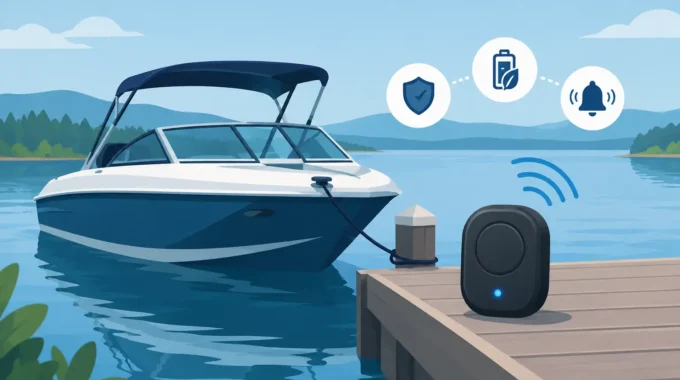
A low power boat alarm system protects unattended vessels from flooding, fire, theft and power loss without draining the batteries it is meant to protect.

Boat Fire Alarms That Warn You Before Loss
A fire can take hold on an unattended boat long before anyone on the marina walkway notices smoke. By the time a neighbour sees flames, the damage may extend well beyond one vessel – to adjacent berths, marina infrastructure and the insurance claim that follows. Properly placed fire alarms give you the warning needed to investigate while there is still a chance to prevent a total loss.
For a yacht, cruiser, houseboat or working vessel, fire detection is not a fit-and-forget accessory. It is part of a wider plan for monitoring the electrical, fuel, cooking and machinery faults that can turn a quiet berth into an emergency.
Why boat fires are different
A vessel brings ignition sources, combustible materials and confined spaces together in a way a house does not. Engine compartments hold heat, fuel lines, wiring looms and moving machinery. Galleys have gas appliances, cooktops and chargers nearby. Cabins are often lined with fabrics, foam, timber and stored gear that can generate dense smoke quickly.
The challenge gets worse when the boat is unattended. A flat battery, failed shore-power connection or overloaded charger may go unnoticed for days. A refrigerator fault can raise current draw. Salt, vibration and moisture can damage wiring or connections over time. None of these faults guarantees a fire, but each is a reason not to rely on somebody happening to be nearby when something goes wrong.
A local siren is valuable when people are aboard or close to the boat. It is not enough on its own when you are at home, travelling or managing several vessels. The practical answer is detection that can also notify you remotely, so a person with access to the vessel can check the situation immediately.
Fire alarms for boats need the right sensor in the right place
There is no single detector that suits every compartment. Smoke detectors are generally suited to accommodation spaces where smouldering materials may produce smoke before open flame. Heat detectors are often more suitable around engine areas, galleys and other locations where humidity, exhaust residue or cooking vapour could cause nuisance smoke alarms.
That distinction matters. A detector that repeatedly triggers falsely will eventually be ignored or disconnected. One placed too far from the likely source may provide warning too late. The aim is dependable early warning, not a system that creates alarm fatigue.
Cabins and accommodation areas
Install detection where smoke is likely to gather and where sleeping occupants need immediate warning. Consider the vessel layout, ventilation paths, ceiling shape and doors that may be closed overnight. Keep sensors clear of air-conditioning outlets and positions likely to attract steam or condensation.
If the vessel has separate cabins, a single detector in the saloon may not provide the warning time you expect. Larger boats may need multiple zones so an alarm tells you where to look first.
Engine rooms and machinery spaces
Engine spaces demand a more considered approach. Heat detection is commonly the sensible choice, but the detector rating and location must suit the normal operating temperature of that compartment. Mounting a sensor directly above a hot exhaust component, for example, can create false alarms or reduce the useful warning margin.
A fire alarm should also sit alongside regular inspection of fuel hoses, clamps, filters, battery cabling, alternators and exhaust systems. Detection does not repair a chafed cable or stop a fuel leak. It gives you a chance to respond before the consequences escalate.
Galleys, battery spaces and charging equipment
Cooking areas need detection that accounts for normal vapour and heat. Battery chargers, inverters and battery banks deserve close attention too, particularly where high electrical loads, ageing batteries or poor ventilation are involved. Burning insulation has a distinctive smell, but you cannot smell it from home. A monitored alarm can raise the alert before a passing boater does.
Remote notification changes the response window
The most useful alarm is one that reaches the person able to act. A marine monitoring system can send an alarm directly to nominated mobile numbers, giving owners, crew or marina contacts a clear prompt to inspect the boat. If a camera is integrated with the system, an alarm-triggered image can provide immediate visual context.
That visual check does not replace an on-site inspection or emergency response. It can, however, help distinguish a likely emergency from a detector affected by steam, and it gives the responding person a better picture before they arrive.
Trek Transponder systems can monitor fire and smoke alongside shore-power loss, battery condition, bilge activity, intrusion and other unattended-vessel risks. Alerts can be sent to up to five mobile numbers, while HD camera images can be requested or triggered by an alarm. This is especially useful when the boat is moored hours from home or when one operator is responsible for a fleet.
Remote alerts should be configured deliberately. Nominate people who will answer the call, know where keys are held and can gain access to the marina after hours. If your vessel is stored in a remote location, agree on the response process before an alarm occurs. A notification without a response plan is only half a safety system.
Do not confuse detection with fire suppression
Fire alarms detect a developing problem. Extinguishers, fixed suppression systems, fire blankets and emergency shutdowns are separate layers of protection. Each has a different role.
A handheld extinguisher may be appropriate for a small, contained fire when it is safe to use, but it is not a reason to enter a smoke-filled engine room. A fixed engine-room suppression system may control a fire in that compartment, yet it still needs correct installation, servicing and a means of alerting people to the event. Remote monitoring can tell you that something has happened; it cannot make an unsafe situation safe to enter.
For commercial vessels, heritage boats and larger yachts, have a qualified marine professional assess the complete arrangement. The best setup depends on vessel size, engine type, fuel system, passenger use and where the boat spends most of its time. Electrical work should meet applicable marine requirements, including AS/NZS 3004.2:2014 where relevant.
Test your alarms before they are needed
A detector with a dead battery, blocked sensor or failed connection is not protection. Put testing into the same routine as checking bilge pumps, battery levels and mooring lines. Test local sounders and remote notifications. Confirm every nominated contact receives the message and knows which vessel it relates to.
You should also inspect detector housings for salt residue, dust, insect ingress and physical damage. Follow the manufacturer’s service intervals and replacement dates. Sensors have a working life, and a unit that looks clean may still be past its recommended replacement period.
When testing an integrated monitoring system, verify the entire chain: detector activation, alarm input, mobile alert, camera response if fitted, and relay operation where sirens or lights are connected. A once-per-second monitoring system offers fast awareness, but only if installation, power supply and communications are maintained.
Build protection around the real risks on your boat
Start with a practical walkthrough. Identify where a fault is most likely to begin, who would know first, and how quickly someone could reach the vessel. Consider shore power, battery charging, engine spaces, cooking appliances, stored fuel and any equipment left operating while you are away.
Then choose marine-suitable fire detection, position it carefully and connect it to an alert system that reaches you when the boat is unattended. The goal is simple: turn a hidden fault into an early warning, while there is still time for a controlled response rather than a ruined vessel.
Your boat may sit quietly at its berth for weeks. That is exactly when its fire alarms need to be working hardest.
Related Posts