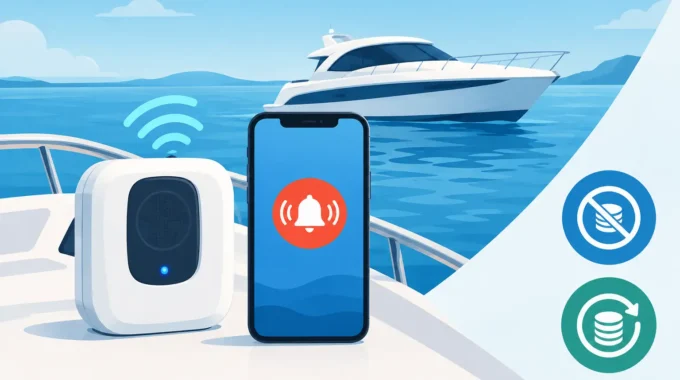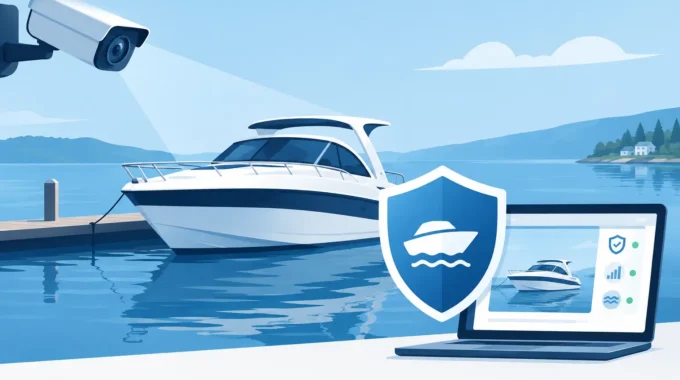
Five risks unattended vessels face can escalate fast. Learn what to monitor remotely to prevent flooding, fire, theft and costly damage at your berth.
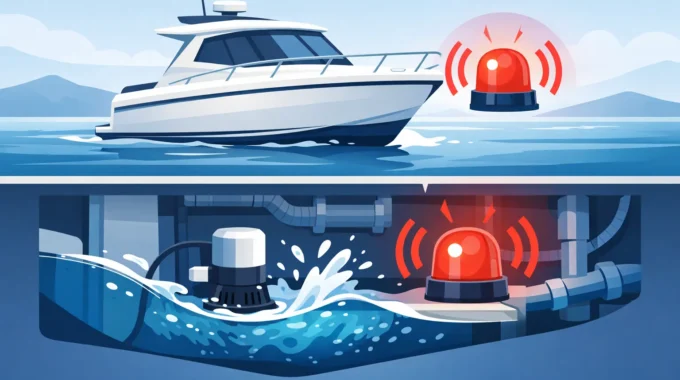
Boat Bilge Alarm: Stop Flooding Before It Spreads
A failed hose clamp, a split cockpit drain or a tired shaft seal can put water into a boat long before anyone on the marina notices. That is why a boat bilge alarm should be treated as an early-warning system, not an optional accessory. The bilge pump may keep up for a while. It may even run often enough to look like the problem is under control. Then the battery runs down, the pump jams, shore power fails or the incoming water simply exceeds the pump’s capacity.
By the time water reaches the cabin sole, the damage is rarely limited to a wet bilge. Electrical systems, batteries, engines, upholstery, refrigeration, personal gear and insurance records can all be affected. On a mooring or at anchor, a flooding event can also become a navigation hazard, pollution incident and salvage job.
Why a bilge pump is not a boat bilge alarm
A bilge pump moves water. It does not tell you why water is there, whether it is keeping up, or whether it has stopped working. Many owners assume the float switch provides enough protection. It does not provide a warning unless it is connected to a system that can notify somebody who is able to act.
A proper boat bilge alarm detects rising water at a defined level and sends an immediate warning to your mobile. That gives you a chance to arrange access, call a marina manager, contact a neighbour, send a contractor or get to the vessel yourself before the water reaches critical equipment.
The distinction matters most when your vessel is unattended. A pump can run continuously for hours without anyone knowing. If it is pumping against a leak, the pump is not solving the problem. It is buying time. An alarm makes that time useful.
Where flooding starts when nobody is aboard
Most bilge flooding does not begin with a dramatic hole in the hull. More often, it is a small fault that becomes serious because it is missed. A loose raw-water hose, failed seacock, leaking stern gland, damaged transducer fitting or cracked washdown line can admit water steadily. Rainwater can enter through hatch seals, cockpit drains, windscreen fittings or blocked scuppers.
On vessels connected to shore water, an internal plumbing failure can be particularly destructive. On boats with inboard engines, cooling-water plumbing and exhaust systems add more possible points of failure. Ageing vessels need extra attention around skin fittings, hoses and clamps, while trailer boats stored outdoors can fill quickly if covers, bungs and drainage arrangements are not right.
The risk is not limited to saltwater. Freshwater flooding can still destroy wiring, battery banks, timber fit-outs and electronics. It can also create mould and corrosion problems that remain expensive long after the water has been removed.
What an effective bilge alarm should monitor
A high-water sensor should be installed above the normal pump activation level. This arrangement gives the automatic pump the first opportunity to clear minor water, while the alarm activates if the level continues rising. Set too low, and nuisance alarms will train people to ignore genuine warnings. Set too high, and the alert may come after critical components are already submerged.
For many boats, the better approach is to monitor both water level and pump behaviour. A high-water alarm tells you the bilge has reached an unsafe level. Pump-run monitoring can identify a pump cycling too frequently, running too long or failing to run when it should. These are different warning signs, and both deserve attention.
A comprehensive vessel-monitoring system can also watch the conditions that make bilge protection fail. Battery voltage matters because a healthy pump needs power. Shore-power monitoring matters because a charger failure can drain batteries over time. Fire, smoke, intrusion and vessel-movement alarms protect against other unattended-vessel incidents that can be just as costly.
For larger boats, catamarans and vessels with separate compartments, one sensor is rarely enough. A forward bilge, engine room, accommodation bilge and lazarette may each need independent monitoring. Water does not always find its way to the lowest point quickly, especially where watertight bulkheads or internal structures divide the vessel.
Alarm delivery must work when you are not nearby
An audible siren is useful if people are on the dock. It is not enough when the boat is at a remote marina, on a swing mooring or simply out of earshot. The alarm needs to reach the people who can respond, wherever they are.
SMS alerts remain valuable because they are direct, familiar and do not rely on someone actively checking an app. App notifications add live vessel status and can make it easier to see several inputs at once. A system that sends alarms to up to five mobile numbers provides practical redundancy: an owner, skipper, marina contact, family member and service provider can all receive the same warning.
Visual confirmation changes the response. A camera image triggered by the alarm can help establish whether the boat is sitting low, whether rain is driving into an open hatch, whether a line has failed, or whether a person is onboard. It will not show every bilge fault, but it can stop wasted trips and help responders make the right call quickly.
Trek Transponder systems combine these notifications with once-per-second monitoring, IP67-rated marine hardware and low current draw, allowing owners to receive direct alerts without placing an unnecessary load on the vessel’s batteries.
Installation details decide whether the warning is useful
A bilge alarm is only as reliable as its sensor position, wiring and power supply. Fit the high-water sensor where rising water will reach it early enough to protect the equipment below, but where ordinary sloshing and pump cycling will not trigger repeated false alarms. Keep it clear of loose gear, hoses and debris that could prevent the float or sensor from operating.
Wiring should be marine-grade, protected from chafe and properly terminated. Connections in the bilge environment are vulnerable to moisture and corrosion, so they must be installed and inspected accordingly. If the alarm system has its own backup power arrangement or is connected to a monitored battery bank, test that condition as well.
Do not install the sensor and assume the job is finished. Test it at commissioning, then test it routinely. Lift the float or simulate high water, confirm the local alarm if fitted, and check that every nominated mobile receives the alert. Check camera responses where relevant. A phone number changed six months ago is not a flood-response plan.
What to do when the alarm arrives
Treat a high-bilge-water alert as urgent until you establish otherwise. First, look at any available camera image or app status. Check battery voltage, shore-power state and whether the bilge pump is operating. Then contact someone who can physically inspect the vessel if you cannot get there promptly.
The response should focus on two questions: is water still entering, and is it being removed? If the pump is running continuously, arrange immediate attendance. If the pump is not running and water is rising, the situation may be more urgent still. Shut off shore water where applicable, isolate failed systems and use additional pumping only when it is safe to do so.
After the immediate incident, find the cause. Replacing a pump without locating the leak is how the same emergency returns. Inspect hoses, clamps, seacocks, stern gear, drains, deck fittings and through-hull connections. Record what occurred, particularly if the issue may involve an insurance claim or a recurring fault.
Make the alarm part of your unattended-vessel plan
A boat bilge alarm is most effective when it sits within a simple, rehearsed plan. Decide who receives alerts, who has keys, who can access the marina after hours and which local contractor can attend if you are away. Keep contact details current and make sure at least one responder understands the boat’s seacocks, battery switches and pump locations.
Water in the bilge is not always a catastrophe. Ignoring an alert can turn it into one. The right warning, delivered early to the right people, gives your vessel its best chance of staying afloat and coming home dry.
Related Posts