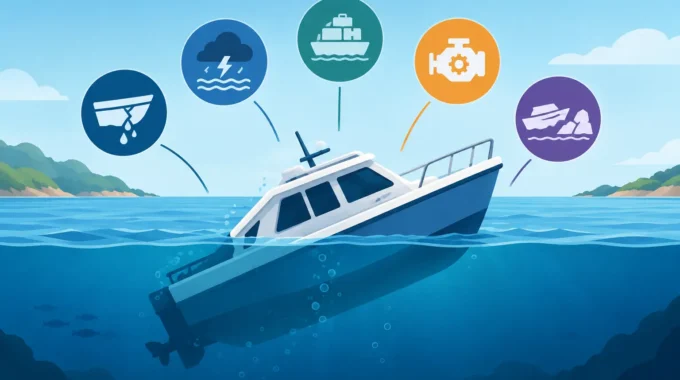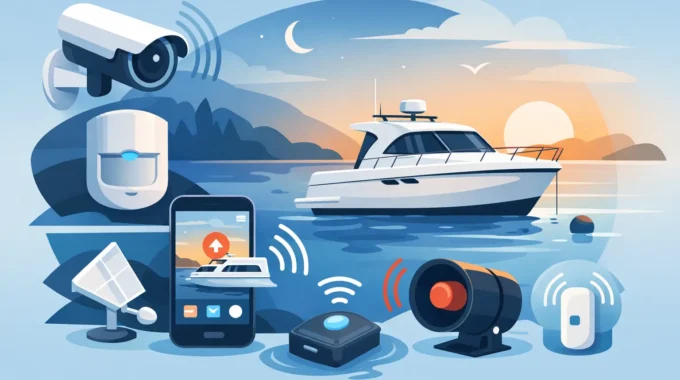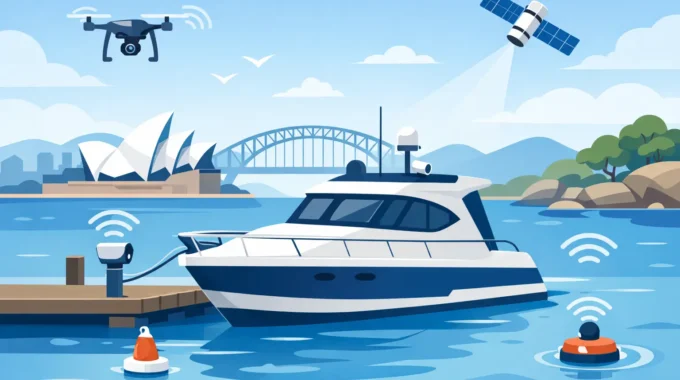
Why do boats sink? Learn the failures that flood unattended vessels, and the monitoring alerts that help owners act before a minor fault becomes loss.
Unattended Boat Safety That Prevents Disaster
A boat can go from secure to seriously damaged between two tide changes. A failed shore-power lead can flatten batteries. A blocked bilge pump can turn a minor leak into flooding. A loose mooring line can leave an expensive vessel adrift before anyone on the marina pontoon notices. Proper unattended boat safety is about detecting these events immediately, then getting a clear warning to someone who can act.
For owners of yachts, cruisers, houseboats and commercial vessels, the risk is not limited to rough weather. Most expensive incidents begin quietly: a battery voltage drops, a fridge stops cooling, water rises in the bilge, or an intruder gains access while the boat is sitting unattended. By the time you arrive for the weekend, the damage, insurance claim and disruption may already be substantial.
Why unattended vessels need active protection
A locked cabin and a regular visit are not a monitoring plan. Boats are exposed to salt, vibration, changing water levels, ageing electrical connections and weather that can change quickly. Even in a well-managed marina, neighbouring boats, shore power and mooring hardware are outside your direct control.
Consider the common chain of events. Shore power fails or trips. The battery charger stops. Battery voltage falls while onboard loads continue to run. Bilge pumps may no longer have enough reserve power when they are needed most. If the issue is not detected early, a simple electrical fault can become a flooding risk.
The same applies to fire and smoke. A small electrical fault, appliance failure or charging issue demands an immediate response, not a discovery days later. Security incidents are also time-sensitive. An alarm that reaches the owner after an intruder has left may document a loss, but an alarm that is received as entry occurs gives the owner, marina staff or security patrol a chance to respond.
Active monitoring does not remove the need for sound maintenance, proper mooring practice or insurance. It gives you the time advantage that those measures alone cannot provide.
Unattended boat safety starts with the right alarms
A useful vessel-monitoring system must watch the risks that can actually damage your boat, not simply report its location once a day. The best configuration depends on where the vessel is kept, its onboard systems and how long it is left alone, but several alarm points are fundamental.
Water ingress and bilge-pump failure
Bilge alarms should detect rising water before it reaches a critical level. Monitoring pump activity also matters. A pump running too often can indicate a leak, failed check valve or water entering through a fitting. A pump that should be operating but is not may point to a blocked intake, blown fuse, wiring fault or flat battery.
For a vessel on a swing mooring or in a marina berth, this is one of the most valuable warnings available. Water damage spreads fast through wiring, joinery, insulation and machinery spaces. Early action can be the difference between drying a compartment and salvaging a vessel.
Battery, charging and shore-power loss
Battery failure is often treated as an inconvenience until it disables critical equipment. Monitor battery voltage and shore power so you know when charging has stopped, voltage is outside an acceptable range or power has been restored.
Set thresholds to suit your battery chemistry and charging system. An overly sensitive low-voltage alert can create nuisance messages; a threshold set too low may leave little usable reserve. The right settings should account for normal loads such as refrigeration, security equipment and automatic bilge pumps.
Fire, smoke and temperature risks
Smoke and fire detection is essential wherever electrical systems, chargers, cooking appliances or machinery are present. Temperature monitoring can also warn of a refrigeration failure before stores are spoiled, or alert you to conditions that suggest an equipment problem.
On larger boats, do not assume one sensor covers every space. Engine rooms, accommodation areas, battery compartments and refrigeration spaces have different risk profiles. Use the alarm design to match the vessel, rather than forcing every area into a single generic setup.
Intrusion, movement and a vessel going adrift
Door, hatch and motion alarms provide direct warning of unauthorised access. Camera images triggered by an alarm add something equally valuable: proof. A message saying a hatch has opened is useful. An HD image that shows whether it is a crew member, marina contractor or intruder lets you make a faster decision.
Movement monitoring is particularly important for vessels at anchor, on moorings or in exposed berths. Anchor drag, a parted line or a boat that has gone adrift can become a collision, grounding or total-loss event. Excessive pitch and roll alerts can provide an early warning that conditions at the vessel are worsening beyond what is expected.
Alarm speed matters more than a daily report
A once-daily status report may reassure you that the boat was fine at a particular time. It will not help much if a hose fails 20 minutes later. Unattended boat safety depends on continuous monitoring and direct alarm delivery.
Once-per-second monitoring provides a far better chance of catching rapidly developing faults. Alerts should go directly to nominated mobiles through SMS or an app, ideally to more than one person. Relying on one owner who may be flying, working offshore or out of mobile range creates a single point of failure.
A sensible escalation plan names the people who can physically attend the boat. This may include the owner, a family member, marina manager, skipper, maintenance contractor or security contact. Make sure each person understands the alarm types and has permission to access the vessel. There is little value in receiving a bilge alert if nobody has keys, berth details or authority to act.
Cameras turn alarms into decisions
Remote cameras are not a substitute for an alarm system. They are the confirmation tool that stops you guessing. When an intrusion sensor triggers, an image can show whether there is genuine activity. When the vessel is moving unexpectedly, a requested image may reveal a loose line, changing weather or another boat close alongside.
Place cameras where they deliver usable evidence: entrances, cockpit areas, decks, machinery spaces or the berth view. Avoid positioning based only on convenience. Test images in darkness, glare and rain, because those are the conditions that often accompany real incidents.
For vessels kept beyond reliable terrestrial mobile coverage, connectivity must be considered as carefully as the sensors. A Starlink-enabled monitoring option can provide global coverage where a standard 4G service may not be sufficient. The trade-off is that satellite connectivity needs appropriate installation, power planning and service arrangements. For a coastal marina vessel, 4G may be entirely suitable. For a remote cruising yacht or offshore operation, broader coverage can be decisive.
Build a system that suits the boat, not a brochure
A small trailer boat stored at home has different exposures from a liveaboard cruiser in a marina or a commercial fleet operating across several locations. Start with the consequences of failure: what could sink the boat, start a fire, disable vital equipment, spoil stock, create a theft loss or cause it to break free?
Then identify what detects each condition and who will respond. Large monohulls and catamarans may require multiple monitoring units or sensors because distance, separate hulls and compartment layouts affect coverage. A system should also have low current draw, so the act of protecting the boat does not become another drain on the battery bank.
Marine hardware needs to withstand the environment it is fitted into. Look for IP67-rated equipment where water and dust exposure are realistic concerns, and ensure electrical installation is appropriate for marine use. Compliance with AS/NZS 3004.2:2014 is a meaningful consideration for vessel electrical systems, particularly when the installation involves shore power and permanent wiring.
Trek Transponder systems are designed around these practical realities, combining marine-specific alarm hardware, direct mobile alerts, camera confirmation and real-time vessel monitoring for owners who need to know what is happening before they reach the marina.
Test the response, not just the equipment
An alarm system is only as effective as its last test. After installation, trigger each sensor deliberately and confirm the right alert reaches every nominated mobile. Check camera images, sirens, lights and any relay-controlled outputs. Record alarm settings so they can be reviewed after maintenance, battery upgrades or a change of berth.
Repeat the test at least seasonally and before leaving the vessel for an extended period. Check sensor condition, cable runs, battery health and mobile or satellite connectivity. If an alert arrives, act on it. Repeatedly dismissing low-battery or intermittent shore-power alarms is how early warnings become expensive failures.
The boat does not need you standing beside it every hour. It does need a system that sees the problem, tells the right people immediately and gives them enough information to protect it. Set that protection up before the next quiet failure starts.
Related Posts