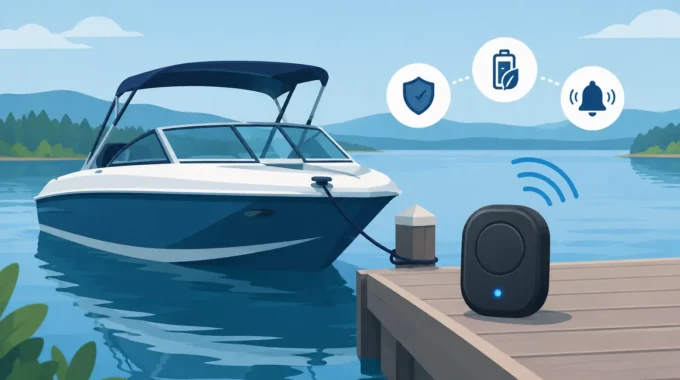
Fire alarms give boat owners early warning of smoke and heat, so you can act before a small fault becomes a destructive vessel fire when unattended at sea.
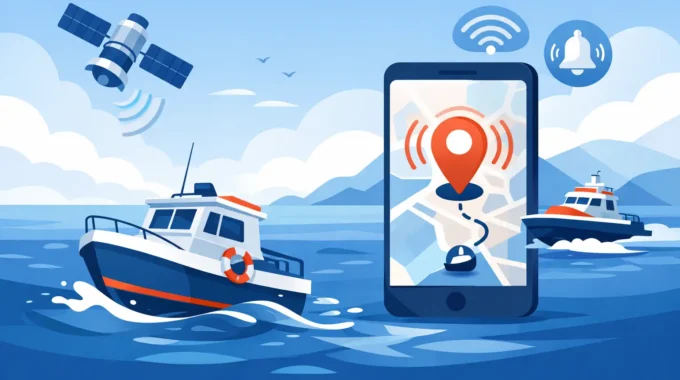
Boat Adrift GPS Alert System for Fast Response
A mooring line parts at 2:15 am. A shackle lets go in a squall. An anchor starts dragging while you are ashore, asleep, or hundreds of kilometres away. By the time someone notices an unattended boat has moved, it may be against a jetty, across a channel, on a sandbank, or taking on water. A boat adrift GPS alert system gives you the warning while there is still time to act.
For boat owners, an adrift event is rarely just an inconvenience. It can mean hull damage, a collision with another vessel, salvage costs, insurance claims, marina disputes, and a boat that is no longer where it should be. The first priority is not simply knowing the vessel has moved. It is receiving a clear, fast alert with enough information to make the right call.
Why a boat goes adrift when nobody is watching
Most breakaways begin with a small failure that is easy to miss from shore. Chafe quietly weakens a mooring line. A poorly secured tender pulls on the stern line. A tidal change alters load angles. Strong wind, wash or a storm front turns a marginal fitting into a failure point. At anchor, a shift in wind direction or a poor set can drag the vessel well outside its intended position.
A marina berth does not remove the risk. Lines can slip, piles can be struck, shore power can fail during bad weather, and a vessel can become vulnerable after an intruder tampers with fittings. Owners of yachts, cruisers, houseboats and larger launches know that one night of rough conditions can expose every weak point aboard.
The costly part is often the delay. A neighbour may not be at the marina. Harbour staff may be managing multiple incidents. A passer-by may see the boat only after it has already contacted another vessel or the shore. Remote monitoring closes that gap by putting the first warning directly in the hands of the people responsible for the vessel.
What a boat adrift GPS alert system should detect
GPS tracking alone is useful, but a proper adrift alarm needs more than a dot on a map. It should allow a safe zone, sometimes called a geofence, to be set around the boat’s normal location. If the boat travels beyond that boundary, the system should send an alarm immediately to nominated mobiles and the vessel monitoring app.
The setting matters. Make the zone too tight and normal swing at anchor, tide movement, or berth positioning can create nuisance alarms. Make it too wide and the boat may travel a significant distance before anyone knows. The right radius depends on whether the vessel is on a fixed berth, mooring, swing mooring or anchor, as well as local wind, current and available sea room.
Movement needs to be interpreted in context. At anchor, some movement is expected, especially when the wind shifts. At a marina berth, even a small unexpected change may warrant attention. A good system lets the owner configure the alarm around the vessel’s actual operating conditions rather than applying one rule everywhere.
Once-per-second monitoring is particularly valuable when conditions deteriorate quickly. It gives the system a close watch on position and other onboard risks, rather than relying on a delayed check-in that may arrive after the boat has travelled too far.
An alert is only useful if it reaches the right people
A warning should not sit in an inbox waiting for somebody to open it. For an adrift event, direct SMS alerts to up to five mobile numbers give the owner, skipper, marina contact, family member or fleet manager a chance to respond at once. App alerts add location visibility and system status, while MMS camera images can provide visual confirmation of what is happening onboard or around the vessel.
That image matters. Before asking somebody to attend in the dark or in rough weather, you may be able to see whether the boat is still tied up, whether water is washing over the deck, whether a line has failed, or whether another vessel is close alongside. It turns a vague alarm into information that supports a practical decision.
GPS alarms work best with other vessel alarms
An adrift warning tells you the boat has moved. It does not always tell you why. The strongest protection comes from combining GPS position monitoring with alarms for the failures that can cause, worsen or follow an adrift incident.
A low battery or shore-power-loss alarm can reveal that critical electrical systems are no longer being maintained. A bilge high-water alarm can warn that the boat is flooding after being damaged or taking water over the side. Bilge-pump monitoring helps identify a pump running excessively, while fire, smoke and intrusion detection covers risks that no GPS system can see.
For vessels kept at anchor or in exposed waters, pitch and roll monitoring can add another layer of warning when conditions become dangerous. Refrigeration alarms are also relevant for commercial and liveaboard vessels, where a power failure can become an expensive stock or provisioning problem before the boat itself is in danger.
This combined approach avoids a common mistake: treating position as the only issue. A boat can remain within its geofence while flooding, losing power, suffering a break and enter, or developing a fire. Conversely, a movement alert may be the first sign of a wider failure. One monitoring system should give you a clear view of both.
Choose connectivity for where the boat actually operates
For many Australian coastal and marina-based vessels, 4G connectivity is a practical way to deliver SMS, MMS and app-based alerts with low ongoing costs. It suits owners who want direct messages to their mobile without depending on a marina office or a neighbour to spot trouble.
Coverage should be considered honestly. If the vessel regularly goes beyond mobile range, spends long periods offshore, or operates internationally, a Starlink-enabled monitoring option may be the better fit. It is not necessary for every boat, but it changes what is possible for owners who need oversight well outside normal 4G coverage.
Power draw is another consideration. An alarm system must stay on when the boat is unattended, without becoming a drain on the batteries it is meant to protect. Marine-specific equipment with very low current draw is essential, particularly on moored vessels that may sit for weeks between visits.
Installation details decide whether the alarm is dependable
A GPS alert system is only as reliable as its installation. Hardware needs to tolerate damp lockers, salt air, vibration and the heat of an enclosed cabin. IP67-rated components are built for the wet, demanding conditions found on working and recreational vessels, but cable routing, fusing, antenna placement and sensor positioning still need to be done properly.
On a larger yacht or catamaran, one unit may not cover every compartment, deck area or risk point. Multiple monitoring units may be appropriate for separated hulls, engine spaces, refrigeration areas and remote lockers. Camera placement should also be deliberate. A camera aimed at the cockpit may confirm a line failure, while one at the entry point may help identify an intruder.
Owners who are confident with marine electrical work may choose a self-install path. Others should use a preferred installer, especially where alarm outputs need to trigger sirens, lights or relays. Any electrical work should respect the vessel’s requirements and applicable AS/NZS 3004.2:2014 standards. The goal is straightforward: no loose connections, no inaccessible sensors, and no critical alarm that is disabled because it was awkward to fit.
Test the response, not just the device
After installation, test the full chain. Move the vessel or temporarily adjust the geofence under controlled conditions. Confirm that every nominated mobile receives the SMS. Request a camera image. Check that app alerts display correctly and that the people listed as contacts know what to do when an alarm arrives.
Set a simple response plan before the weather turns. Decide who is closest to the vessel, who can contact the marina or harbour authority, who has access keys, and who can arrange a tow if required. For commercial operators, make this part of normal fleet procedures rather than relying on one person’s phone.
Trek Transponder systems are built for this type of unattended-vessel protection, combining GPS movement alerts with marine alarms, HD cameras and direct notifications designed to get attention when it counts.
An adrift alarm does not replace sound seamanship, inspected mooring gear or a properly set anchor. It gives those precautions a backup when nobody is aboard. Set the zone carefully, nominate people who will act, and make sure your boat can call for help before a loose line becomes a lost vessel.
Related Posts