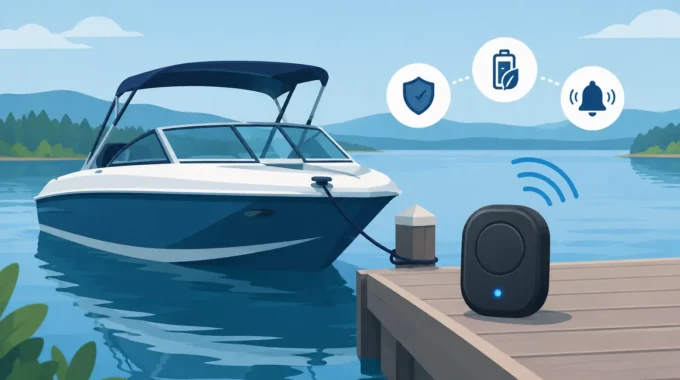
Fire alarms give boat owners early warning of smoke and heat, so you can act before a small fault becomes a destructive vessel fire when unattended at sea.
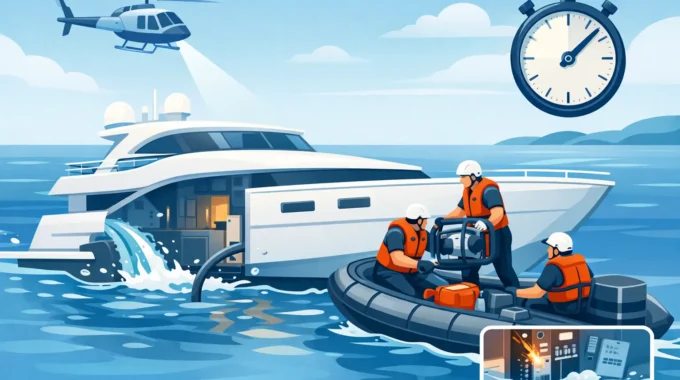
Yacht Flooding Response Case Study in 17 Minutes
At 2:13 am, a yacht owner received an alarm showing the bilge pump had started cycling far more often than normal. This yacht flooding response case study follows what happened next: a small but continuous seawater ingress, an unattended vessel, and a response window measured in minutes rather than the next morning.
The vessel was a 12-metre cruising yacht on a marina berth, left unattended for several days. It had shore power connected, its batteries were healthy and the weather was ordinary. There was no dramatic storm, collision or obvious warning from the dock. The problem was a slow leak at a failed plumbing fitting below the waterline.
That is how many expensive flooding incidents begin. Not with a spectacular event, but with a component that lets go quietly while nobody is aboard.
The incident: a pump that would not stop
The yacht’s normal bilge-pump pattern was short and infrequent. On this occasion, the pump activated, stopped, then returned again within minutes. A remote monitoring system detected the repeated activity and sent an alarm directly to the owner’s mobile, as well as a nominated nearby contact.
A bilge-pump alarm alone does not always mean the boat is sinking. Rainwater may have entered through an open hatch. A shower sump may be discharging. A float switch may be sticking. But repeated cycles are a warning that demands a decision, particularly when the boat has not been used and there has been no heavy rain.
The owner did not wait to see whether the alarm would clear. He requested camera images through the system and saw no sign of an intruder or obvious damage on deck. He then rang the marina and his contact, who was 17 minutes away.
That combination mattered. The alarm identified an abnormal condition immediately, while the camera check helped rule out a break-in or a deck-level issue before anyone travelled to the berth.
What the first person aboard found
On arrival, the contact found water in the bilge well above its usual level. The automatic pump was operating, but it was only just keeping pace with the ingress. The cabin had not flooded, the batteries remained online and the yacht still had freeboard. It was a serious problem, but it was still controllable.
The source was traced to a split hose connection on a seawater line. The contact shut the relevant seacock, isolated the failed section and confirmed the water level had stopped rising. A portable pump was then used to reduce the remaining water while the owner arranged a marine technician to complete the repair.
The practical result was straightforward: wet bilges, a failed fitting and an urgent repair bill. The likely alternative was not straightforward. If the pump had eventually lost the battle, or if shore power and charging had failed at the same time, the vessel could have flooded beyond the floorboards, damaged electrical systems and become an insurance event.
Why early detection changed the outcome
A bilge pump is not a flooding solution. It is a last line of defence that buys time. Its real capacity depends on pump size, hose run, battery condition, debris around the strainer, discharge height and whether the leak is increasing faster than the pump can move water.
In this case, the pump was doing its job, but the boat was still taking on water. Without an alert, it could have run for hours. Continuous pumping also places a heavy load on the battery bank. If the charger trips, shore power fails or a battery terminal is compromised, the situation can move from manageable to catastrophic very quickly.
Once-per-second monitoring is valuable here because it can identify changing conditions rather than merely confirming that the bilge is wet. An owner needs to know that the pump is running repeatedly, that water has reached an alarm point or that a critical electrical supply has changed. A delayed report after the vessel has already taken on significant water is not enough.
This is also why alarm delivery matters. A notification buried in an app can be missed. Direct SMS or mobile alarms sent to several nominated people give the vessel a better chance of being checked promptly. The right number of recipients depends on the owner, marina access and where the boat is kept, but one person with a flat mobile is not a response plan.
Yacht flooding response case study: the decisions that counted
Three decisions prevented a minor failure becoming a major casualty.
First, the owner treated repeated pump activity as an urgent alarm, not a maintenance reminder. It is tempting to assume a float switch is playing up, especially after a false alarm in the past. That assumption can be costly. Investigate the cause first, then determine whether a sensor needs adjustment.
Second, the owner used visual confirmation to assess the situation remotely. Camera images cannot show every hidden leak, and they do not replace somebody going aboard. They can, however, confirm whether the boat appears secure, whether a hatch is open, whether a person is onboard and whether conditions at the berth look abnormal. That is useful information when directing a marina manager, neighbour or contractor.
Third, there was a nominated local responder with access to the vessel. Remote alarms are only as effective as the action that follows them. If you live several hours from your berth, have a documented response arrangement. That may be a marina contact, trusted neighbour, skipper, contractor or a professional vessel-management service. Make sure they have keys, gate access, berth details and authority to act.
The weak points exposed by the incident
The failed fitting was replaced, but the owner also reviewed the systems around it. A flooding incident should trigger more than a single repair. It should expose where the response chain is weak.
The first check was every below-waterline hose, clamp, seacock and through-hull fitting. Age, corrosion, vibration and poor installation all matter. A fitting that looks acceptable from above can be deteriorating where it cannot easily be seen. Hoses should be properly supported, clamps inspected and seacocks exercised as part of routine maintenance.
The second check was pump capacity and pump condition. Bilge pumps need clean strainers, sound wiring, correct fusing and a discharge line that is not kinked or blocked. Test both the automatic operation and manual override. Do not assume a pump works because you can hear it run. Confirm it actually moves water overboard.
The third check was electrical resilience. Pumps, alarms and communications need power when the vessel is unattended. Battery voltage monitoring, shore-power-loss alerts and low-current equipment are part of flooding protection because they warn of the failures that can disable the primary response.
Finally, the owner reviewed alarm settings. A useful setup distinguishes between a brief normal pump cycle and a repeated or sustained event requiring immediate attention. Sensitivity should be set for the way the yacht is used and berthed. Too many nuisance alarms can lead to alarm fatigue. Settings that are too relaxed can delay a genuine emergency. There is no universal threshold, which is why installation and configuration should reflect the vessel.
Building a response plan before the bilge rises
Every unattended yacht should have a written flooding response plan, even if it is only a page kept onboard and shared with key contacts. It should state where the keys are held, who can access the marina after hours, which seacocks may be shut in an emergency and the phone numbers for the marina, insurer, mechanic and emergency tow or salvage provider.
Your responders should know the difference between checking an alarm and entering a dangerous situation. If water is near electrical equipment, do not wade into it blindly. If the vessel is unstable, heavily flooded or at risk of sinking at the berth, call the marina and emergency services as appropriate. Protect people first. A boat can be repaired or replaced.
A properly installed marine monitoring system gives the owner the earliest possible warning across bilge flooding, pump activity, power loss and other unattended-vessel risks. Trek Transponder systems are built for this job, with IP67-rated hardware, direct alarms to up to five mobile numbers and camera images available when a triggered alarm needs checking.
The fitting in this case failed without warning. The yacht did not. Set up the alarms, test the pumps, nominate the responder and make sure somebody can act before a small leak has all night to become a disaster.
Related Posts