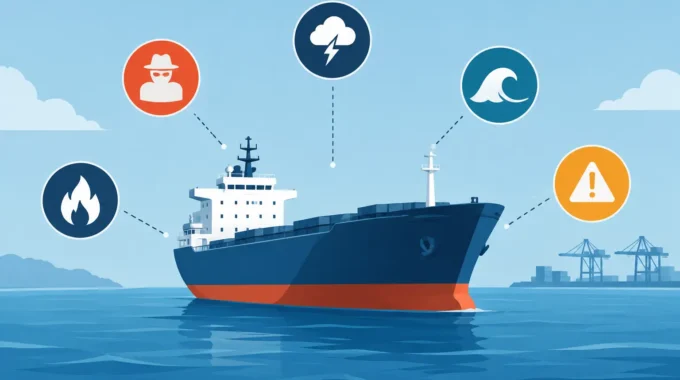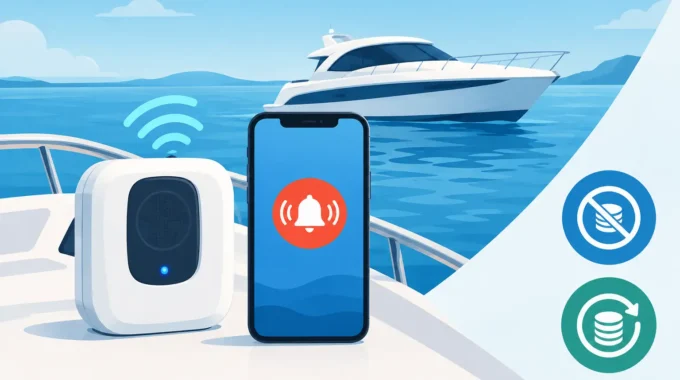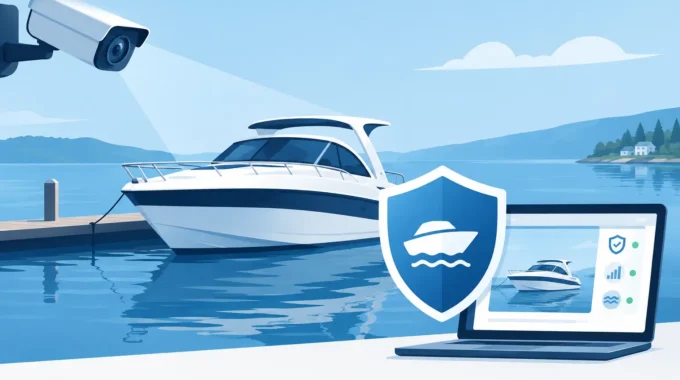
Five risks unattended vessels face can escalate fast. Learn what to monitor remotely to prevent flooding, fire, theft and costly damage at your berth.
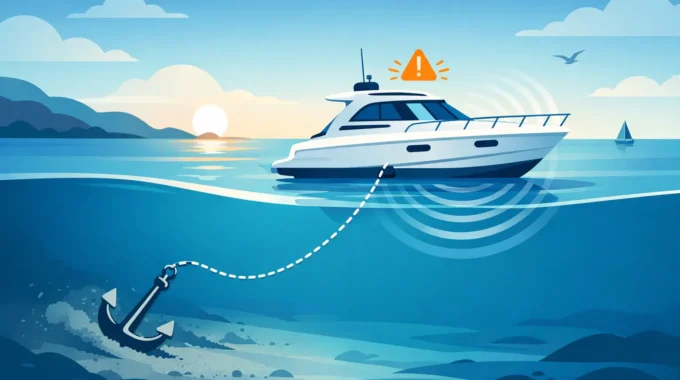
Anchor Drag Alarm Protection for Unattended Boats
The wind does not need to be extreme for a boat to drag. A wind shift at 2 am, a fouled anchor, a chafed snubber or another vessel swinging too close can turn a settled anchorage into an expensive recovery job. An anchor drag alarm gives you an early warning that your vessel has moved outside the position you consider safe, while there is still time to act.
For owners who leave a yacht, cruiser, houseboat or work vessel unattended, that warning can be the difference between starting the engine and re-anchoring, or receiving a call that the boat is aground, against a neighbour or missing from its mooring area.
Why boats drag when nobody is watching
Anchors rarely fail for one simple reason. The anchor may have set adequately when it was dropped, then lost holding as the tide changed direction. It may have landed on weed, rock or a thin patch of sand over hard ground. A short scope, undersized ground tackle, poor chain-to-rope transition or insufficient time for the anchor to bed in can all reduce the margin for error.
Conditions also change after you leave. A calm afternoon can become a squall line. A crowded bay can fill with boats that alter your swing room. On a multihull or high-sided cruiser, windage can apply far more load than expected. Even a well-set anchor can be tested by repeated yawing and snatching through the night.
The problem is not merely that the vessel moves. Every boat at anchor moves within a normal arc as wind and tide change. The real danger begins when it moves beyond that expected area, gathers speed, or approaches shallow water, rocks, channel markers, other vessels or a shoreline.
What an anchor drag alarm actually monitors
A properly configured anchor drag alarm uses the vessel’s GPS position to establish a safe position or swing radius. It then checks location frequently and sends an alert if the boat crosses the defined boundary. That is a practical safety layer, not a substitute for good anchoring practice.
The setting needs judgement. Set the permitted radius too tightly and ordinary swinging will trigger nuisance alarms. Set it too wide and the boat may travel too far before you know there is a problem. Your safe area must account for water depth, tidal range, chain scope, the anchor’s likely location, wind direction changes and every hazard around the anchorage.
For example, a boat lying in deep open water with generous room may justify a larger radius than a vessel anchored near a rocky lee shore. A houseboat in a river can have different constraints again, including current, obstructions and narrow navigation space. There is no magic number that suits every vessel or anchorage.
Position polling speed matters
A location update every few minutes may tell you that something happened. It may not tell you early enough to prevent damage. When a vessel is accelerating downwind or being swept by current, the interval between readings matters.
Trek Transponder monitors conditions once per second, so a configured movement breach can be detected promptly rather than waiting for an occasional location refresh. The alarm can be delivered directly to up to five mobile numbers by SMS, with real-time vessel status available through the monitoring app. That gives the skipper, marina contact, crew member or operator a chance to respond before a minor movement becomes a salvage job.
Set the alarm after you have anchored properly
An alarm is only as useful as the position and boundary you give it. Do not set it the moment the anchor hits the bottom. First, make sure the anchor has actually taken hold.
Let out appropriate scope for the depth, tide and expected conditions. Reverse gently to load the anchor, then increase load in a controlled manner while checking that the boat is not sliding. Confirm your position against visible bearings, charted features and sounder depth where practical. Once you are satisfied the vessel is holding and has settled into its swing pattern, set the monitored position and alarm radius.
Before leaving the boat unattended, check the practical basics as well. Is the snubber protected from chafe? Are the bow roller, chain stopper and shackles secure? Is there enough water through the tidal cycle? Could a wind shift put the boat on a different line towards danger? These checks are not old-fashioned seamanship. They are the first defence.
Alarms must reach someone who can act
A flashing screen on board does not help if nobody is aboard. The value of remote monitoring is that it sends the warning to the people who can make a decision, wherever they are.
An effective response plan is simple. Decide who receives the alert, who has keys and access to the vessel, and who is closest enough to attend. If you are ashore nearby, you may be able to return immediately. If the boat is in a remote anchorage, a trusted local contact, tender operator or marina manager may need to be part of the plan.
For commercial vessels, fleets and heritage craft, send notifications to more than one responsible person. One operator may be driving, asleep, offshore or without coverage. Escalation to multiple mobile numbers reduces the chance that a critical warning is missed.
An alarm should also prompt a clear first check: has the boat genuinely moved outside its safe radius, or is there an issue with positioning? This is where camera confirmation is valuable. HD marine cameras that send images when an alarm occurs, or when requested by the owner, can show whether the vessel is lying normally, nearing another boat, taking water over the bow or already in an unsafe location.
Do not treat anchor drag as an isolated risk
A dragging boat can create several failures at once. Grounding can damage the hull, rudder, propeller and running gear. A collision may breach the hull or leave the vessel entangled with another boat. If the boat reaches a shallow shore, repeated wave action can cause structural damage long before anyone arrives.
Then there are the secondary risks. A dragging vessel may lose shore-power connection, flatten batteries while trying to maintain systems, trigger bilge pumps after impact, or suffer water ingress that becomes a flooding event. A boat that moves free at night may also be harder and more dangerous to locate.
That is why vessel monitoring should cover more than GPS movement. Monitor bilge level, bilge-pump operation, battery voltage, shore power, fire and smoke, intrusion, excessive pitch and roll, and refrigeration where relevant. The goal is not to create more alerts. It is to identify the specific condition that needs action before it becomes a claim, repair bill or total loss.
Choose marine hardware, not a consumer tracker
A portable tracker can indicate where an object is. It is not necessarily designed to protect a vessel through heat, salt, vibration, damp compartments and extended unattended operation. Nor will it usually integrate alarms, cameras, vessel inputs and notification paths into one practical system.
For permanent monitoring, look for marine-specific hardware with suitable environmental protection, low current draw and a dependable method of delivering alerts. IP67-rated equipment is built to resist dust and temporary immersion, but installation location, cable entries and connections still matter. Water finds poor terminations quickly.
If your boat is normally beyond reliable mobile coverage, connectivity needs another answer. A Starlink-enabled monitoring arrangement can provide global communication options for vessels operating or stored well outside ordinary 4G service areas. The right option depends on where the vessel goes, its power budget and whether you need continuous remote oversight or only occasional tracking.
Installation should also suit the vessel. A small monohull may need a straightforward central installation, while a large catamaran can benefit from monitoring points in separate hulls. Professional installers can advise on sensor placement, antenna position, camera coverage and wiring so the system reports a real fault rather than an avoidable installation issue.
Respond fast when the alarm arrives
If you receive an anchor drag alert, do not assume it is a false alarm because the weather seems calm where you are. Check the live position, review any available image and contact someone on site if you cannot attend. Consider tide, current and the direction the vessel is moving, not just the distance travelled.
If the boat is still afloat and clear, the response may be as simple as re-anchoring in better ground or moving to a protected mooring. If it is nearing danger, notify local authorities, marina staff or marine assistance as appropriate. Early calls are easier than trying to organise help after the vessel has grounded, collided or gone adrift.
An anchor alarm does not replace a properly selected anchor, sound seamanship or a careful weather watch. It gives those precautions a set of eyes after you have stepped ashore. Set the boundary honestly, nominate the people who will respond, and make sure the warning reaches them before your boat becomes tomorrow morning’s problem.
Related Posts