Can Starlink monitor a boat? Learn what connectivity can do, where it falls short, and how dedicated alarms protect an unattended vessel remotely.
Does Starlink Work Offshore for Your Boat?
A boat can be 30 nautical miles from the coast, rolling at anchor with no mobile signal, when shore power fails or the bilge pump starts cycling. That is where the question, does Starlink work offshore, stops being about streaming weather videos and becomes about whether someone receives a warning before a manageable fault becomes a flooded, adrift or dead boat.
Does Starlink work offshore? The short answer
Yes, Starlink can work offshore, but it is not a blanket guarantee of internet anywhere on the water. Your result depends on the service plan, the vessel’s location, a clear view of the sky, available power and the way the equipment is installed. Coastal passages, offshore anchorages and many bluewater routes can have usable connectivity where 4G has disappeared completely.
For boat owners, the real advantage is continuity. A satellite connection can keep vessel monitoring, camera access and alarm notifications operating when the boat is outside normal mobile coverage. That matters for a cruiser on a mooring, a yacht at a remote island anchorage, a charter vessel between ports or a commercial operator managing boats across a wide area.
But do not treat Starlink as a fit-and-forget safety device. It needs the right plan, reliable DC power and a properly mounted antenna. It also cannot replace essential marine safety equipment such as an EPIRB, VHF radio, AIS, navigation equipment or a proper watchkeeper.
Offshore coverage is not the same as mobile coverage
The first mistake owners make is assuming that a Starlink dish works wherever the vessel floats. Satellite availability is broad, but service access offshore is governed by the plan you hold, the country and waters you are operating in, network capacity and Starlink’s current terms. Those terms can change, particularly for ocean use and international travel.
Coastal cruising and remote anchorages
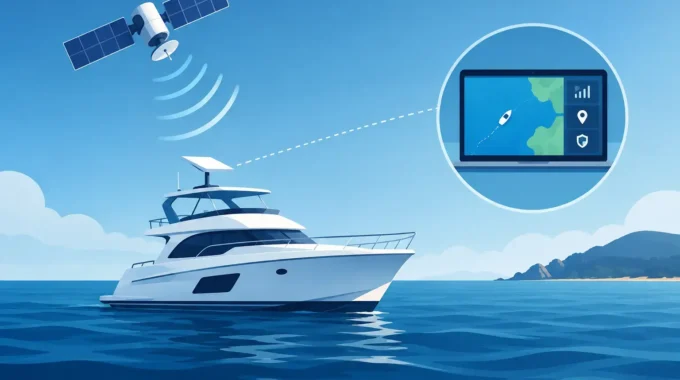
For boats travelling around Australia, Starlink is often most useful just beyond the range of reliable 4G. Mobile coverage can drop sharply once you leave a populated coastline, round a headland, enter a remote bay or head offshore. In these situations, satellite internet can maintain a data path to a vessel-monitoring system, allowing alarms and camera images to reach the owner or nominated contacts.
That is a major improvement over discovering a problem only when you return to the boat. A low battery bank, failed refrigeration system or high-water alarm is expensive enough in a marina. Left unattended in a remote anchorage, it can become far worse.
Bluewater passages and international waters
Long-range cruising requires more checking. Confirm that your selected Starlink service is authorised for the areas you intend to travel, including offshore and international waters. Do this before departure, not after your mobile service drops out beyond the horizon.
Also plan for interruption. Satellite internet can be affected by congestion, location restrictions, equipment faults and the physical environment. If an alarm is critical, build in layers: local sirens or lights, multiple recipients for remote alerts, battery backup and regular status reporting. One communications path is useful. A monitored vessel with fallback measures is far safer.
The antenna needs sky, not wishful thinking
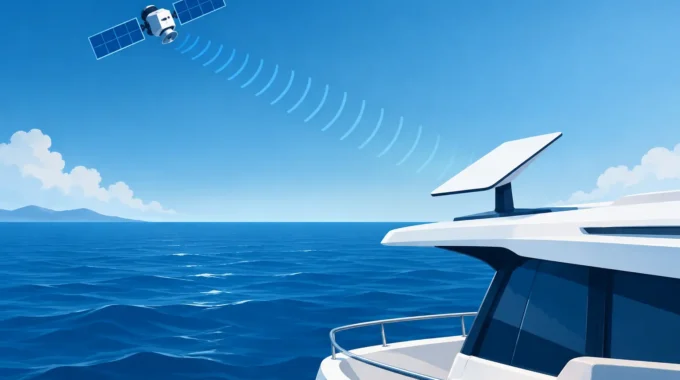
Starlink antennas need an unobstructed view of the sky. On a boat, masts, booms, radar scanners, hardtops, davits, solar panels and other equipment can block parts of that view. Even brief obstructions may interrupt a connection. That may be tolerable for browsing, but it is less acceptable when you are relying on the connection to deliver an alarm image or status update.
Mount the antenna where it has the clearest practical exposure while remaining protected from impact, wash-down damage and snagging. The mount must cope with vibration, salt spray, UV exposure and vessel motion. Cable runs should be supported, sealed at deck penetrations and kept clear of areas likely to flood or chafe.
A neat installation is not merely cosmetic. Water ingress, a loose connector or a cable crushed under a locker lid can remove your offshore connection at exactly the wrong time.
Power draw is the issue many boats overlook
Starlink uses far more power than a typical vessel alarm or monitoring unit. Exact draw varies by equipment and conditions, but the dish and router can place a meaningful load on the house bank over a full day. On a boat at anchor, that load must be balanced against refrigeration, navigation electronics, lighting, pumps and the charging available from solar, alternator, wind generation or a genset.
A system that performs well tied to shore power may drain batteries quickly during several overcast days at anchor. Before fitting Starlink, calculate daily consumption and assess the worst case, not the sunny-day average. Include losses from DC conversion if the installation relies on an inverter.
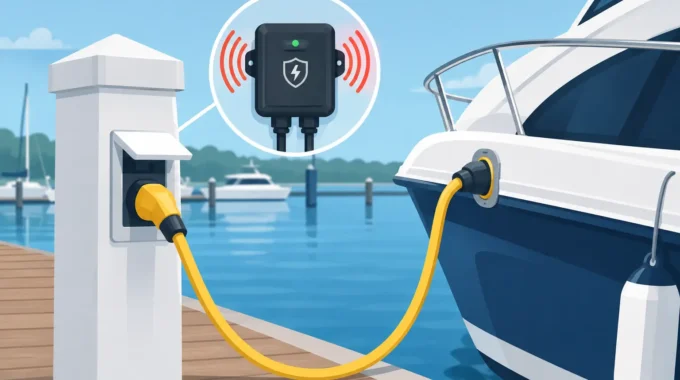
For unattended monitoring, separate the communications load from the protection load in your thinking. A low-current alarm system should continue watching for flooding, fire, battery failure, shore-power loss and intrusion even if the internet equipment has shut down or been switched off to preserve power. The satellite connection adds global visibility, but it should not create a single point of failure.
Weather and vessel movement can affect performance
Starlink is designed to operate outdoors, but offshore conditions are demanding. Heavy rain can reduce signal quality. Salt residue can build up. Strong winds, spray and constant vibration test mounts and connectors. A vessel pitching at sea may still maintain a connection, yet performance can vary depending on sea state, installation and the antenna’s view of the sky.
This is why marine installation matters. Domestic-style mounting methods and exposed indoor-grade power connections do not belong on a boat. Use marine-suitable cabling, protected electrical connections and mounting hardware designed for the environment.
Make Starlink useful for vessel monitoring
Internet access is only valuable when the monitoring system can turn a fault into a clear, actionable warning. A message saying “alarm” is not enough when your vessel is hours away. You need to know what has happened, how urgent it is and whether someone can verify the situation.
A Starlink-enabled monitoring arrangement can send app notifications and support remote camera viewing or alarm-triggered images when 4G is unavailable. That gives an owner a way to check whether an intruder is aboard, whether water is rising, whether a shore-power failure has affected the boat or whether a vessel has shifted position at anchor.
Trek Transponder systems are built around this practical response. They monitor critical onboard risks once per second, can notify up to five mobile numbers, and can provide camera images when an alarm occurs or when you request them. With a suitable Starlink connection, that monitoring can remain visible far beyond normal mobile coverage.
An alarm still needs a response plan
Remote visibility does not pump out a boat, extinguish a fire or secure a broken mooring line. Before relying on offshore monitoring, nominate people who can act: a marina manager, local contractor, trusted neighbouring skipper, crew member or emergency contact. Give them access instructions, key locations and clear authority to respond.
Set alarm priorities carefully. High water, fire or smoke, loss of shore power, battery voltage and anchor drag may need different escalation steps. Test every recipient’s mobile number and confirm they understand what an alarm means. A notification buried in an old group chat is not protection.
A practical offshore Starlink checklist
Before leaving the marina or fitting satellite internet to an unattended vessel, check these five points:
- Confirm the service plan supports the waters and countries you intend to use.
- Select an antenna position with a clear sky view and a marine-grade mounting method.
- Calculate daily power use against your actual charging capacity and battery reserve.
- Keep core alarm monitoring operating independently from the Starlink equipment where possible.
- Test alarm delivery, camera access and your response plan while you are still within easy reach of the boat.
When Starlink is not the right answer on its own
If your boat remains in a well-covered marina, a 4G monitoring system may be all you need. It is simpler, uses less power and can still deliver SMS or MMS alerts directly to mobile numbers. For many owners, Starlink is best treated as an additional connection for remote cruising, offshore operations or locations with poor mobile reception.
Likewise, if the vessel is stored without reliable charging, fitting a high-draw satellite system before resolving the power budget can create another problem. Start with sound batteries, charging, bilge pumping, fire detection and physical security. Then add the communications layer that suits how and where you use the boat.
Starlink can give an offshore boat a valuable line back to you, but the safest result comes from treating it as part of a properly installed monitoring and response system. Test it before the trip, protect its power supply, and make sure the person receiving the alarm can act before a small fault turns into a marine disaster.
Related Posts