Do marine alarms need subscriptions? See which alerts need connectivity, what ongoing fees cover, and how to protect your unattended boat while away.
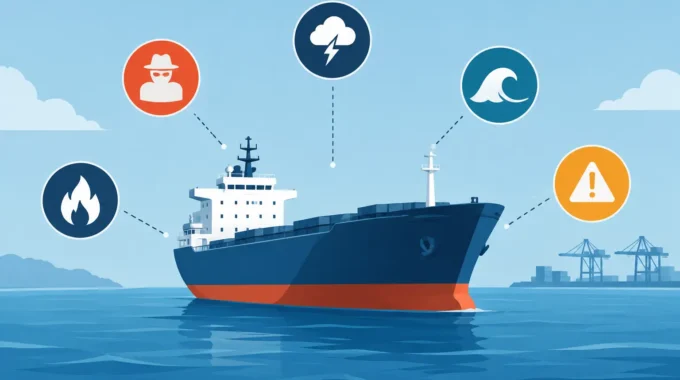
Five Risks Unattended Vessels Cannot Ignore
A quiet boat is not necessarily a safe boat. The five risks unattended vessels face are often invisible from the marina car park, yet each can turn a routine week away into an insurance claim, emergency call-out or total loss. A failed bilge pump, disconnected shore power lead or intruder can cause serious damage long before anyone happens to walk past.
Whether your vessel is on a marina berth, swing mooring, anchor or trailer, the issue is the same: faults do not wait until you return. Remote monitoring gives you warning while there is still time to act, organise a neighbour, call the marina or dispatch a contractor.
Five risks unattended vessels face at the berth
1. Flooding from bilge water or pump failure
Water ingress is one of the fastest ways for an unattended vessel to become a disaster. A leaking hose clamp, failed stern gland, rainwater entering through an open hatch or blocked scupper may seem minor at first. If the bilge pump cannot keep up, the battery is flat or the pump has failed, water can rise unnoticed for days.
The damage is not limited to carpets and stored gear. Saltwater can destroy electrical systems, engines, chargers, batteries and navigation equipment. Once water reaches wiring looms and inaccessible compartments, repair costs can escalate well beyond the original cause.
Monitor high-water level and bilge-pump activity separately. A high-water alarm tells you the boat is taking on water. Repeated or unusually long pump runs can reveal a leak before the water reaches the high-level sensor. An immediate SMS or app alert gives you the chance to arrange inspection rather than relying on the next marina patrol.
2. Shore-power loss and failing batteries
A shore-power lead can be knocked loose, a marina breaker can trip, or a charger can fail without warning. On a vessel left connected to shore power, that single fault can quietly drain service batteries while refrigeration, monitoring equipment and other loads continue operating.
Flat batteries create more than an inconvenience at the next outing. They can stop bilge pumps, lights, alarms and communications when those systems are needed most. Deep discharge also shortens battery life, turning an avoidable power interruption into a costly replacement job.
The right response depends on how the vessel is used. A weekend runabout may only need a shore-power failure alert. A liveaboard cruiser, charter vessel or boat with refrigeration needs visibility of shore power, battery voltage and charging condition. Once-per-second monitoring is valuable here: it identifies a genuine loss quickly, rather than reporting it hours after the batteries have begun to fall away.
3. Fire, smoke and overheating equipment
Fire is the risk no owner can afford to discover late. Battery chargers, inverters, refrigeration compressors, galley appliances and ageing wiring can all become ignition sources. A fire aboard also threatens neighbouring vessels, marina infrastructure and people living or working nearby.
Smoke detection is essential, but it should form part of a clear alert plan. If an alarm sounds, the owner needs to know where the boat is, who can reach it and whether marina staff require immediate notification. Where suitable, an alarm system can also trigger a siren or warning light to draw attention from nearby people.
Do not assume a shore-power connection makes the boat safer. Continuous power can keep a fault active. Electrical work should be carried out correctly, and marine systems should be selected and installed with applicable requirements in mind, including AS/NZS 3004.2:2014 where relevant. Detection does not replace maintenance, but it can give you the critical minutes needed to prevent a contained fault becoming a marina emergency.
4. Theft, break and enter, and unauthorised boarding
An unattended vessel can look like an easy target, particularly when it is moored away from the busiest pontoons or left for long periods between trips. Outboard motors, electronics, tenders, fishing gear and tools are obvious targets. But a break-in also brings water damage from broken hatches, vandalism, stolen keys and the risk of someone attempting to move the vessel.
A good security setup needs more than a loud local alarm. At an empty marina, an alarm that nobody hears does little to protect your boat. You need an intrusion alert sent directly to your mobile, with the ability to notify up to five people so one unavailable owner does not become a missed incident.
Camera images add the proof that an alarm alone cannot provide. A triggered image, or a photo requested remotely, can help distinguish a false alarm from an open companionway, suspicious person or damaged fitting. It also gives marina management or police useful information before they arrive. Cameras are not a substitute for locking down valuables, but they remove the uncertainty that leaves owners guessing from hundreds of kilometres away.
5. Going adrift, dragging anchor or excessive movement
A vessel that breaks free can strike other boats, collide with a jetty, run aground or drift into open water. Lines chafe through. Cleats fail. A change in wind direction can place loads on mooring gear that were not apparent when you left. At anchor, a dragging vessel can cover dangerous ground quickly, especially overnight or in poor weather.
Position alerts are the obvious safeguard, but movement monitoring deserves equal attention. Excessive pitch and roll can indicate worsening conditions, a failed mooring arrangement or a vessel taking water. For larger craft and multihulls, more than one monitoring unit may be appropriate to cover separate spaces and risk points.
Set practical geofence and movement thresholds. Thresholds that are too tight create nuisance alarms from normal tide, wake and swing. Thresholds that are too broad may not alert you until the boat has already travelled too far. The right settings depend on the mooring type, local conditions and the vessel’s normal range of movement.
What effective remote oversight looks like
A vessel-monitoring system must work when conditions are wet, hot, dark and inconvenient. Marine-grade hardware with IP67 protection, low current draw and reliable communications matters far more than a collection of consumer smart devices that were never intended for a bilge or engine space.
It should also deliver useful information, not just noise. Configure alerts for the risks your vessel actually carries, nominate the people who can respond, and test each alarm before relying on it. Check that your nominated mobiles receive SMS or MMS alerts, review camera coverage at night, and make sure a trusted person has access to keys and the marina details if you are travelling.
For vessels outside dependable mobile coverage, satellite-enabled monitoring may be the sensible choice. The trade-off is greater equipment and connectivity cost, but the alternative is having no warning while your boat is remote. Trek Transponder systems combine direct mobile alerts, real-time app monitoring and alarm-triggered HD images, with Starlink-enabled options for owners who need wider coverage.
Act while the fault is still small
Most unattended-vessel losses begin with something ordinary: a loose connection, a worn hose, a failed pump or a line that looked sound last weekend. Put eyes on the boat through a proper inspection routine, then put an alarm on the risks you cannot see. The best time to receive a warning is while a marina call, a neighbour’s visit or a quick repair can still save the vessel.
Related Posts