Fire alarms give boat owners early warning of smoke and heat, so you can act before a small fault becomes a destructive vessel fire when unattended at sea.
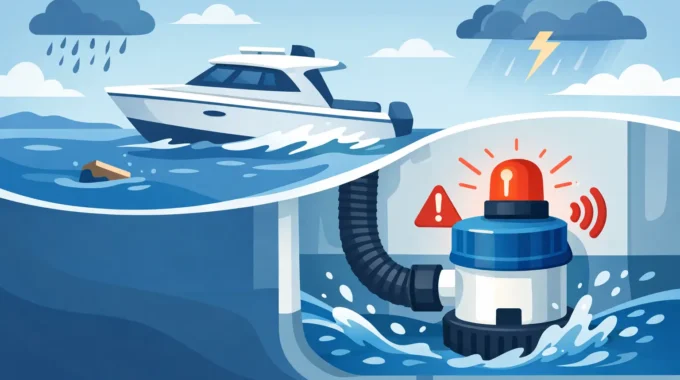
What Triggers Bilge Pump Alarms on a Boat?
A bilge pump alarm at 2 am is not an inconvenience. It is a warning that water may be entering your boat, a pump may be working far harder than it should, or a critical electrical fault has stopped it from protecting the hull. Understanding what triggers bilge pump alarms lets you judge the urgency quickly – and act before a manageable leak becomes a flooded cabin, ruined batteries or a vessel on the bottom.
What triggers bilge pump alarms?
Bilge pump alarms are generally triggered when a high-water float switch rises, when the primary pump runs for too long or too often, or when a monitoring system detects a fault in the pump circuit. The exact trigger depends on how the vessel is wired and what alarm equipment is fitted.
A basic high-water alarm is independent of the normal bilge pump. It uses a separate float switch mounted above the pump’s usual activation level. Water reaches that higher point, the switch closes and an audible alarm sounds. On an attended boat, that gives the crew a chance to find the source of water before it overtops floorboards, reaches electrical equipment or compromises stability.
For an unattended vessel, an onboard buzzer is not enough. A remote system should send an immediate alarm to nominated mobiles, so the owner, marina contact or skipper can investigate while there is still time to save the boat.
High bilge water level
This is the most serious and most obvious trigger. Water has risen above the normal operating level of the primary pump and activated a dedicated high-water switch. That can happen because the incoming water exceeds the pump’s capacity, the pump has failed, the discharge cannot get water overboard, or the pump is not receiving power.
Do not assume a high-water alarm means only a little rainwater. A failed hose clamp, split raw-water hose, leaking stern gland, damaged seacock, failed cockpit drain or breached hull fitting can fill a bilge surprisingly fast. The risk is greater when the boat is unattended, leaning on a mooring, exposed to wake, or taking green water over the deck.
Excessive pump running or repeated cycling
Many monitored systems alarm when the bilge pump runs continuously beyond a set time, or cycles repeatedly within a set period. A pump that comes on once after heavy rain may be normal. A pump that runs every few minutes on a clear, calm day is not normal until proven otherwise.
Frequent cycling often points to a slow leak, water returning down the discharge hose, a leaking non-return valve, a float switch that is sticking, or a pump positioned in a low spot where small amounts of water repeatedly activate it. It may also reveal a battery charger, freshwater system or refrigeration drain contributing water to the bilge.
The key is change. If your boat normally pumps for ten seconds after a storm but suddenly runs for several minutes, treat that as an active fault. A remote alarm that reports pump activity gives you a useful early warning before the high-water alarm has to do its job.
Pump circuit, battery or power failure
A bilge pump cannot protect a boat without a healthy power supply. Some vessel-monitoring systems can detect low battery voltage, shore-power loss or a failed pump circuit. These conditions may trigger their own alarms because they directly affect bilge protection.
A flat house battery, corroded fuse holder, loose terminal, tripped breaker or failed automatic float switch can leave a perfectly good pump unable to run. Shore-power loss can then turn into a bilge emergency if the battery charger is no longer maintaining the bank. On a boat left for weeks at a marina, these faults are often found only after the battery has been depleted and the water has already risen.
Why a bilge pump alarm can sound when the boat is not sinking
Not every alarm means the hull is taking on water, but every alarm deserves a reason. The aim is not to dismiss nuisance alarms. It is to identify the condition causing them and remove it.
Heavy rain is a common cause, particularly on vessels with blocked cockpit drains, leaking hatches, perished window seals or canvas that funnels water into the cockpit. Rainwater entering through deck hardware can accumulate slowly and make the pump cycle long after the weather has cleared.
A float switch can also be the culprit. Debris in the bilge, oil residue, cable ties, loose insulation or a shifted hose may jam the float in the raised position. Electronic sensors can be affected by contamination or poor installation. A pump may then run dry, overheat and flatten the battery – creating a second failure from the first.
Discharge plumbing creates another common problem. If the discharge hose has a low loop, poor routing or a faulty check valve, water can drain back into the bilge after each cycle. The pump removes the same water repeatedly. Check valves can reduce backflow but they also add restriction and can jam, so their use and placement need careful consideration rather than a quick fix.
The faults worth checking first
When you receive a bilge alarm, arrange for someone competent to inspect the vessel promptly. If water is visibly rising, notify marina staff or emergency services where appropriate and do not delay while trying to diagnose it remotely.
Once the boat is safe, inspect these areas methodically:
- The bilge water level, colour and smell. Saltwater, freshwater, fuel-contaminated water and rainwater each point to different sources.
- The pump and float switch. Check that both move freely, activate correctly and are clear of debris.
- The fuse, wiring, terminals and battery voltage. Look for corrosion, heat damage and loose connections.
- The discharge hose, seacock and through-hull fitting. Confirm the outlet is clear and water is actually leaving the vessel.
- Hoses, clamps, stern glands, raw-water systems, cockpit drains and deck fittings. Look for drips, split hoses and signs of water tracking into the bilge.
Test the system using clean water, not guesswork. Confirm the primary pump starts at its intended level, the high-water alarm operates separately, and the discharge clears properly. Then confirm that any remote alert reaches every nominated mobile. An alarm that does not reach the person who can act is only half a system.
Set alarms for the way your boat is used
A trailer boat used every weekend needs a different arrangement from a cruiser left in a marina berth for months. On a larger yacht, catamaran or houseboat, one pump alarm may not cover every compartment. Separate bilges, engine spaces, lazarettes and low lockers can each need their own sensing and pumping arrangement.
Alarm thresholds also need to account for normal water sources. A vessel that collects condensation or small amounts of rainwater may have occasional pump operation that is expected. Set the monitoring system to report unusual run time or repeated cycles, rather than creating an alarm every time the pump runs briefly. Set the high-water alarm independently and high enough to avoid normal cycling, but low enough to provide meaningful time to respond.
There is a trade-off here. A very sensitive setting catches minor changes early but may produce more alerts. A relaxed setting reduces messages but may delay warning of a slow leak. For an unattended, high-value vessel, early notification is usually the safer choice – provided the installation is tidy and the system has been tested.
Remote proof beats uncertainty
A bilge pump alarm tells you there is a condition to investigate. A remote monitoring system can tell you more: whether shore power has failed, whether battery voltage is dropping, how long the pump has operated and, with a camera, what is happening onboard.
That matters when you are hours away from the marina or offshore on another job. Rather than asking someone to make a blind trip to the boat, you can receive an alarm on up to five mobiles and request or trigger images to confirm whether water is present, the cabin is dry, or crew need to attend immediately. Once-per-second monitoring is particularly useful where a fast-developing water ingress event cannot wait for a daily status report.
Trek Transponder combines bilge and pump monitoring with battery, shore-power, fire, intrusion and vessel-movement alarms in Australian-made, IP67-rated marine hardware. The practical benefit is simple: one system can warn you when the conditions that keep a bilge pump working have failed as well as when the water level rises.
A bilge alarm should never be treated as background noise from a boat that is “probably fine”. Test it, understand its trigger, keep the bilge and discharge route clear, and make sure an alarm reaches someone who can get to the vessel. That small amount of preparation is far cheaper than meeting your insurer, marina manager and salvage contractor after the fact.
Related Posts