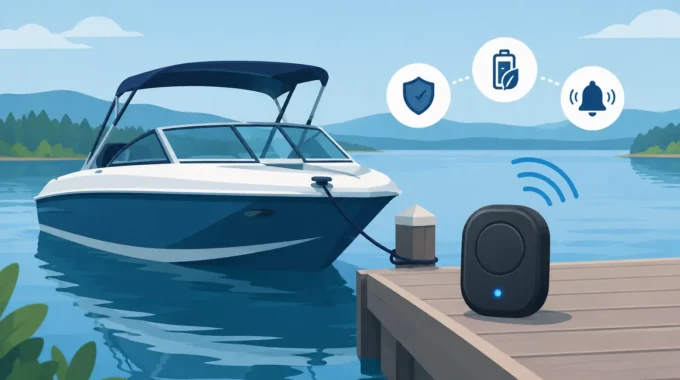
Fire alarms give boat owners early warning of smoke and heat, so you can act before a small fault becomes a destructive vessel fire when unattended at sea.
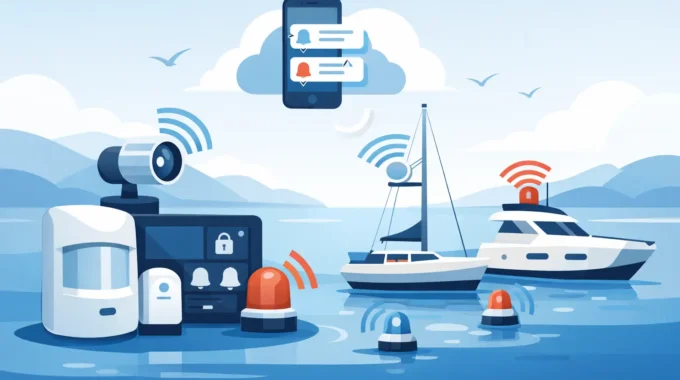
Marine Alarm Comparison for Unattended Boats
A boat can take on water, lose shore power or break free from its mooring long before anyone walks past the marina berth. A worthwhile marine alarm comparison is not about finding the cheapest box with a siren. It is about establishing whether the system will detect the failure that matters, get the warning to the right person, and give them enough information to act before a minor fault becomes an insurance claim.
For boats left on a swing mooring, in a marina, on a trailer or at a remote berth, remote visibility is not a luxury. It is the difference between arriving to a flat battery and arriving to a flooded, damaged or missing vessel.
Why a marine alarm comparison must start with risk
Many alarm systems look similar in a product list. They may all mention GPS, motion detection or a mobile app. That tells you very little about how they perform when the charger trips overnight, a hose fails, a bilge pump jams or an intruder boards at 2 am.
Start with the risks your vessel actually faces. A trailer boat stored at home may place theft and unauthorised movement at the top of the list. A cruising yacht on shore power needs early notice of power loss, battery voltage decline, bilge activity and refrigeration failure. A houseboat or commercial vessel may need multiple zones, external sirens, high-water detection and alerts sent to more than one operator.
The right system depends on the vessel and where it sits. But any system protecting an unattended boat should be judged by the same hard questions: what does it detect, how fast does it detect it, how does it notify you, and can you verify the situation remotely?
Marine alarm comparison: the five tests that matter
1. Sensor coverage: one alarm is not vessel protection
A basic standalone alarm may detect motion or a door opening. That can help deter theft, but it will not warn you that the battery bank is collapsing, the bilge pump is running continuously, or shore power has failed during a hot weekend.
Compare the inputs available and whether they are designed for marine conditions. The most useful monitoring coverage commonly includes battery voltage, shore-power failure, high bilge water, bilge-pump run time, smoke or fire, intrusion, GPS position and movement. On vessels with refrigeration, freezer or critical equipment, temperature and equipment-failure alerts can prevent expensive spoilage and damage.
For a larger yacht, catamaran or fleet vessel, expansion matters. A single unit may not cover every compartment, hatch, engine space and accommodation area. Check whether the system can support additional sensors or multiple monitoring units without creating separate, confusing alert systems.
2. Detection speed: minutes can be too late
Not all monitoring is continuous. Some trackers report position only at set intervals. Some smart sensors check in periodically to conserve power. That may be acceptable for locating stolen equipment, but it is a poor fit for fast-moving emergencies.
Consider a failed bilge hose. Water level can rise quickly. Consider a vessel dragging anchor in a squall. The position that mattered was the one recorded when the boat first moved, not an update received after it has crossed the channel.
Ask how often the system checks each condition and how it decides an alarm threshold has been met. Once-per-second monitoring gives a very different level of oversight to a unit that wakes intermittently. It also reduces nuisance alarms by allowing sensible delay and threshold settings rather than reacting to every small voltage fluctuation or wave movement.
3. Alert delivery: an app alone is not enough
An alert is only useful if it reaches someone who can respond. App notifications can be missed, particularly if a mobile has poor data service, notifications are muted or the owner is travelling. Email is slower again and can be buried in a crowded inbox.
SMS alarms remain valuable because they are direct, immediate and readable on almost any mobile. MMS image alerts add another layer of certainty. If an intrusion alarm includes a current camera image, you can see whether there is a person aboard, a loose cover moving in the wind, or a false trigger caused by changing light.
Look closely at the number of recipients. A system that alerts one owner creates a single point of failure. For family boats, shared vessels and commercial operations, alarms should be able to go to several mobile numbers. One person may be offshore, asleep after a night shift or simply unable to attend. A marina contact, skipper, manager or trusted neighbour may need the same warning.
Also check whether the unit can activate an onboard response. A local siren, deck light or relay-controlled device can make an intruder leave before they have time to cause serious damage. Remote warnings and local deterrence work best together.
4. Visual confirmation: stop guessing from an alert
GPS can tell you a boat has moved. It cannot tell you whether it is still tied up, whether a tender has been taken, or whether an alarm was caused by someone boarding. A camera changes the quality of the decision you can make from kilometres away.
In a practical comparison, check whether cameras are marine-suitable, whether they can be triggered by an alarm and whether you can request images when you are concerned. HD images are particularly useful after a storm warning, during an unexplained power event or when a neighbour reports activity at the berth.
Live video is useful in some circumstances, but it is not the only measure of value. It can consume significant data and depends heavily on coverage. Alarm-triggered still images can be faster, cheaper to send and more useful when the immediate question is simple: is my vessel secure right now?
5. Connectivity and power draw: protection must survive the outage
A marine alarm that drains the battery it is meant to protect is a poor investment. Compare standby current draw, battery backup arrangements and what happens when shore power is lost. The system should alert you to the outage while continuing to monitor the vessel from its own supply.
Connectivity deserves the same scrutiny. A 4G alarm system is a sensible choice in most Australian marinas and coastal locations, provided coverage is available. For vessels travelling offshore, operating in remote regions or kept beyond reliable mobile service, satellite connectivity can be the deciding factor. A Starlink-enabled monitoring option can provide far broader coverage, but it needs suitable power planning and installation for the way the vessel operates.
Do not assume every GPS tracker is an alarm system, or every Wi-Fi camera works when the marina network drops out. The alarm hardware, communications path and power source must work together under failure conditions.
Compare build quality and installation, not just features
Marine electronics live with salt spray, condensation, vibration, heat and electrical noise. A domestic security product may appear less expensive until corrosion, water ingress or unreliable connections leave it silent when it is needed.
Look for properly rated hardware such as IP67 protection where equipment may be exposed to damp or spray. Confirm that wiring, relay capacity and sensor options suit the load being controlled. If the system is connected to shore power, chargers or 240-volt circuits, installation and compliance are not areas for shortcuts. Australian marine electrical requirements, including AS/NZS 3004.2:2014 where applicable, should be part of the conversation with your installer.
Installation flexibility matters too. A capable owner may fit parts of a low-voltage system themselves, while a complex yacht or commercial vessel should use an experienced marine installer. The best setup is the one that places sensors where a real failure will be detected early, not merely where installation is quickest.
What different alarm types do well
A simple motion alarm is inexpensive and can provide local deterrence, but it has limited value for flooding, power and battery risks. A GPS tracker is useful for location and recovery, yet it may not monitor the boat’s electrical or safety systems. Wi-Fi smart devices can suit a vessel parked within reliable internet range, but are often dependent on shore power and the very network that may fail.
An integrated marine monitoring system costs more upfront, but combines safety inputs, security detection, GPS, remote alerts and cameras in one operational view. That is generally the better fit for owners protecting a serious asset, particularly when a problem may occur days or weeks between visits.
Trek Transponder systems are built around this integrated approach, with IP67-rated hardware, low current draw, direct SMS or MMS alarms to up to five mobiles, HD camera images and once-per-second monitoring. The value is not a longer feature list. It is receiving a clear warning early enough to send someone to the boat before the damage spreads.
Ask these questions before you buy
Before selecting a system, ask the supplier to explain exactly what happens in a shore-power failure, a high-bilge event, an intruder alarm and a GPS movement alarm. Ask how alerts are delivered, how many people receive them, whether images can be requested remotely, and whether the unit keeps operating when mains power fails.
Then test the support behind the hardware. A marine alarm is not a device you want to troubleshoot for the first time after midnight while your boat is taking on water. You need clear setup advice, practical technical support and an installation path that suits your vessel.
Before leaving the boat unattended next time, create one realistic failure scenario and test it. Turn off shore power, lift the bilge float switch or trigger the intrusion zone. If the right people receive a clear alert and can see what is happening, you have protection that can earn its place aboard.
Related Posts