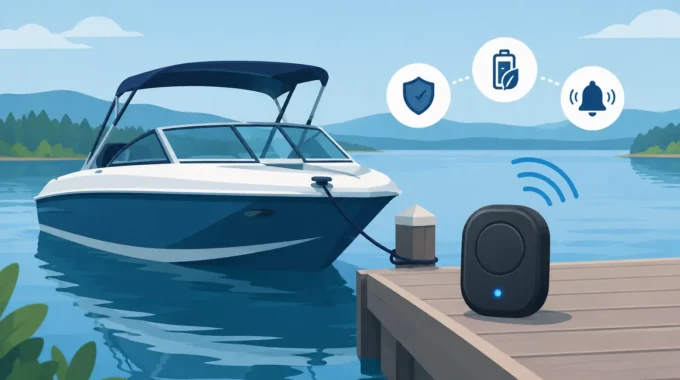
Fire alarms give boat owners early warning of smoke and heat, so you can act before a small fault becomes a destructive vessel fire when unattended at sea.
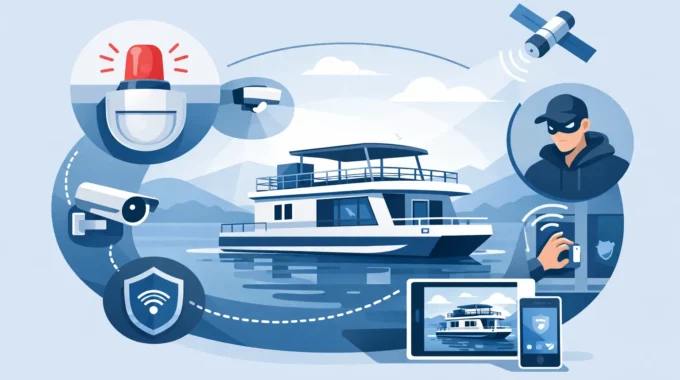
Houseboat Alarm System Protection That Acts Early
A quiet houseboat can become a major incident in a few hours. A flat battery can stop the bilge pump. A failed shore-power lead can spoil refrigeration and leave vital systems without charge. A small water leak can become a flooded cabin while nobody is on board. A properly specified houseboat alarm system gives you the warning early enough to act, rather than discovering the damage on your next visit.
For houseboat owners, remote monitoring is not a luxury accessory. It is practical protection for an asset that may sit at a marina berth, private mooring or riverside pontoon for days or weeks at a time. The right system watches the risks that matter, sends an alarm straight to your mobile and gives you enough information to make the right call.
Why houseboats need more than a siren
A conventional intruder alarm has a place, but it only covers one part of the problem. On an unattended houseboat, water ingress, electrical faults and loss of shore power can cause more financial damage than a break-in. By the time a neighbouring owner notices something is wrong, batteries may be ruined, pumps may have stopped, and water may be well above the cabin sole.
Houseboats also have different operating conditions from a trailer boat used every weekend. They often carry larger domestic battery banks, refrigerators, inverters, solar systems, multiple bilge areas and mains shore power. Many are kept in locations where an audible siren will not be heard by the owner, especially overnight or during the off-season.
That is why remote notification matters. An alarm should reach the people who can respond, not just make noise at the vessel. SMS alerts are particularly useful because they do not depend on the owner having an app open at the time. A system that can alert up to five mobile numbers also means a marina manager, family member, neighbour or skipper can be included in the response plan.
What a houseboat alarm system should monitor
The best system is built around the failures that can sink, disable or expose your vessel. Start with bilge monitoring. A high-water sensor warns that water is rising where it should not be, while bilge-pump monitoring can identify a pump running excessively or a pump fault. These are separate problems and should be treated that way. A pump may be working hard because there is a leak, or it may fail completely when you need it most.
Battery voltage is just as critical. Low voltage can point to a charging failure, shore-power loss, battery deterioration or an unexpected load left running. It can also leave pumps, lighting, communications and security equipment unable to do their job. A useful system monitors voltage continuously and alerts you before the bank is too depleted to recover easily.
Shore-power monitoring closes another costly gap. If shore power trips after a storm, marina outage or faulty lead, you need to know promptly. Refrigeration may be at risk, battery chargers may be offline and the vessel may begin relying entirely on its battery bank. For liveaboard or regularly used houseboats, refrigeration alarms can prevent spoiled food and the unpleasant clean-up that follows.
Fire and smoke detection should also be part of the decision. Houseboats contain domestic-style appliances, charging equipment, cabling and batteries in close quarters. Smoke detection cannot prevent every fault, but it can turn an unattended fire into an immediate emergency response rather than a delayed discovery.
Security remains essential. Door, hatch and motion sensors can alert you to an intruder, while a triggered HD camera image provides the evidence an alarm tone cannot. If you can request camera images remotely as well, you can check a concern before driving hours to the marina or calling someone out unnecessarily.
For vessels kept on exposed rivers, lakes or coastal moorings, consider movement alarms as well. Anchor drag, a vessel going adrift, excessive pitch and roll, or unauthorised movement can quickly create a collision risk. Large multi-hull houseboats may need more than one monitoring unit so that separate hulls, compartments and key access points are covered properly.
Speed and proof change the outcome
An alarm is only useful if it arrives quickly and tells you what happened. A vague message that says “alarm” still leaves you guessing whether to call the marina, organise a friend or contact emergency services. A meaningful alert identifies the event: high bilge water, shore power off, smoke detected, low battery or intrusion.
Monitoring frequency matters here. Conditions on a boat can change fast, particularly when a hose fails, rainwater enters through an open hatch or a bilge pump begins cycling. Once-per-second monitoring provides a far better chance of detecting a developing fault early than systems that only check periodically.
Camera confirmation is the next advantage. An image triggered by an alarm can show whether a hatch is open, whether someone is on deck, whether the boat has shifted on its mooring, or whether a false alarm is likely. It does not replace a physical inspection when there is a real risk, but it helps you prioritise the response and give clear information to whoever attends the vessel.
Choose marine hardware, not a domestic compromise
A houseboat is a wet, vibrating, corrosive environment. Domestic security equipment may be inexpensive, but it is not necessarily designed for spray, humidity, vibration, fluctuating voltage or prolonged exposure near salt water. The enclosure, wiring, sensors and connectors all need to suit marine use.
Look for IP67-rated alarm hardware where exposure is possible. This rating indicates strong protection against dust and temporary immersion, which is relevant in engine bays, lockers and damp storage areas. Low current draw is equally important. A monitoring system should protect the battery bank, not become another load that quietly flattens it while the vessel is unattended.
Electrical compliance should not be an afterthought. Systems installed on Australian vessels need to work safely alongside existing DC and shore-power arrangements. Equipment designed with AS/NZS 3004.2:2014 requirements in mind gives owners and installers a stronger foundation than a collection of improvised consumer devices.
Plan the response before the first alarm
Technology does not remove the need for a plan. Before fitting any houseboat alarm system, decide who receives each alarm and what they are expected to do. A high-water alert might go to the owner, marina office and a nearby contact. An intrusion alert may go to the owner and security contact. A low-voltage warning may only need the owner or electrician, provided it is received early.
Keep the list current. If a family member changes mobile numbers or a marina caretaker leaves, update the notification recipients immediately. Up to five recipients is valuable only if each person knows their role and can be reached.
It is also sensible to test sensors after installation and at regular intervals. Lift a float switch, isolate shore power under controlled conditions, open a protected hatch and confirm that the right mobiles receive the right message. Check that camera images are clear in daylight and after dark. Testing is far cheaper than finding a wiring or coverage issue during a genuine emergency.
Connectivity deserves attention as well. Standard 4G monitoring suits many Australian marinas and waterways, but remote cruising areas may have poor mobile coverage. A Starlink-enabled option can be the better fit for owners who travel beyond reliable 4G areas or need global vessel visibility. The trade-off is additional equipment and power planning, but the benefit is continued oversight where a mobile-only system cannot communicate.
Installation should match the vessel
A smaller houseboat with one bilge area and simple shore power may be straightforward for a capable owner to fit. Larger vessels, refits and boats with complex electrical systems are generally better handled by a marine electrician or preferred installer. The goal is not merely to mount sensors. It is to position them where they detect the first sign of trouble, protect cabling correctly and integrate alarms with sirens, lights, pumps or relay-controlled equipment where appropriate.
Trek Transponder systems are Australian-made for this job, combining remote alarm inputs, HD marine cameras, SMS and MMS alerts, app-based monitoring and low-power operation in a marine-specific package. That matters when your vessel is unattended and an alarm needs to be dependable, not just clever.
Do not wait for a flat bank, a flooded compartment or a call from the marina to find out what your houseboat has been doing without you. Fit monitoring that watches the real risks, nominate people who can respond and test it before the next storm, outage or long stretch away from the berth.
Related Posts