Fire alarms give boat owners early warning of smoke and heat, so you can act before a small fault becomes a destructive vessel fire when unattended at sea.
Boat Alarm Systems With Cameras That Prove It
A bilge alarm can tell you something is wrong. A camera can show you whether it is a failed float switch, rising water around the engine, or a harmless splash at the stern. That difference matters when you are hours from the marina. Boat alarm systems with cameras give owners evidence to act on, not another vague notification to worry about.
For an unattended yacht, cruiser, houseboat or commercial vessel, most serious losses start quietly. Shore power trips. A battery bank runs down. A bilge pump runs too often. An intruder boards after dark. A mooring line chafes through in a blow. By the time someone notices from the dock, a manageable fault can become a flooded, adrift or badly damaged boat.
Why cameras change a boat alarm response
A remote alarm without visual confirmation leaves too much to guesswork. If you receive an SMS saying the bilge alarm has activated, you may need to ring the marina, call a neighbour, organise a contractor and start travelling to the vessel. That is the right response if water is rising, but it is an expensive and stressful exercise if the alarm was caused by a brief wash from a passing wake.
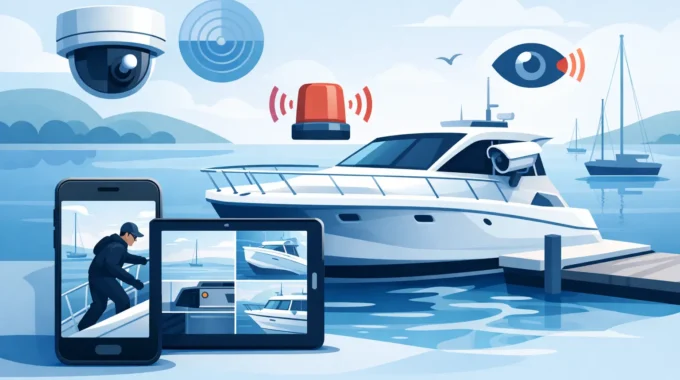
An alarm-triggered HD image gives you a clearer first decision. You can see water in the bilge, an open companionway, a person on deck, smoke in the cabin, or a boat sitting safely at its berth. You can also request camera images when conditions look doubtful, such as during a storm, after a power outage or when the vessel has been left on a swing mooring for several weeks.
Cameras are not a substitute for sensors. They are the proof behind the alarm. A proper marine monitoring system uses both: sensors detect the event immediately, then cameras help confirm what needs to happen next.
The risks worth watching when nobody is aboard
The right system starts with the risks your vessel actually faces. A trailer boat kept at home has different requirements from a liveaboard cruiser in a marina, and a charter fleet needs oversight across several vessels. Still, the costly failures are familiar.
Battery voltage and shore power are high on the list. A shore-power lead can be disconnected, a marina breaker can trip, or a charger can fail. Refrigeration stops, batteries discharge and pumps may no longer have enough reserve to do their job. Remote voltage monitoring lets you respond before ruined batteries, warm freezers and failed essential equipment create a bigger repair bill.
Bilge activity needs the same attention. A high-water alarm is valuable, but a bilge pump that starts cycling excessively can reveal a developing leak long before the water reaches a high-level sensor. Camera confirmation can show whether the bilge is actually filling and whether the vessel is sitting normally in the water.
Fire, smoke and intrusion alarms demand immediate action. A photo sent with an alert can assist a fast call to marina security, a neighbour, emergency services or your insurer. It can also distinguish a genuine security event from a loose cover or wildlife moving across the deck.
For vessels at anchor or on moorings, location and movement monitoring add another layer of protection. Anchor drag, a vessel going adrift, excessive pitch and roll, or unusual movement at the berth can all signal trouble. In strong weather, being able to check the vessel remotely may prevent a late response to a broken line, failed fender arrangement or damaged canopy.
What boat alarm systems with cameras should do
Not every camera-and-alarm package is built for a wet, vibrating marine environment. A useful system must be designed around the realities of life aboard: moisture, heat, poor mobile coverage, limited battery capacity and long periods without anyone opening the cabin door.
Look for IP67-rated alarm hardware that can tolerate harsh marine conditions, along with HD cameras positioned where they can verify the areas that matter. One camera may cover the cabin and entry point. Another may be better aimed at the cockpit, engine space access, stern or critical equipment. Larger vessels and catamarans may require multiple monitoring units and camera positions to avoid blind spots.
Alarm delivery must be immediate and practical. SMS and MMS alerts are particularly useful because they can reach designated mobiles without requiring every recipient to be watching an app. The ability to send direct alarms to up to five mobile numbers means a skipper, partner, marina contact and crew member can all receive the warning at the same time. A real-time monitoring app adds live vessel status and a central place to check conditions across one boat or a fleet.
Once-per-second monitoring is another practical distinction. A system that checks conditions infrequently may miss the early stages of a rapidly changing fault. When a boat is taking on water, breaking free or losing power, early notice is the advantage that gives you time to intervene.
Low power draw is equally critical. A security system should protect the battery bank, not become another constant drain on it. This is particularly relevant for vessels stored without dependable shore power, boats on moorings and owners who leave their vessel unattended between trips.
Build the system around action, not gadgets
The most common mistake is installing a collection of individual devices without deciding who will respond and how. A camera, bilge switch, siren and GPS tracker are useful only if they work together and the right people receive a clear alert.
Start with the failures that would cause the greatest loss. For many marina-based owners, that means high bilge water, bilge-pump cycling, shore-power loss, low battery voltage, smoke, intrusion and refrigeration failure. For a vessel at anchor, add anchor drag, geofence alerts and movement or tilt monitoring. A commercial operator may also need separate alert groups so the duty manager receives urgent alarms while maintenance staff receive lower-priority fault notifications.
Then decide what each alert should trigger. A siren and lights may deter an intruder at the vessel. An SMS or MMS should warn the people who can act. A camera image should confirm the scene. Some incidents require a call to marina staff; others require immediate attendance by a qualified technician. The response plan should be agreed before the alarm sounds at 2 am.
Installation quality matters here. Cameras need a clear field of view and sensible lighting conditions. Sensors should be mounted where they can detect the issue early without nuisance activation. Wiring must be protected, connections secure and the system tested under realistic conditions. On larger or complex vessels, use an experienced marine installer who understands both the electrical system and the vessel layout.
Connectivity is part of vessel security
A 4G system is highly effective where mobile coverage is available, particularly for boats in marinas, coastal waterways and populated cruising areas. However, mobile coverage is not guaranteed. If your vessel travels offshore, works in remote regions or sits beyond reliable terrestrial reception, consider a Starlink-enabled monitoring option for wider connectivity.
This is not about fitting technology for its own sake. It is about ensuring an alarm can reach you when the boat is somewhere you cannot easily reach. Global connectivity is especially relevant for passagemaking yachts, remote commercial operations and owners who keep a vessel far from their normal home base.
There are trade-offs. Satellite connectivity adds equipment and service considerations, while 4G may be the simpler and lower-cost choice for a boat that never leaves a well-covered marina. Choose the connection that matches where the vessel genuinely operates, not where you hope it will be.
Test before you need it
A monitoring system should not be installed and forgotten. Test alarm delivery, camera images, battery reporting and app access after installation, then test again at sensible intervals. Confirm that every nominated mobile number still receives alerts and that your contacts know what they are expected to do.
Check camera lenses for salt spray, condensation and obstructions. Review sensor placement after modifications to the boat. If you add a cover, relocate equipment or change the battery system, make sure the monitoring arrangement still sees and detects what it should.
Trek Transponder systems are built for owners who need direct warning, visual confirmation and practical remote oversight from an Australian-made marine-specific platform. The key is not merely knowing your boat has an alarm. It is knowing what has happened, seeing enough to judge the risk and having time to stop the damage before your vessel becomes the marina’s next disaster.
Related Posts