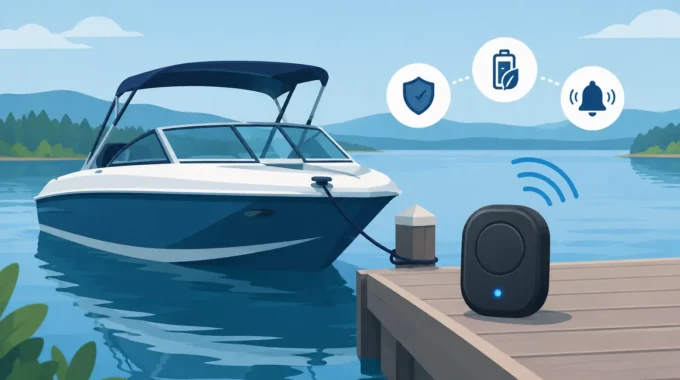
Fire alarms give boat owners early warning of smoke and heat, so you can act before a small fault becomes a destructive vessel fire when unattended at sea.
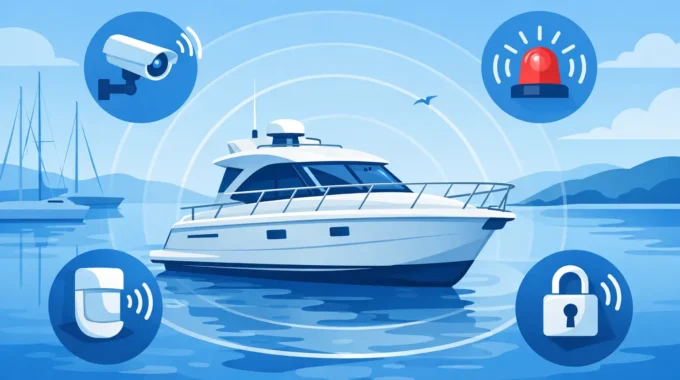
Marine Alarm Installation That Protects Your Boat
A flat battery is frustrating. A flat battery that stops the bilge pump while your boat is unattended can become a salvage job. That is why marine alarm installation is not about fitting a siren and hoping someone hears it across the marina. It is about detecting the first sign of trouble and getting a clear warning to the people who can act.
For yachts, cruisers, houseboats and commercial vessels left on a berth, mooring or anchor, the risk never takes a day off. Shore power can fail after a storm. A hose clamp can let go. A fridge can stop running. An intruder can board after dark. Your vessel needs to tell you what is happening before a small fault turns into water damage, theft, an insurance claim or a boat breaking free.
What a Proper Marine Alarm Installation Must Do
A marine alarm system has to work in an environment that punishes ordinary electronics. Moisture, salt, heat, vibration and intermittent power are normal conditions, not rare events. The hardware needs suitable marine protection, the wiring needs to be secure, and the alarm must still communicate when you are hours away.
The best installation starts with the risks specific to your boat. A trailer boat stored at home may need intrusion and battery monitoring. A cruising yacht on shore power may need bilge, mains failure, fire, smoke, battery voltage and fridge alarms. A liveaboard catamaran or hire fleet may need multiple monitored zones, camera coverage and alerts sent to several responsible people.
An effective system should monitor conditions continuously, not merely check them once every few minutes. Water rising in a bilge, a shore-power failure during hot weather or a vessel moving outside its anchor position can become urgent quickly. Once-per-second monitoring gives the system the best chance of catching a developing incident early.
Just as importantly, the alert needs to reach you in a form you will see. SMS alerts are direct and practical. App notifications add live status and control. MMS or camera images provide evidence, so you can tell the difference between a genuine boarding event and a loose cover moving in the wind before calling marina security or heading to the boat.
Plan Your Marine Alarm Installation Before Drilling
Do not buy sensors first and work out their location later. Walk through the vessel with a realistic question in mind: what fails here, and how would I know if I was 100 kilometres away?
Start at the electrical system. Identify the house battery bank, charger, shore-power inlet, distribution board and the circuits that must stay alive. A remote monitoring system needs a reliable supply, low current draw and correctly fused connections. It should be installed so a low battery event is reported, rather than becoming the reason the alarm system stops working.
Next, inspect likely water-entry points. Common areas include bilges, shower sumps, engine spaces, under-floor compartments, freshwater pumps and through-hull fittings. A bilge sensor should be placed where water will be detected early, not in a location that only alarms once the compartment is already deep in water. If the vessel has more than one isolated bilge area, one sensor may not be enough.
Then consider physical security. Entry points, cockpit lockers, companionways and valuable equipment areas may need intrusion protection. Cameras should cover useful approaches and spaces, not simply record a close-up of a bulkhead. Mount them high enough to avoid casual interference, with a view that can identify a person or show whether water is entering a compartment.
Finally, map the vessel’s movement risks. At anchor, GPS-based position and anchor-drag monitoring can warn you before the boat reaches another vessel, a reef or the shoreline. At a marina berth, movement monitoring can identify a vessel going adrift. Pitch and roll alerts may also indicate unusual motion in rough conditions, wake damage or a vessel that is no longer secured as it should be.
Choose marine-rated hardware
The alarm panel, sensors, cable entries and external components must suit wet, corrosive conditions. IP67-rated equipment is designed to resist dust and temporary immersion, making it far more appropriate for demanding marine locations than consumer-grade security gear.
That rating does not excuse poor installation. Keep connections protected, use suitable cable glands, support wiring against vibration and keep equipment away from direct water exposure where practical. Salt-laden moisture finds weak points quickly.
Avoid hidden power and signal problems
Poor power connections cause false alarms, missed alarms and hard-to-diagnose faults. Use appropriately sized marine cable, correctly rated fuses and sound terminals. Keep alarm wiring tidy and clearly labelled so future servicing does not turn into guesswork.
Signal strength also matters. A 4G alarm system must be tested from the vessel’s usual berth or mooring, not just from the workshop bench. If the boat regularly travels outside mobile coverage, a Starlink-enabled monitoring option can provide global connectivity. The right choice depends on where you keep and operate the vessel, as well as your budget for hardware and service.
Install Sensors Where They Give You Time to Act
An alarm is only useful if it detects the problem early enough for action to matter. This is especially true for flooding and fire.
Fit bilge monitoring low enough to provide early warning, but secure it so it cannot move with vibration or floating debris. Test the alert by simulating water at the sensor. If bilge pumps are monitored, confirm the system can identify excessive pump activity or pump failure. A pump running continuously may mean a leak. A pump that does not run when water rises is just as serious.
For smoke and fire detection, select locations suited to the type of risk. Engine spaces, galleys, battery compartments and accommodation areas each have different conditions. Avoid fitting sensors where steam, exhaust or routine heat will produce nuisance alarms, but do not place them so far from the hazard that detection is delayed. A qualified marine electrician can help determine the correct arrangement for larger or more complex vessels.
Shore-power monitoring deserves the same attention. When shore power drops out, battery charging, refrigeration, dehumidifiers and essential onboard systems may all be affected. In summer, a fridge failure can ruin stores. Over a longer absence, a charging failure can leave batteries depleted and reduce the capacity available for bilge pumping, lighting or communications.
Test Every Alarm Scenario at the Berth
Marine alarm installation is not finished when the enclosure is mounted and the app opens. It is finished after every alarm path has been tested from sensor to mobile.
Trigger each sensor one at a time. Check that the correct alert arrives, that it names the relevant condition and that every nominated contact receives it. Set up to five mobile numbers where more than one person is responsible for the boat. Owners, family, a skipper, marina contact or fleet manager can all receive alerts, but make sure each person knows what they are expected to do.
Request camera images through the system and trigger images from an alarm event. Confirm the picture is useful in daylight and at night. Check that the system reports battery voltage, shore-power status and communication health accurately. If a relay is used to activate a siren, light or another device, test that function under load and ensure the relay capacity suits the circuit.
For electrical work on Australian vessels, installation should be carried out with AS/NZS 3004.2:2014 requirements in mind. Compliance is not paperwork for its own sake. It helps protect people, equipment and the vessel from unsafe wiring practices that can create the very risks the alarm system is meant to detect.
Set Alerts for Action, Not Alarm Fatigue
Too many alerts train people to ignore them. Too few alerts leave you blind. Set thresholds and reporting intervals to reflect the vessel’s actual operating conditions.
A boat on a quiet marina berth may need an immediate alert for shore-power loss, rising bilge water, smoke, intrusion or movement. Battery voltage alarms need sensible thresholds that account for normal overnight voltage changes. Anchor-drag alarms should allow for expected swing room, yet remain tight enough to warn before the vessel is in danger.
Create a simple response plan and keep it current. Decide who will attend the boat, who can contact the marina, where spare keys are held and what level of alarm requires emergency services. A remote alarm gives you time and information. A response plan turns that warning into protection.
Trek Transponder systems combine marine-rated alarm hardware, 4G SMS and MMS alerts, HD camera images and real-time monitoring so owners can check their vessel rather than wait for bad news from the marina.
Your boat may be unattended, but it should never be unobserved. Fit the monitoring that matches its risks, test it properly, and make sure the next alert reaches someone ready to act before the damage spreads.
Related Posts