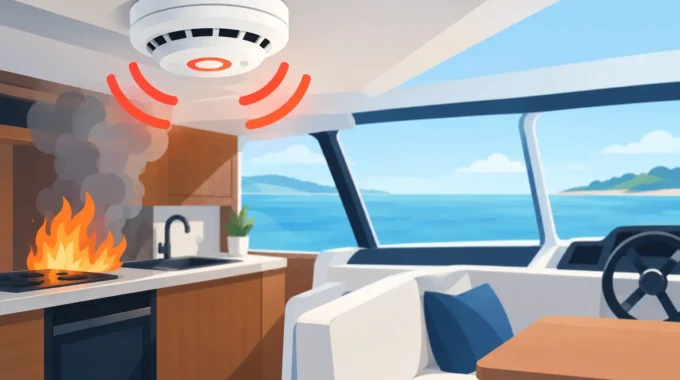
Fire alarms give boat owners early warning of smoke and heat, so you can act before a small fault becomes a destructive vessel fire when unattended at sea.
Remote Fire Alarm for Boats That Warns You Fast
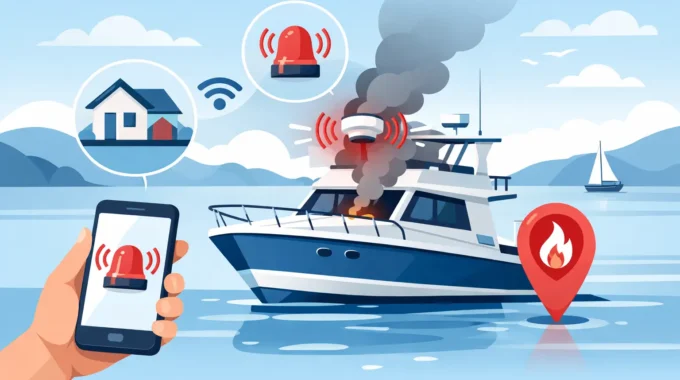
A fire on an unattended boat does not wait until you are back at the marina. It can begin with a charger fault, damaged wiring, an overheated appliance or a failing battery bank, then spread through a locked cabin before anyone on the dock notices. A remote fire alarm for boats puts the warning in your hand immediately, wherever you are, so you can send help while there is still time to save the vessel.
For owners of yachts, cruisers, houseboats and working vessels, the question is not whether a smoke alarm is worthwhile. It is whether the alarm can reach someone who can act when the boat is empty. An audible alarm inside a locked vessel may alert a nearby berth holder. A properly configured remote alarm can notify several people by SMS and app alert, provide camera images, and trigger an immediate response plan.
Why ordinary boat smoke alarms are not enough
A standard battery smoke alarm has a place on board, but it is not remote protection. Its siren is only useful if somebody is close enough to hear it, recognises what it means and is willing or able to investigate. In a marina during poor weather, after hours, or on a mooring away from shore, that is a serious assumption to make.
The risk is compounded because a fire rarely arrives as a single, obvious event. An electrical fault may first cause heat, smoke, a voltage drop or shore-power trouble. Refrigeration equipment can run continuously in hot conditions. Chargers and inverters are often left operating while the owner is kilometres away. Lithium battery installations require particular care, but conventional lead-acid systems, corroded connections and overloaded circuits can also create dangerous conditions.
A remote system changes the time available to respond. Instead of learning about a fire from a marina call after visible smoke is reported, the owner and nominated contacts receive the alarm at the first detected condition. That early warning may allow a marina manager, neighbour, crew member or emergency service to inspect the vessel before a small incident becomes a total loss.
What a remote fire alarm for boats must detect
Fire detection should be part of a wider unattended-vessel monitoring plan, not a standalone gadget fitted and forgotten. At minimum, the system needs suitable smoke and/or heat detection in the right areas, reliable alarm inputs, dependable communications and a power arrangement that remains active if shore power fails.
Smoke detection is generally suited to accommodation spaces where a developing electrical or appliance fire may produce smoke first. Heat detection can be a better choice in areas where normal vapour, dust or cooking fumes could create nuisance alarms. Engine rooms, battery compartments, galleys and enclosed machinery spaces each need a considered approach. The correct sensor type and location depend on the vessel layout, installed equipment and how the boat is used.
Detection alone is not enough. The alarm controller should recognise the input immediately and send a clear message identifying the alarm condition. Once-per-second monitoring gives owners a far better chance of being warned as the event occurs, rather than finding out during a scheduled status report hours later.
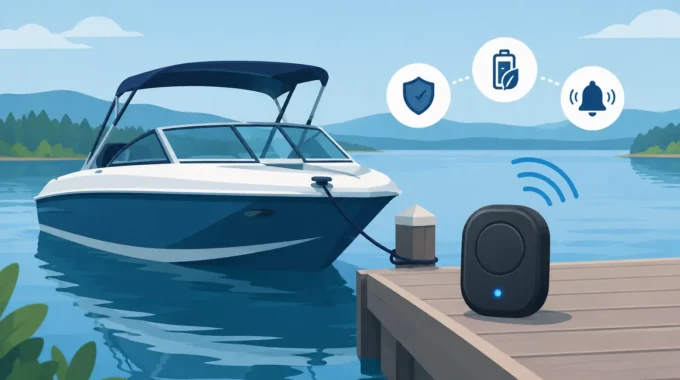
A serious marine system also needs to keep monitoring through the conditions that often accompany an incident. Shore-power loss, flat batteries and poor mobile coverage can all interrupt lesser systems at exactly the wrong moment. Low current draw matters because the monitor must protect the battery bank, not quietly drain it while the boat sits unattended.
The alert needs to reach more than one person
One mobile number is a single point of failure. The owner may be flying, out of coverage, asleep, at work or simply unable to reach the vessel. Configure a fire alarm to notify up to five trusted mobile numbers, including a marina contact, local friend, skipper, caretaker or fleet manager where appropriate.
Each person should know what they are expected to do. That may mean calling marina security, checking the camera image, contacting the owner, or directing emergency services to the berth number and access point. Do not wait for an alarm to decide who holds keys, who knows the marina gate code, or who can authorise urgent action.
SMS remains valuable because it is direct and familiar. App notifications add real-time visibility, status information and easier remote checking. The strongest arrangement uses both, giving the owner an immediate text alert while also providing a live view of the broader vessel condition.
Camera confirmation is especially useful, but it should never delay an emergency call when a fire alarm is credible. An HD marine camera can show whether smoke is visible in the cabin, whether anyone is aboard, whether a neighbouring boat is at risk, or whether an apparent alarm may need a different investigation. It gives responders useful information without asking someone to board a potentially dangerous vessel blindly.
Installation decisions that affect the outcome
Marine fire monitoring is not a fit-and-forget job. Sensors must be positioned away from sources of normal condensation, exhaust and cooking vapour where possible, while remaining close enough to detect a genuine developing fire. A detector buried behind stored gear or mounted in a poorly chosen dead-air space may offer false confidence.
The controller, wiring and connectors must also be suitable for the marine environment. Salt air, vibration, heat and moisture quickly expose weak installations. IP67-rated alarm hardware helps protect critical components from water and dust ingress, but cable routing, fusing, terminals and mounting still need to be completed properly. For larger vessels and catamarans, more than one monitoring unit may be appropriate to cover separated hulls, cabins or machinery zones.
Electrical work should be planned with the vessel’s existing DC and AC systems in mind. This includes shore-power equipment, chargers, inverters, battery isolation, generator circuits and any installed fire suppression system. Compliance with AS/NZS 3004.2:2014 is relevant to electrical installations on recreational vessels, but compliance does not replace sensible system design, quality installation or regular inspection.
A professional installer is often the right choice where the boat has complex electrical systems, multiple battery banks or commercial operating requirements. Hands-on owners can still take responsibility for the essentials: understand every alarm message, know how the system is powered, and test that alerts arrive on every nominated mobile.
Fire monitoring works best with the whole vessel in view
A fire alarm should not be isolated from the events that can lead to a fire, or make a fire harder to respond to. If shore power drops out, refrigeration and battery charging may be affected. If batteries are failing, the monitoring system and emergency pumps may be compromised. If an intruder boards the boat, they may interfere with electrical equipment. If the vessel goes adrift, a fire response becomes harder and more urgent.
That is why owners benefit from one marine-specific system monitoring smoke or fire inputs alongside battery voltage, shore power, bilge level, bilge-pump activity, intrusion, anchor drag, excessive pitch and roll, refrigeration failure and vessel movement. It gives context. A low-voltage warning followed by a smoke alarm deserves a different level of urgency from an isolated detector warning that must be checked, but both demand action.
Trek Transponder systems are built for this practical reality, combining remote alarm inputs, marine cameras, SMS/MMS alerts and app-based vessel monitoring in Australian-made hardware. For boats that travel beyond dependable mobile coverage, a Starlink-enabled configuration can provide a global communications path. The right option depends on where the vessel is kept, how often it is unattended and what level of oversight is needed.
Test the alarm before you need it
An alarm that has not been tested is only a hope. Test fire inputs according to the detector manufacturer’s instructions and confirm the wording, timing and delivery of each alert. Check that every nominated contact receives it. Request camera images remotely and make sure they are clear enough to identify smoke, people and conditions around the boat.
Review the plan after changing berths, mobile numbers, battery arrangements or onboard equipment. A new charger, upgraded lithium bank, altered galley layout or additional refrigeration unit can change the risk profile. Keep contact details and vessel location information ready for the people who may need to respond under pressure.
Do not accept silence as proof that your boat is safe. Fit detection suited to the vessel, send alarms to people who can act, and test the response while the stakes are low. The best time to find a missing alert or poorly placed detector is on a quiet day at the berth, not when smoke is already rising from a locked cabin.
Related Posts