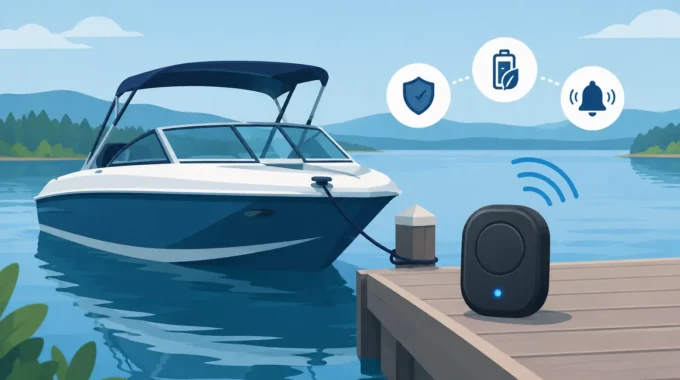
Fire alarms give boat owners early warning of smoke and heat, so you can act before a small fault becomes a destructive vessel fire when unattended at sea.
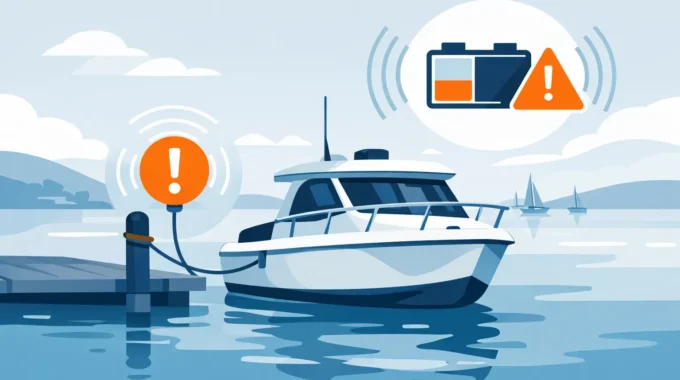
Boat Battery Failure Alert System for Moorings
A flat battery at the marina is rarely just an inconvenience. It can stop bilge pumps, refrigeration, lighting, communications and security equipment precisely when your vessel is unattended. A boat battery failure alert system gives you early warning on your mobile, so a charging problem can be dealt with before it becomes a flooded bilge, spoiled stores, damaged batteries or an insurance headache.
For a yacht on a swing mooring, a cruiser in a marina berth or a houseboat left between trips, waiting until the next visit is not a monitoring plan. Batteries can fall away quickly after shore power trips, a charger fails, a connection corrodes or an onboard load keeps drawing current. The right alert system tells you when the voltage is heading into trouble, wherever you are.
Why boat batteries fail while nobody is aboard
Most battery failures begin with a small fault that goes unnoticed. Shore power can be disconnected by a tripped marina pedestal, a damaged lead, an overloaded circuit or work on the dock. A battery charger may fail silently. Solar charging may be insufficient after poor weather, shading or a regulator fault. On older vessels, corroded terminals and tired cabling can create voltage drop that leaves the battery bank undercharged even though equipment appears to be operating.
Then there is consumption. Automatic bilge pumps, fridges, freezers, navigation electronics left in standby, alarm systems and parasitic loads all draw power. A healthy battery bank has capacity to absorb those loads. A weak bank, a failed charger or loss of shore power does not.
The consequences depend on the vessel and its location. A refrigerator failure may be costly and unpleasant. A dead start battery can leave you stranded. More seriously, low voltage can compromise a bilge-pump cycle at the moment rain, a leaking hose or a failed stern gland is sending water aboard. That is why battery voltage should not be monitored as an isolated number. It should sit within a broader unattended-vessel alarm strategy.
What a boat battery failure alert system should detect
A useful system does more than send a message when a battery is already dead. By that point, you may have lost the ability to run critical equipment or communicate with the monitoring device. It needs to watch voltage continuously, apply thresholds suited to the battery type and notify nominated contacts early enough for someone to act.
For most owners, the key events are low battery voltage, loss of shore power and charger failure symptoms. The exact alarm thresholds need care. A voltage that is normal during a heavy pump or inverter load may be a serious warning once the load settles. Equally, setting an alarm too high can create nuisance messages every time a fridge compressor starts.
A marine-specific setup should allow practical configuration around your vessel’s normal operating voltage, battery chemistry and charging arrangements. AGM, flooded lead-acid, gel and lithium banks behave differently. Lithium systems also commonly have a battery management system that can disconnect the bank to protect it. If that occurs, an external alert can be the difference between discovering the problem remotely and finding a powerless vessel days later.
Shore power is a separate risk
A shore-power failure is not always immediately visible in battery voltage. A fully charged bank may continue carrying loads for hours or days, depending on capacity and consumption. By the time a low-voltage alarm arrives, the underlying loss of AC supply may have been present for far too long.
Monitor shore power independently where possible. An immediate alert allows you to ask a marina manager, neighbour or contractor to check the pedestal, lead and onboard breaker while battery reserve remains available. It also helps identify recurring supply problems that would otherwise be blamed on the batteries.
Alarm delivery must not rely on one person
A boat can be unattended when its owner is flying, offshore, asleep, working in poor mobile coverage or simply unable to get to the marina. Send alerts to more than one trusted person. A partner, berth neighbour, skipper, fleet manager or local contractor can be part of the response plan.
Direct SMS alerts remain valuable because they do not require someone to open an app before they know there is a problem. App-based monitoring adds useful live status and history. Camera images triggered by an alarm can provide another layer of certainty: is the boat still in its berth, is the shore lead connected, is there water visible, or does the vessel need immediate attendance?
Battery monitoring works best with bilge and security alarms
A low-voltage message tells you a power problem exists. It does not tell you what is happening to the vessel. That is why single-purpose battery monitors leave dangerous gaps.
Consider a realistic sequence. Shore power fails overnight during heavy rain. The battery bank begins supplying the fridge, alarm and bilge pump. A blocked scupper or minor leak increases bilge-pump activity. By morning, the bank is low and the pump is cycling less effectively. If your monitoring only reports battery voltage, you know you have a problem but not its urgency. If it also monitors bilge level, pump operation and shore power, you can make a proper decision quickly.
The same principle applies to fire, smoke, intrusion, anchor drag and a vessel going adrift. These incidents can coincide with power problems or become worse when batteries are depleted. A complete system brings those alerts together so owners are not trying to interpret disconnected devices after the fact.
Trek Transponder systems are built for this kind of unattended-vessel protection, combining battery and shore-power monitoring with alarms for bilge flooding, fire and smoke, intrusion, movement and other critical events. IP67-rated hardware, low current draw and once-per-second monitoring matter because the alarm itself must remain dependable in a wet, harsh marine environment.
Set alarm thresholds that lead to action
An alert is only useful if someone knows what to do when it arrives. Before installation, decide who receives messages and what each alarm means. A low-voltage warning may require a phone call to the marina or a visit within a few hours. A low-voltage alarm combined with high bilge water needs a faster response. Loss of shore power may be an immediate check during hot weather if refrigeration, chargers or dehumidifiers are running.
Avoid copying voltage settings from another boat. Battery-bank size, resting voltage, charge source, inverter loads and battery chemistry all affect sensible thresholds. Record baseline voltage when the vessel is healthy, when shore power is on and when it is disconnected under normal load. Then configure warnings with enough margin to intervene before critical equipment is compromised.
Test the alarms. Disconnect shore power under supervision, confirm the notification arrives on every nominated mobile and check that the message clearly identifies the vessel and alarm condition. If cameras are fitted, request an image and make sure it is useful for assessing the berth. Test again after electrical upgrades, battery replacement or a change in marina connectivity.
Installation details that determine reliability
Marine electrical monitoring is not a place for loose joins, undersized cable or assumptions about a vessel’s wiring. The monitoring unit must have a protected, reliable supply and be installed where it is not exposed to avoidable water ingress, heat or physical damage. Sensor inputs should be correctly fused and configured, while shore-power sensing must be handled safely and in accordance with applicable electrical requirements.
For Australian vessels, ask about compliance with AS/NZS 3004.2:2014 where shore-power installation is involved. Owners who are not confident working on DC and AC systems should use a qualified marine electrician or preferred installer. A professional installation costs far less than diagnosing an intermittent fault after a false alarm, or worse, after no alarm arrives.
Larger vessels may need more than one monitoring unit or additional sensors. A catamaran with separate hulls, multiple battery banks and several bilge zones should not be treated like a small runabout. Commercial operators and hire fleets also benefit from consistent alarm naming, escalation contacts and documented response procedures across every vessel.
Do not wait for the next marina visit
Battery failure is often the first warning of a wider electrical or shore-power problem. Treat it that way. Monitor the battery bank, detect shore-power loss, protect the bilge-pump supply and make sure the right people receive an alarm quickly.
Set up the system, test it at the berth and give your nominated responders clear instructions. When the message arrives, you should be deciding who is attending the vessel, not wondering how long the fault has been there.
Related Posts