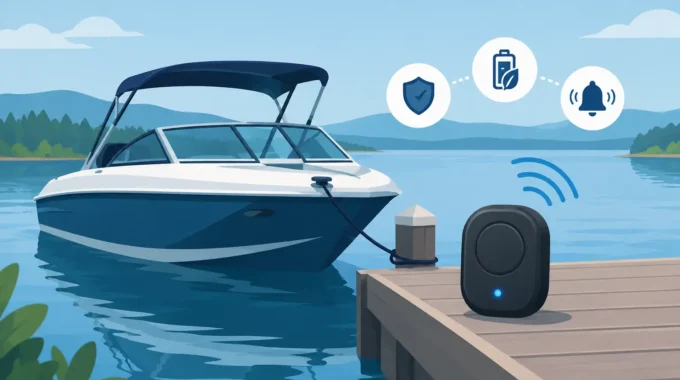
A low power boat alarm system protects unattended vessels from flooding, fire, theft and power loss without draining the batteries it is meant to protect.

How to Respond to an Onboard Power Outage
A dead boat is rarely just an inconvenience. When you need to respond to onboard power outage, the immediate concern is not whether the cabin lights work. It is whether the bilge pump still has power, whether refrigeration has failed, whether batteries are being damaged, and whether the vessel is safe to leave unattended.
For a yacht at a marina, a cruiser on a swing mooring or a commercial vessel between shifts, loss of power can become an expensive chain reaction. The right response starts with confirming what has actually failed, then protecting the systems that keep the boat afloat and secure.
First, establish what power has been lost
Do not assume every onboard system is down because one screen is blank. Work out whether the fault is shore power, the AC supply, the DC battery bank, an individual circuit, or a charging problem. Each requires a different response.
If the vessel is alongside, check whether shore power is available at the pedestal and whether other boats have power. Inspect the shore-power lead for a loose connection, heat damage, water ingress or a tripped supply. Do this safely. Never handle damaged electrical gear while standing in water or with wet hands.
If shore power is present but the boat is not charging, check the vessel’s AC main switch, residual current device and battery charger status. A tripped breaker is a warning, not a nuisance. Resetting it repeatedly without finding the cause can turn a minor fault into a fire risk. If it trips again, isolate the circuit and arrange a qualified marine electrician.
If shore power has failed across the marina, your DC systems may still operate from battery power. That buys time, but not indefinitely. Bilge pumps, alarms, refrigeration, navigation equipment and lighting can steadily drain a battery bank, particularly if an automatic pump is cycling because of water ingress.
Protect the systems that prevent a sinking or fire
Once you know the extent of the outage, give priority to safety-critical loads. A functioning bilge pump and a charged battery bank matter more than cabin comfort.
Check the bilge immediately. Look for rising water, an active pump, a blocked float switch or a pump that is running but not discharging. A failed shore-power supply can expose a weak battery bank, while a failed bilge pump can flatten even healthy batteries through repeated cycling. If water is entering faster than the pump can manage, contact marina staff, a nearby skipper or emergency assistance without delay.
Then check for heat, smoke, burning smells or unusually hot cables, battery cases, chargers and switchboards. Battery charging faults and poor electrical connections can create dangerous heat well before visible flames appear. Isolate power only if it is safe to do so. Do not open swollen batteries, disconnect arcing cables or keep investigating a suspected electrical fire in an enclosed compartment.
If the vessel is unattended when the alarm arrives, the person attending needs clear information before they step aboard. An alert that simply says “power fault” leaves too much guesswork. A system that can report shore-power loss, battery voltage and camera images gives the owner or caretaker a far better chance of deciding whether this is a marina blackout or an urgent vessel fault.
How to respond to onboard power outage remotely
Most owners are not standing on the dock when shore power drops. They may be at work, travelling interstate or asleep at home. That is why remote response needs to be planned before the problem occurs.
Start by confirming the alarm and checking whether other conditions have changed. Is the battery voltage falling? Has a bilge-pump alarm activated? Has a high-water, smoke or intruder alarm been received at the same time? A single shore-power loss may be manageable for several hours. Shore-power loss combined with a falling battery and repeated bilge-pump activity demands immediate action.
Use camera images, where fitted, to check the cabin, engine space entrance, dock line position and surrounding berth conditions. An image cannot replace an onboard inspection, but it can confirm whether the boat is sitting normally, whether lights are still active or whether storm conditions are affecting the berth.
Contact your marina or a nominated local person with a simple instruction: check shore power, inspect the boat externally, confirm bilge-pump operation and call if there is any sign of water, smoke, heat or a loose vessel. Avoid asking an untrained person to dismantle panels or reset electrical protection. Their role is to make the vessel safe and escalate the problem.
For owners cruising remotely, the response may be different. At anchor, an onboard power outage can affect anchor alarms, communications, navigation lights and refrigeration. In heavy weather, it may also coincide with excessive pitch and roll or anchor drag. Get eyes on the boat as quickly as possible and do not assume a battery issue is isolated from the conditions outside.
Do not flatten the battery bank while waiting
A power outage turns battery management into a countdown. The available time depends on battery capacity, battery condition, temperature, load and whether charging can be restored. Old batteries with apparent charge can collapse quickly under pump or inverter loads.
Switch off non-essential DC loads if you are aboard. That can include entertainment systems, unnecessary cabin lights, inverter-fed appliances and non-critical refrigeration. Leave essential alarms, bilge pumping, communications and safety equipment supplied.
Be careful with inverters. They can consume substantial current even when the appliance load appears small. A kettle, microwave or power tool may be insignificant on shore power but punishing on a battery bank. If the vessel has solar panels or a generator, check that their charging systems are operating correctly rather than assuming they are covering the load.
Never rely on voltage alone as proof that batteries are healthy. Voltage may recover after a load is removed, masking poor capacity. A proper inspection should include battery condition, terminal tightness, fuse integrity, charger output and signs of corrosion or water ingress.
Find the cause before restoring normal operation
When power returns, do not simply turn every circuit back on and walk away. Confirm that the charger is charging within its normal range and that batteries are not overheating. Check that the bilge is dry, the pumps have stopped cycling and refrigeration has restarted.
Review what happened. Was the shore-power plug knocked loose? Did a marina pedestal trip? Was there a charger fault, an overloaded circuit, a damaged lead or a battery nearing end of life? The cause determines whether the fix is as simple as replacing a lead or as serious as rewiring a circuit.
This is also the time to check battery water levels where applicable, clean terminals, inspect cable glands and test alarms. Marine electrical faults thrive in damp, salty environments. A connection that works on a calm afternoon can fail after rain, vibration or a hot summer weekend at the marina.
Set up alerts that give you time to act
A boat alarm should tell you about the failure while it is still a manageable problem, not after the batteries are ruined or the bilge has overflowed. Configure separate alerts for shore-power loss, low battery voltage, high water and bilge-pump activity. Send them to more than one mobile number so one missed call does not leave the vessel unprotected.
Trek Transponder systems are built for this kind of unattended-vessel risk, with once-per-second monitoring, direct alerts to up to five mobiles and camera images that can provide visual confirmation when an alarm is triggered. Low power draw matters too, particularly when shore power is unavailable and every amp-hour counts.
For larger vessels, hire fleets and multi-hull boats, consider independent monitoring zones. A single alarm point may not reveal a fault in a separate hull, machinery space or refrigerated compartment. The right configuration depends on the vessel, its battery arrangements, berth location and how quickly someone can attend.
Record the actions to take in your vessel manual and give the same instructions to family, crew and marina contacts. Include your electrician’s details, battery isolator locations, bilge-pump switches and the order in which systems should be checked. When an alarm lands at 2 am, a clear plan prevents a panicked response.
The best time to deal with an onboard power outage is before it becomes a flooded bilge, a cooked battery bank or a silent boat drifting at its berth. Set the alerts, test the response and make sure someone can act when the power disappears.
Related Posts