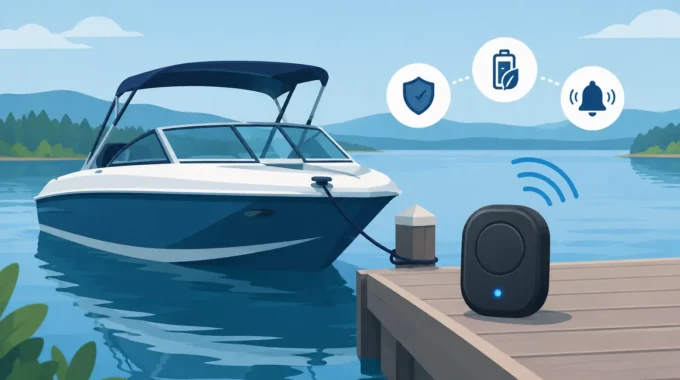
Fire alarms give boat owners early warning of smoke and heat, so you can act before a small fault becomes a destructive vessel fire when unattended at sea.

Boat Deck Intruder Sensor Stops Unwanted Boarding
A boat left quietly in a marina is not necessarily a boat left alone. After dark, an unauthorised person can step aboard, search lockers, tamper with electronics or cause damage in minutes. A boat deck intruder sensor gives you a direct warning when someone enters the area they should not be, so you can act before a break-in becomes a costly insurance claim, a missed cruise or a vessel left unsafe at its berth.
For owners who leave a yacht, cruiser, houseboat or work vessel unattended, intrusion detection should not be treated as an optional extra. It is part of a proper remote monitoring plan alongside bilge, battery, shore power, fire and mooring alarms.
What a boat deck intruder sensor does
A deck intruder sensor monitors a defined external or semi-enclosed area of the vessel for movement or unauthorised entry. Depending on the sensor type and its position, that may include the cockpit, aft deck, flybridge, side decks, boarding platform, companionway approach or a covered outdoor living area.
When movement is detected, the system sends an alarm to nominated mobile numbers. A well-designed marine alarm system can also activate a siren, deck lights or another relay-controlled response. If marine cameras are connected, the owner can receive an alarm-triggered image or request an image remotely to see what is happening before deciding whether to call marina security, a neighbour or police.
That visual confirmation matters. Motion near a boat is not always criminal activity. It may be a marina staff member, a neighbouring owner checking lines, a bird in a poorly positioned detection zone or someone stepping aboard with permission. An image turns an alarm into useful information.
Why deck protection needs to be marine-specific
A domestic security sensor may look suitable on paper, but boats create conditions that expose weak equipment quickly. Salt spray, rain, sun, vibration, wash, condensation and temperature swings are normal life aboard. An intruder sensor installed outside must be protected against water and dust ingress and mounted securely enough to remain reliable after rough weather and regular vessel movement.
The other challenge is motion. A boat moored in a marina moves. Wind shifts, wakes pass through, lines load up and covers flap. At anchor, the motion is greater again. A sensor that is too sensitive, badly aimed or fitted where it sees a moving cover, flag or rope can create nuisance alarms. Owners then make the worst possible adjustment: they turn it off.
A properly configured deck sensor should focus on likely boarding routes while avoiding obvious moving objects. It should also be part of a system with sensible alarm controls, reliable mobile communications and low power draw. There is no value in an alarm that flattens the batteries while the boat is waiting for its next trip.
Where should the sensor be fitted?
The best location depends on the vessel layout and the way people board. On many monohulls, the cockpit is the obvious first zone because it gives access to the companionway, lockers and helm area. A flybridge cruiser may need coverage at the cockpit and flybridge stair access. A larger catamaran often needs more than one detection zone because the boarding routes and open deck areas are wider.
The goal is not to blanket every square metre of deck with a sensor. The goal is to detect a person progressing towards the cabin, helm, tender controls, valuable equipment or critical systems.
Cockpit and companionway protection
The cockpit is often where intruders first stop. It may contain rod holders, electronics, refrigeration, safety gear, cockpit lockers and access to the cabin. Positioning a sensor to cover cockpit entry and the approach to the companionway can provide meaningful early warning without attempting to monitor an entire marina berth.
Avoid aiming a sensor straight through clear screens, at moving canvas, or towards an area where a neighbouring vessel regularly passes close by. The correct angle is as important as the equipment itself.
Side decks, swim platforms and stern access
Stern boarding platforms and transoms are common entry points, particularly where marina fingers make access easy. Side decks can also be vulnerable where a vessel sits close to a pontoon. These areas may require separate protection on larger vessels, especially if an intruder could reach a cabin hatch or tender without crossing the cockpit detection zone.
Consider how the boat is used. If crew, cleaners or marina staff regularly access one side, configure the system around real operating routines rather than creating an alarm every time legitimate work is done.
Alarm delivery is where protection becomes action
An external siren may discourage an intruder, but it is not enough on its own. A siren can be ignored in a busy marina or unheard in a remote anchorage. The real value comes from receiving the alarm directly on your mobile, wherever you are.
SMS alerts remain practical because they do not rely on you having an app open. App notifications add another layer of visibility, particularly when checking vessel status, reviewing events or remotely requesting camera images. For a boat shared by family, crew or managers, alarms should be capable of reaching multiple nominated mobile numbers. One person may be flying, asleep, out of coverage or simply unable to respond.
Trek Transponder systems can send direct alarms to up to five mobiles and trigger HD marine-camera images on alarm or by user request. That gives owners evidence to assess an event quickly rather than driving to the marina blindly or asking someone to attend without knowing what they are walking into.
Pair the intruder sensor with the risks that follow
Unauthorised boarding rarely creates only one concern. An intruder can leave a hatch open before rain arrives, disconnect shore power, tamper with batteries, damage a bilge pump or cast off a line. A person trying to steal equipment may cause flooding or electrical damage without intending to.
This is why a standalone movement alarm has limits. A complete vessel monitoring system should continue watching the conditions that can sink, burn, disable or release a boat after the person has gone. Battery voltage, shore-power status, bilge level, bilge-pump operation, smoke, fire, anchor drag and excessive pitch or roll all tell part of the story.
For example, an intrusion alert followed by shore-power loss and falling battery voltage is a different event from a single movement notification. A camera image showing an open cockpit cover while rain is forecast changes the urgency again. Once-per-second monitoring helps identify these changes as they occur, not hours later when the damage is already done.
Reduce false alarms without reducing security
Owners are right to be wary of alarms that cry wolf. The answer is not less monitoring. It is better planning, fitting and testing.
Start by identifying the likely boarding path. Then fit the sensor where it can see that path without viewing loose covers, swinging fenders, flapping flags or high-traffic neighbouring areas. Test it in daylight and after dark. Have someone board from the pontoon, swim platform and side deck while you confirm the detection area and alarm delivery on your mobile.
Also test the system after a period of rain, wind and normal vessel movement. Sensor alignment, mounting hardware and cable entry points should be checked as part of regular maintenance. External equipment needs marine-grade sealing, and the installation should not introduce a water path into the vessel.
A large vessel may need multiple sensors rather than one sensor set to maximum sensitivity. Dividing the deck into sensible zones is often more dependable and gives better information when an alarm occurs. It also allows a crew member to work in one area while another protected area remains armed, if the system supports that operating mode.
Choose equipment that will stay on watch
When comparing a boat deck intruder sensor, look beyond the detection claim. Ask how it handles the marine environment, what current it draws while monitoring, how alarms are delivered, whether it can trigger cameras and external deterrents, and whether the system remains useful when you are outside normal mobile coverage.
For Australian owners, installation quality and electrical compliance also matter. Marine alarm hardware should be suitable for exposed conditions, with IP67-rated components where appropriate, and installed as part of a vessel electrical setup that respects applicable marine standards, including AS/NZS 3004.2:2014 where relevant.
If your vessel spends months at a remote mooring, on a long passage or outside standard mobile service, consider the communications path as carefully as the sensor itself. A Starlink-enabled monitoring option can provide wider coverage where ordinary mobile networks are unreliable, but it must be matched to the vessel’s power budget and operating profile.
A boat is a valuable asset, but it is also a complex system that can deteriorate rapidly when nobody is aboard. Fit deck intrusion detection before the next unattended stretch, test every alarm path, and make sure the first person to know about a problem is you.
Related Posts